

- Dhaka Cattle Prices Drop Sharply Before Eid-ul-Azha |
- Fresh rain spell triggers waterlogging in Dhaka, hampers Eid prep |
- Over 1.5 million pilgrims perform Hajj amid regional tensions |
- After the blaze, Kalshi slum dwellers see what little remains |
- Dhaka, 5 other divisions to see heavy rainfall in 24 hours |
Iran Holds the Upper Edge? A Strategic and Political Assessment
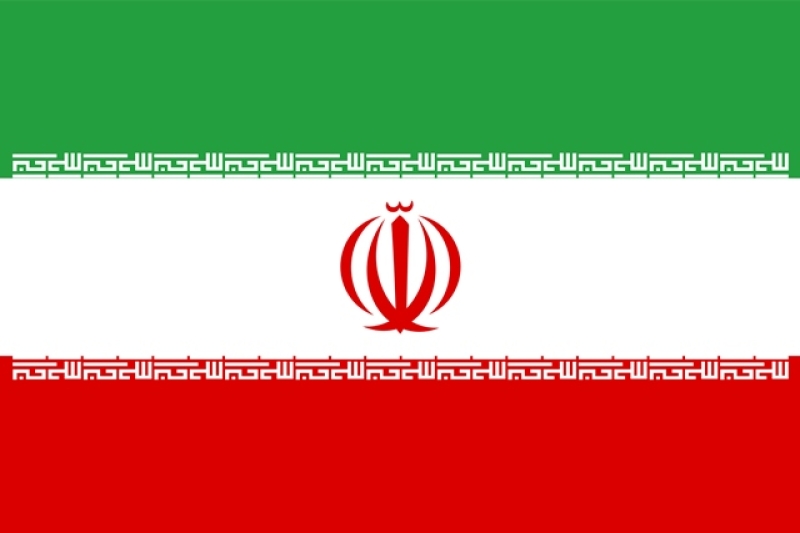
Iran has the upper edge
By Dr Ranjan Solomon
Iran maintains a surprising strategic advantage due to its asymmetric capabilities and geographic positioning. By effectively militarizing the Strait of Hormuz—the vital maritime route for Persian Gulf oil and gas—and expanding hostilities, Tehran has thwarted a decisive U.S. and Israeli victory, using regional leverage to force Washington to negotiate concessions.
The dominant Western narrative still presents Israel as militarily superior and Iran as cornered. But wars are not won only by superior airpower or spectacular strikes. They are won politically, economically, psychologically, and through endurance. In that broader sense, Iran appears to have gained significant leverage in this confrontation.
Israel possesses advanced military technology, nuclear ambiguity, Western intelligence backing, and overwhelming support from the United States. Yet despite this, neither Israel nor Washington has succeeded in decisively breaking Iran’s strategic capacity. Iran retains missile capability, regional influence, control over strategic chokepoints, and the ability to impose global economic costs.
What is increasingly visible is the emergence of a new geopolitical reality: the decline of unquestioned American-Israeli dominance in West Asia. Analysts now openly discuss a shifting world order where U.S. coercive power no longer guarantees political victory.
Several factors explain why Iran may currently hold the strategic upper edge.
War of endurance rather than conquest
Iran does not need to defeat Israel conventionally. It only needs to survive, sustain pressure, and raise the costs of war. The longer the confrontation continues, the greater the political and economic burden on Israel and the United States. Iran is executing an asymmetrical war of endurance against Israel and the United States. By utilizing proxy networks and strategic friction, Tehran aims to survive conventional military pressure while escalating the political and economic costs of the conflict.
The primary components of this long-term strategy include the cost-exchange ratio. Iran forces Israel and the United States to expend highly expensive, multi-million-dollar interceptors (like the Arrow and Iron Dome systems) to destroy relatively low-cost, mass-produced drones and missiles.
By threatening maritime corridors and energy infrastructure, Iran drives up global shipping, insurance, and energy costs. This financial bleed is intended to outlast the Israeli and U.S. willingness to fund a protracted, multi-front conflict thus inviting economic attrition on the enemy. Sustained warfare inherently strains domestic economies, political cohesion, and reserve military forces in allied nations. Tehran calculates that the cumulative political burden will eventually force a compromise in their favour.
The Strait of Hormuz factor is a major factor that weighs in Iran’s favour. Iran’s geographical control over one of the world’s most critical oil corridors gives it enormous leverage. Disruption there affects global fuel prices, shipping, inflation, and Western economies.
Israel’s dependence on the United States paints a bleak picture of Israel’s boastful strength. Pentagon assessments reportedly show the United States carrying much of Israel’s missile-defense burden, depleting advanced interceptor stockpiles. This raises questions about sustainability and strategic overstretch.
The war also lacks political legitimacy in the Global South. Across much of Asia, Africa, and Latin America, the war is increasingly viewed not as “defense of democracy” but as another episode of Western military intervention and regional domination.
Above all, USA’s much trumpeted failure of regime-change ambitions gives Iran a psychological advantage and morale boost. Despite heavy strikes, Iran’s state structure remains intact. There is no evidence of collapse, surrender, or abandonment of strategic goals.
At the same time, caution is necessary. Israel retains devastating military capabilities and can inflict enormous destruction. Iran has suffered serious military and infrastructural damage. Civilian casualties on all sides remain morally indefensible.
But history repeatedly shows that technologically superior powers often fail against nations prepared for prolonged resistance. Vietnam, Iraq, Afghanistan, Lebanon in 2006 – all exposed the limits of overwhelming force when political legitimacy erodes.
The war between Iran and Israel is no longer merely a regional confrontation. It has become a defining test of the emerging global order. Beneath the missiles, airstrikes, and diplomatic threats lies a larger struggle over power itself: Who controls the political future of West Asia? Can the United States still dictate outcomes through force? And is Israel’s long-standing military dominance beginning to encounter structural limits?
Contrary to much Western media framing, Iran may today hold the strategic upper edge – not necessarily because it is militarily stronger in conventional terms, but because it has succeeded in transforming the conflict into a war of endurance, legitimacy, and geopolitical cost.
Israel entered this confrontation with clear advantages: superior airpower, advanced intelligence systems, sophisticated missile defense, cyber capabilities, and unwavering American backing. Iran, by contrast, faced sanctions, economic isolation, diplomatic pressure, and repeated threats of regime change.
Yet months into the conflict, Israel and the United States have not achieved decisive political objectives. Iran’s state apparatus remains functional. Its missile capability, though degraded, remains operational. Regional allies continue to exert pressure across multiple fronts. Most importantly, Iran has demonstrated an ability to absorb punishment while steadily raising the cost of continued war.
That changes the strategic equation.
Military superiority alone does not determine victory. The United States possessed overwhelming military superiority in Vietnam, Iraq, and Afghanistan. Yet each war revealed a fundamental truth: modern wars are ultimately political contests. A state that can survive, resist, and impose long-term costs can often outlast materially stronger opponents. Iran appears to understand this reality far better than Washington or Tel Aviv.
One of Iran’s greatest advantages is geography. The Strait of Hormuz remains one of the most important energy choke points on earth. Roughly one-fifth of global oil flows through it. Iran’s ability to threaten or partially disrupt that corridor gives it leverage far beyond its conventional military strength.
Oil markets react not merely to actual disruption but to fear and uncertainty. Fuel prices have already risen sharply, with analysts warning that even if the war ended immediately, global energy markets could remain unstable for months or years.
This matters politically. Wars become difficult to sustain when ordinary citizens begin paying economic costs. Inflation, fuel prices, shipping disruptions, and military expenditures create domestic pressure in Western countries. Democracies may wage wars abroad, but they cannot easily escape public exhaustion at home.
Meanwhile, reports suggest that the United States has borne the overwhelming burden of defending Israel from missile attacks, using significant portions of its advanced interceptor inventory. This reveals another uncomfortable reality: Israel’s security architecture remains heavily dependent on American logistical and military support.
The longer the war drags on, the more visible this dependence becomes.
At the geopolitical level, the conflict is accelerating the decline of the unipolar world. For decades after the Cold War, the United States operated as the uncontested global power. Military intervention, sanctions, regime-change operations, and economic coercion became normalized instruments of policy. That era is visibly weakening.
Russia and China increasingly challenge Western influence. Regional powers like Türkiye and Saudi Arabia pursue more independent policies. Much of the Global South views American foreign policy with growing scepticism, especially after Iraq, Libya, Gaza, and now Iran.
Indeed, many countries no longer see Western military intervention as morally credible. Instead, they increasingly interpret such wars through the lens of power politics, double standards, and imperial overreach.
This perception benefits Iran politically.
Iran has positioned itself – not always convincingly, but effectively enough for many audiences – as a state resisting Western domination. Whether one agrees with Iran’s internal politics is secondary to the broader symbolic reality: much of the non-Western world sees Iran standing against a heavily armed alliance backed by the world’s strongest military power.
That symbolism matters.
Israel, meanwhile, faces a deepening legitimacy crisis internationally, intensified by global outrage over Gaza and wider regional escalation. Even governments traditionally aligned with Washington are becoming more cautious about unconditional support. The political cost of association with prolonged regional warfare is increasing.
Another significant factor is strategic resilience. Despite massive strikes on military and nuclear facilities, Iran has not collapsed internally. Predictions of regime implosion have once again proven exaggerated.
Instead, external attack often strengthens nationalist cohesion. History repeatedly shows that societies under siege tend to rally around sovereignty, even when internal dissent exists. Foreign military pressure can unintentionally consolidate rather than weaken ruling structures.
None of this means Iran is “winning” in any simplistic sense. Iran has suffered extensive damage. Civilian suffering remains profound. Israeli civilians have also faced missile attacks and insecurity. International humanitarian law must apply universally, whether violations are committed by Israel, Iran, or any other actor.
But strategically, Iran does not need battlefield domination to succeed. It only needs to prevent defeat. That is the lesson powerful states repeatedly fail to learn.
Wars driven by technological supremacy often underestimate political endurance. Superior weapons can destroy infrastructure, assassinate commanders, and devastate economies. But they cannot easily erase national identity, historical memory, or the willingness of societies to resist perceived domination.
The deeper crisis exposed by this war is therefore not merely military. It is civilizational and geopolitical. The conflict reveals the weakening capacity of Western powers to impose uncontested political outcomes in a changing world.
The old order is fading.
The emerging world is more fragmented, multipolar, and resistant to unilateral power. Iran’s ability to withstand pressure from Israel and the United States—despite enormous asymmetries—illustrates that transformation vividly.
Whether one supports Iran or opposes its government is ultimately beside the point. The larger reality is this: military intimidation no longer guarantees political obedience.
And that may be the most important lesson of this war.
Ranjan Solomon has worked in social justice movements since he was 19 years of age. After an accumulated period of 58 years working with oppressed and marginalized groups locally, nationally, and internationally, he has now turned author-researcher and freelance writer focussed on questions of global and local justice struggles. Ranjan Solomon is particularly tied in close solidarity with the Palestinian struggle for freedom from Israeli occupation, and the cruel apartheid system since 1987. Ranjan Solomon can be contacted at ranjan.solomon@gmail.com 24 May 2026
Source: https://countercurrents.org via JUST Commrntary, Malayasia