

- First cruise ship crosses Strait of Hormuz since war began |
- MDBs stress co-op support global stability amid uncertainty |
- PM opens first Hajj flight, visits Ashkona camp |
- River ports asked to hoist cautionary signal No 1 |
- Oil prices drop 9% & Wall Street rallies to a record after Iran reopens Hormuz |
Iran Reopens Hormuz but Warns as US Blockade Stays
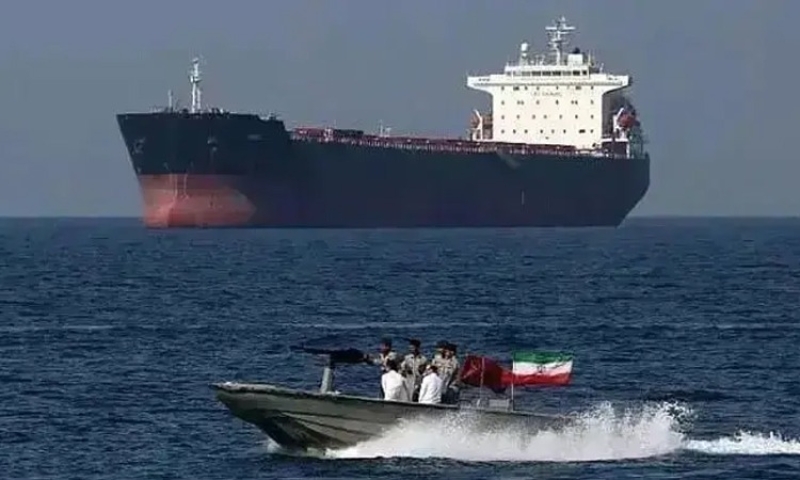
Iran has reopened the Strait of Hormuz to commercial shipping but warned it could close the vital route again if the United States continues its blockade of Iranian vessels and ports.
Officials said ships are now allowed to pass through the waterway, which carries around 20% of global oil supplies. However, vessels must follow routes designated by Iran, signalling that Tehran still retains tight control over transit. It remains unclear whether any transit fees apply, while monitoring data suggests traffic is limited to approved corridors.
US President Donald Trump said the American blockade will remain in place until a broader agreement is reached with Iran, including over its nuclear programme. While welcoming the reopening, he made clear that restrictions would continue until negotiations are fully concluded.
Iranian authorities criticised the blockade as a violation of the recent ceasefire and warned that the strait could be shut again if US measures persist. Since the blockade began, several Iranian ships have reportedly been turned back by US forces.
Talks between the two sides may resume soon after earlier negotiations failed to deliver a breakthrough, particularly on nuclear issues. Hopes of renewed diplomacy helped push oil prices lower, easing immediate concerns over global energy supplies.
However, mixed signals have emerged within Iran, with some semi-official outlets questioning whether the decision to reopen the strait has full backing from the country’s top leadership.
Meanwhile, a ceasefire between Israel and the Iran-backed Hezbollah group in Lebanon appeared to be holding, offering some relief to regional tensions. Still, uncertainty remains over full compliance, especially with Israeli troops continuing operations in parts of southern Lebanon.
Despite the truce, sporadic violence has been reported, including an Israeli strike that caused casualties shortly after it came into effect. Neither side has confirmed full adherence to the ceasefire terms.
The broader conflict has claimed thousands of lives across the region, with key disputes still unresolved, including Iran’s nuclear ambitions, control of the Strait of Hormuz, and potential compensation for war-related damage.
Trump also suggested Iran could make concessions on its enriched uranium stockpile, though this has yet to be confirmed by Tehran or mediators.