

- UNESCO Grants ‘Enhanced Protection’ to Mideast Sites |
- Solar Irrigation Cuts Diesel Use for Bangladesh Farmers |
- Trump claims Iran won’t close Hormuz strait again |
- Trump says Israel ‘prohibited’ from bombing Lebanon |
- Iran, US say Strait of Hormuz is fully open to commercial vessels |
UNESCO Grants ‘Enhanced Protection’ to Mideast Sites
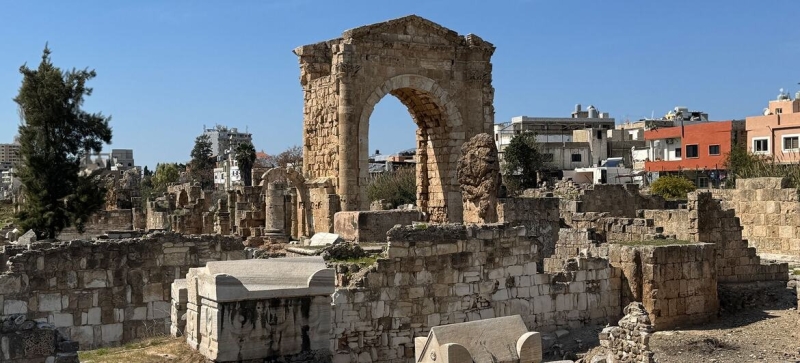
Al-Bass, an archeological site in Tyre, Lebanon, is under threat of close-proximity bombing amid the ongoing conflict in the Middle East.
Since the Middle East war began on 28 February, several sites of major cultural significance in Israel, Iran and Lebanon have come under attack. Ensuring their protection is the responsibility of the UN agency for education, science and culture, UNESCO.
At the request of the Lebanese government, UNESCO has placed 39 World Heritage sites in the country under so-called “enhanced protection”.
But what is “enhanced protection”, and what can the agency do during times of war? To answer these questions, UN officials spoke with Krista Pikkat, Director of the Culture and Emergencies Entity at UNESCO.
Living heritage under threat
UNESCO has repeatedly warned about the impact of the conflict on the region’s rich and diverse cultural heritage. Since the outbreak of war, the agency has received reports of damage to more than 20 cultural sites, including World Heritage locations and others of national importance.
“We verify the reports we receive from different sources, either through satellite imagery by analysing before-and-after images or through on-site inspections,” Ms Pikkat said.
UNESCO has so far confirmed damage to five cultural properties, including a synagogue, the Golestan Palace, the Sa’dabad Palace and the old Senate Palace in Iran, as well as the ancient city of Tyre in Lebanon.
“It is the living heritage of communities that is under threat,” she added.
What is ‘enhanced protection’?
Lebanon now has 39 sites on UNESCO’s “enhanced protection” list, the highest number for any country.
“Enhanced protection is the highest level of international legal protection under the Second Protocol to the 1954 Hague Convention,” Ms Pikkat explained. “It is granted to sites of the greatest importance to humanity and provides them with the highest level of immunity from military attack.”
Any state or party that fails to comply with the convention could be committing a war crime.
In Lebanon, UNESCO works closely with national authorities, particularly the Directorate General of Antiquities, offering technical advice and support for emergency protection. This includes training, emergency inventories, safeguarding measures, rehabilitation of storage sites, evacuation guidelines for movable heritage, and marking protected locations with the Blue Shield emblem.
More than stones and mortar
During conflict, UNESCO calls for restraint and the protection of educational, cultural, media and scientific institutions, as they form the foundation of future societies.
The agency stresses that culture and heritage play a vital role in shaping identity, offering comfort and support to affected communities.
When these foundations are destroyed, the impact goes beyond physical damage, deepening trauma, fuelling resentment and hindering recovery and dialogue.
“We should not only see culture as something fragile that needs protection,” Ms Pikkat said. “Culture is also a source of resilience and an economic asset for recovery and peacebuilding.”