

- 40-foot-long dead whale float to Kuakata sea |
- Bangladesh’s export earnings fall by 7.09pc in May |
- New Force Commander of UNFICYP Lt Gen Minhazul Alam meets PM |
- BERC raises retail power tariff by Tk 1.52 per unit |
Ignoring Food Systems in Climate Deal Risks Disaster
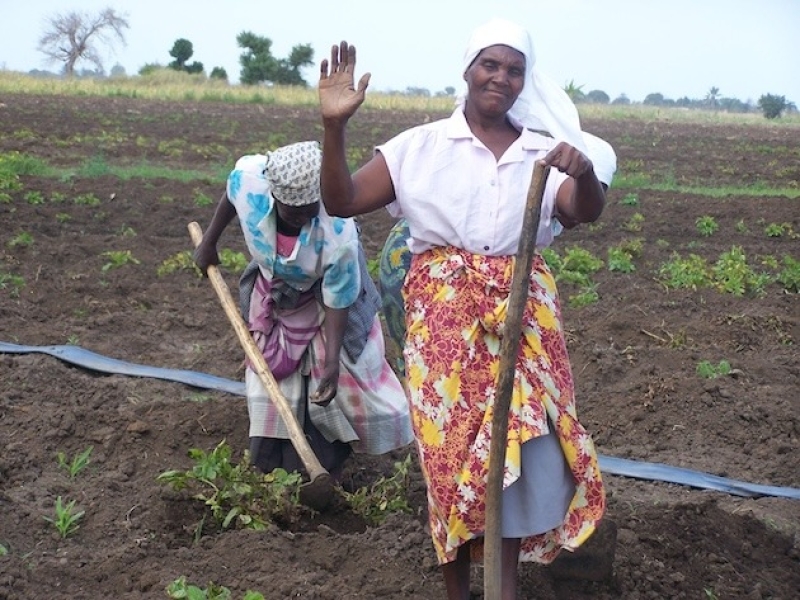
Agriculture is both a challenge and a solution for climate change.
As they ate catered meals, COP30 negotiators showed little appetite for fixing broken food systems, a major source of climate pollution, experts have warned.
Food systems encompass the complete journey food takes—from farm to fork—covering production, processing, distribution, trade, consumption and waste.
The International Panel of Experts on Sustainable Food Systems (IPES-Food) warned that the final COP30 agreement risks deepening both climate and hunger crises, as it failed to address global warming emissions from food systems and the escalating damage caused by fossil fuel–dependent industrial agriculture.
Food appears only once in the negotiated text, as a narrow indicator on “climate-resilient food production” under the Global Goal on Adaptation, IPES-Food noted.
“There is no mention of food systems, no roadmap to tackle deforestation, and no recognition that industrial agriculture drives nearly 90 percent of forest loss worldwide,” the think tank said. It added that negotiators weakened language in the Mitigation Work Programme, shifting from addressing the “drivers” of deforestation to vague “challenges”.
IPES-Food said the omission of food systems in the COP30 agreement stood in stark contrast to the summit itself, which was held in the heart of the Amazon. About 30 percent of all food served during COP30 came from agroecological family farmers and traditional communities, while concrete public policy proposals for a just transition of food systems were on display.
By failing to support a transition to environmentally friendly and low-emission agriculture, the agreement has left the global food system—and the billions who depend on it—highly vulnerable to the very climate shocks it helps to create, experts said.
“Food solutions were on display everywhere around COP30—from the 80 tonnes of local and agroecological meals served to concrete proposals for tackling hunger—but none of this made it into the negotiating rooms or the final agreement,” said Elisabetta Recine, an IPES-Food panel expert and president of Brazil’s National Food and Nutrition Security Council.
“Despite all the talk, negotiators failed to act, and the lived realities of people most affected by hunger, poverty and climate shocks went unheard,” she added.
Big Oil and Big Ag, Bigger Voice
More than 300 industrial agriculture lobbyists were registered as delegates at COP30. They have been blamed for influencing discussions and promoting false solutions to climate change.
“COP30 was supposed to be the implementation COP—where words turned into action,” said Danielle Nierenberg, an expert on sustainable agriculture and president of Food Tank. “But once again, corporate interests won out over people, nature and the future of food and agriculture as part of the climate solution.”
Raj Patel, an IPES-Food panel expert and professor at the University of Texas, said agribusiness lobbyists had captured COP30 to shape outcomes favouring industrial agriculture and big oil.
“Food systems are second only to oil and gas as a driver of the climate crisis, and unlike oil wells, they are also the first victim of the chaos they create,” Patel said.
Obstacles and Opportunities
Scientists have warned that carbon emissions, including those from agriculture, must be cut sharply if the world is to meet the Paris Agreement goal of limiting global warming to 2°C or less.
Even if fossil fuel emissions were eliminated immediately, emissions from the global food system alone would make it impossible to limit warming to 1.5°C and would make even the 2°C target difficult to achieve, scientists have said.
Selorm Kugbega, a research fellow at the Stockholm Environment Institute, said that despite repeated promises to tackle agriculture-linked emissions, COP30 turned out to be a disappointment for agrifood systems.
Initiatives such as RAIZ, which aims to restore 500 million hectares of degraded land by 2030, and TERRA, designed to scale up climate solutions for smallholder farmers through blended finance, were launched at COP30 but failed to address the impacts of industrial food systems. The participation of more than 300 industrial agriculture lobbyists fuelled accusations that outcomes were swayed.
Kugbega said COP30 should have been an opportunity to cement agriculture’s central role in future climate negotiations. Instead, it ended without clear agreements on grant-based public finance for agricultural adaptation or the redirection of public funds that subsidise industrial systems.
He added that the negotiations highlighted deep power imbalances, with the protection of industrial agriculture interests undermining the credibility of efforts to cut agriculture-related emissions. Smallholders, he noted, bear high climate risks but receive little adaptation finance.
Frugal Financing for Food and Farmers
According to the Climate Policy Initiative and the UN’s Standing Committee on Finance, agriculture receives a small and insufficient share of global climate finance.
Of the roughly USD 1.3 trillion in global climate finance mobilised annually, agriculture receives about USD 35 billion. This is a major shortfall, given that food systems account for around one-third of global greenhouse gas emissions and are among the sectors most vulnerable to climate impacts. Smallholder farmers, who produce up to 80 percent of food in developing countries, receive just 0.3 percent of this funding.
Will COP31 Deliver?
While COP30 underscored the need to address climate impacts through transforming food systems, it remains unclear whether COP31 will deliver meaningful progress.
Waiting for COP31 to solve the problem amounts to surrender, Patel said, arguing that agribusiness lobbyists never pause their efforts.
“The test is not whether diplomats craft better language, but whether farmers’, indigenous and climate movements can generate enough political pressure to make governments fear inaction more than confronting corporate power,” he said.
COP31, to be hosted by Turkey with Australia as negotiations president in 2026, is expected to prioritise adaptation finance, fossil fuel phase-out, support for Small Island Developing States and oceans. While aligned with broader climate justice goals, experts warned that food systems risk remaining marginal rather than central to the agenda.