

- Dhaka Tops Global Air Pollution Index Again |
- UN Unveils First Global AI Assessment Report |
- Balogun scores and sees red as US beat Bosnia 2-0 |
- PM reviews projects to ease city’s traffic congestion |
- Efforts underway to bring Hasina back for trial: Shama |
Pricing pollution: Does it work?
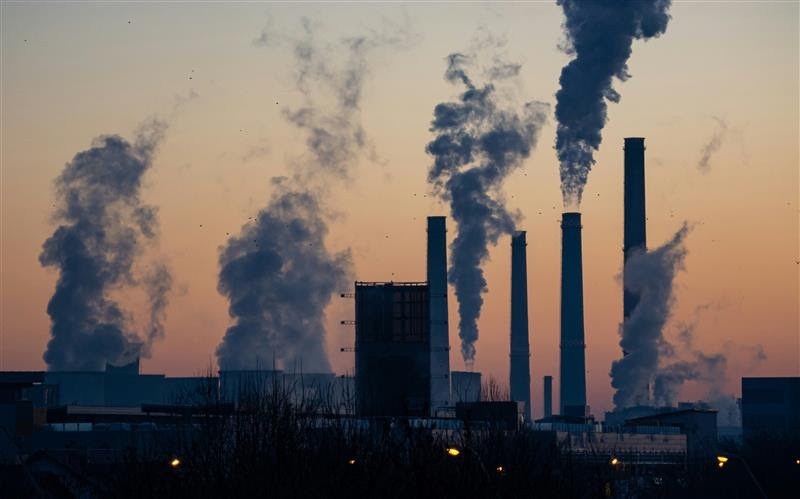
By February 2026, 41 emissions trading systems are active globally, covering 26% of global GHG emissions, according to the ICAP Status Reportm, 2026. (Photo- Ella Ivanescu - Unsplash)
Carbon markets are once again making headlines in Europe. Recent EU policy discussions show how closely climate action is now tied to everyday concerns like energy prices, jobs, food and industrial competitiveness. Faced with rising energy costs, EU policymakers are considering concessions. Industry groups lobbied for these changes, arguing that current rules risk putting European companies at a disadvantage.
How carbon markets work
At their core, carbon markets are designed to reduce pollution by putting a price on it. Governments set a limit on how much greenhouse gas can be emitted by certain sectors, such as energy and heavy industry. Companies must hold permits - often called allowances - for every tonne of pollution they produce.
If a company reduces its emissions, it can sell its unused permits to others. If it exceeds its limit, it must buy more. This creates a financial incentive to pollute less. Alongside this system are carbon credits, which represent emissions reduced or removed elsewhere. For example, a project that protects a forest or installs clean energy can generate credits that others can buy.
A simple way to understand this is to imagine the atmosphere as a bathtub filling with water. Emissions are the water flowing in. Some efforts turn down the tap, while others remove water already in the tub. Both approaches can help but only if the system is reliable.
In practice, carbon markets operate through two main channels: regulated markets run by governments and voluntary markets where companies buy credits to offset emissions and meet their own climate goals. These systems are increasingly overlapping, making markets more connected.
Carbon markets matter because they are becoming a central tool in global climate policy. More countries are adopting them each year.
A global trading market
Beyond Europe, carbon markets are undergoing rapid global transformation. They are expanding quickly across economies. Recent years have seen major new systems launched in countries such as Japan, India, and Vietnam, while others across Latin America and Africa are developing similar systems.
At the same time, countries are beginning to link their systems through international frameworks such as Article 6 of the Paris Agreement, enabling cross-border trading of carbon credits and pushing toward more common standards.
Carbon markets are also gaining importance as an economic tool. For governments facing tight budgets, they can generate revenue, while in developing countries they can finance projects such as ecosystem restoration or improved access to energy.
The integrity challenge
As carbon markets expand, so do the risks. These risks fall into three main areas: environmental, financial, and social integrity.
Environmental integrity is about whether carbon markets actually reduce emissions. One major challenge is ensuring that carbon credits represent real and additional climate benefits. If a project would have happened anyway, issuing credits for it does not lead to genuine reductions.
Financial integrity is another concern. Carbon markets are complex and, in some cases, opaque. This creates opportunities for fraud, tax evasion, or market manipulation. Cases of fraud and abuse in some projects have highlighted how weak oversight can undermine trust.
Social integrity explains how carbon projects can affect land use and local communities, particularly in developing countries. Without proper safeguards, communities may be excluded from decisions or even lose access to land and resources.
This is why integrity is essential. Transparency about agreements, clear information about projects and credits sold, strong monitoring, and inclusive decision-making can help ensure that carbon markets deliver real benefits while minimizing risks. Experts also stress that cutting emissions directly should come first, with carbon credits used only for remaining emissions.
Encouragingly, there are some positive developments. In Pakistan, Transparency International has worked with government partners to embed transparency and accountability into emerging carbon market rules. In Zambia, sustained advocacy contributed to a landmark law that integrates climate and governance standards. In Mozambique, efforts have focused on ensuring that climate finance benefits communities and avoids harmful practices.
These examples highlight the need for integrity in carbon markets, particularly to ensure transparency and accountability. A key issue remains the potential for conflict of interest among verifiers or independent third parties that check whether a carbon project’s claims are accurate: an area that requires greater scrutiny and attention going forward. – Transparency International