

- JS passes Tk 9.38 lakh crore budget for FY27 |
- Court ruling blocks Aslam Chowdhury’s MP oath |
- Prioritise natural resources regeneration in budget to make dev holistic |
- Finance Bill passed, tax-free threshold set at Tk 4 lakh |
- PM calls FY27 budget 'life-friendly', promises relief |
Myanmar Imposes Martial Law in 60 Townships
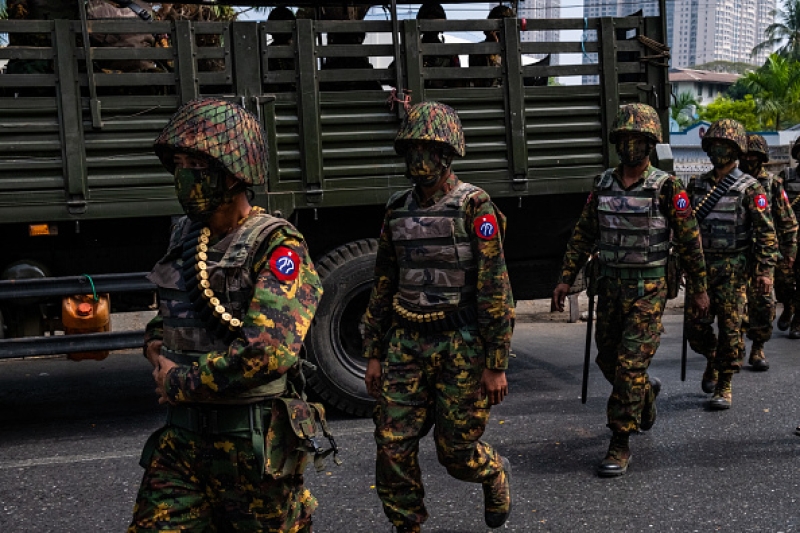
Myanmar’s military-backed government has imposed martial law across 60 townships, in a sweeping move that underscores the fragility of its recent transition to a nominal civilian administration.
The emergency ordinances were issued by junta leader-turned-president Min Aung Hlaing, placing large parts of the country under direct military authority for an initial period of 90 days. The affected areas span conflict-prone regions, including Kachin, Kayah, Kayin, Chin, Shan and Rakhine states, along with Sagaing, Magway and Mandalay regions.
These territories have been at the centre of sustained clashes between the military and a mix of ethnic armed organisations and pro-democracy resistance groups since the 2021 coup. Many of the townships have already been under curfews and heavy security restrictions for years.
According to state-run media, the government justified the move as necessary to “end armed terrorism” and restore “the rule of law.” A separate notification published in the state-owned Global New Light of Myanmar said all executive and judicial powers in the designated areas would be transferred to military chief Ye Win Oo during the emergency period.
The declaration effectively sidelines civilian administrative structures in the affected regions, giving the armed forces broad powers over governance, law enforcement and judicial processes. Analysts say this could further tighten the military’s grip on areas where it has struggled to assert full control.
The move marks the first major consolidation step by Min Aung Hlaing since he assumed the presidency earlier this month following elections widely criticised by international observers and opposition groups as neither free nor credible. The polls were boycotted by key political actors and held amid ongoing violence, raising questions about their legitimacy.
Myanmar has remained deeply unstable since the military ousted the elected government of Aung San Suu Kyi in the 2021 Myanmar coup d'état. The coup triggered mass protests that evolved into an armed resistance movement, plunging large parts of the country into protracted conflict.
Since seizing power, the military has repeatedly extended nationwide emergency rule while facing mounting battlefield pressure and international isolation. Despite staging elections late last year and early this year, the security situation has shown little sign of improvement.
Observers warn that the latest imposition of martial law could escalate tensions further, deepen humanitarian challenges, and reduce prospects for a negotiated political settlement in the near term.