

- Middle East War Puts Bangladesh Jobs at Risk |
- Starmer criticises Trump, defends UK position not to allow use of its bases |
- Iran War: Nuke watchdog urges restraint amid ongoing strikes |
- 80pc tube wells in Chhatak run dry; water crisis acute |
- Advance Eid train ticket sale begins |
Edmonton Tests AI-Enabled Police Body Cameras with Facial Recognition
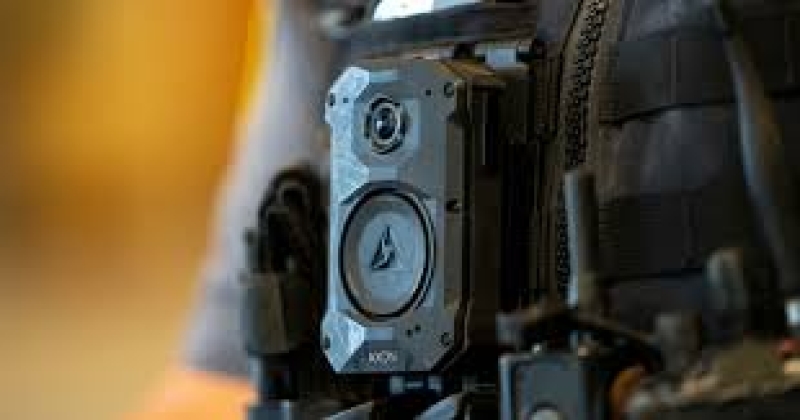
Police in Edmonton, Canada, have begun a trial of AI-powered body cameras designed to recognize individuals on a "high-risk" watch list. The technology, which can identify approximately 7,000 people, marks a significant shift in law enforcement's approach to facial recognition, a tool previously deemed too invasive in North America.
The pilot program, launched last week, comes after Axon Enterprise, the leading body-camera manufacturer, backed away from facial recognition in 2019 due to ethical concerns. Now, the company is testing the technology in Edmonton, the northernmost city in North America with a population of over a million.
Barry Friedman, former chair of Axon's AI ethics board, expressed concerns about the lack of transparency and expert review in the deployment of such powerful tools. As a law professor at NYU, he stressed that the technology's risks and costs must be clearly justified before implementation.
Axon CEO Rick Smith emphasized that the Edmonton trial is "early-stage field research," intended to assess the system's performance and determine necessary safeguards. Testing in Canada, Smith explained, would provide valuable insights before considering future rollouts in the U.S.
The AI system is designed to enhance officer safety by flagging individuals identified as violent, armed, or dangerous, with a watch list containing 6,341 names and 724 individuals with serious outstanding warrants. Axon insists the focus will remain on serious offenders, according to the company’s director of responsible AI, Ann-Li Cooke.
The outcome of the trial could influence policing practices worldwide, as Axon is a dominant player in the U.S. body-camera market and expanding in Canada. While Motorola Solutions offers facial recognition capabilities in its cameras, it has opted not to use the feature proactively for now.
Edmonton's program aligns with Alberta’s 2023 mandate for provincewide police body cameras, aiming to boost accountability and accelerate investigations. However, real-time facial recognition remains controversial, with critics warning of potential surveillance overreach and racial bias. Some U.S. states have imposed restrictions, and the European Union has banned public real-time face scanning except in extreme circumstances.
In contrast, the UK has embraced facial recognition, with its system contributing to 1,300 arrests in two years.
Details about the Edmonton pilot are scarce. Axon has not disclosed which third-party facial recognition model is used, and the trial will only run during daylight hours through December due to Edmonton’s harsh winters and low-light conditions. About 50 officers are participating, though they won’t receive real-time alerts; results will be reviewed afterward. The ultimate goal is to alert officers to the presence of high-risk individuals while responding to calls.
Privacy concerns are mounting. Alberta’s privacy commissioner received a privacy impact assessment just before the trial was announced and is currently reviewing it.
Temitope Oriola, a criminologist at the University of Alberta, noted the sensitivity of the trial, given Edmonton's strained relationship with Indigenous and Black communities. He warned that while the program could lead to improvements, it is far from guaranteed.
Axon acknowledges challenges with accuracy, particularly in low-light conditions and when identifying individuals at a distance or from difficult angles, which can disproportionately affect darker-skinned people. The company insists that all facial recognition matches will undergo human verification and that part of the trial will focus on refining training for reviewers to minimize risks.
Friedman argued that Axon should release its findings publicly and that decisions about such powerful technology should not be left to police or private companies alone. "A pilot can be valuable," he said, "but it requires transparency and accountability."