

- ADP Implementation Hits Five-Year Low at 1.85% |
- NYC BNP leaders, activists upbeat ahead of Tarique Rahman’s arrival |
- PM off to New York to attend UNGA |
- 8 Killed in Ashulia Garment Factory Fire |
- Apratim Murder Suspects Confessed, Says Home Minister |
UN AI Panel Launches Global Impact Study on Humans
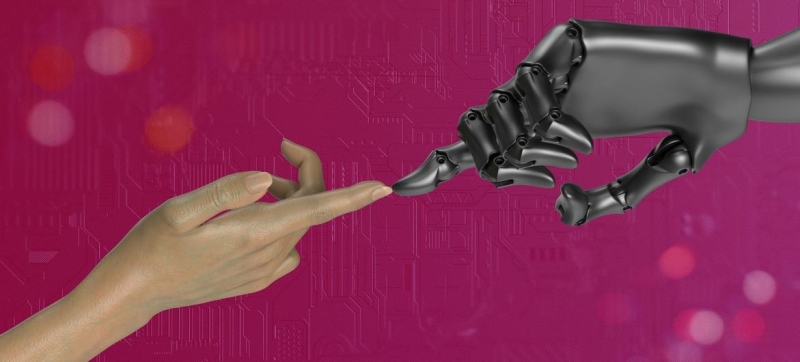
The UN Security Council is meeting to discuss the impact of artificial intelligence on international peace and security.
The UN’s Independent International Scientific Panel on AI, the first global body of its kind, is preparing for its inaugural in-person summit.
Tasked with navigating the intersection of innovation and ethics, the group of world-leading experts is launching a landmark study on forces transforming modern life.
“We are not just focusing on AI as a mathematical or algorithmic field; we are also ensuring that humans remain central to decision-making,” said Menna El-Assady, assistant professor at the Swiss Federal Institute of Technology (ETH Zurich).
El-Assady is one of 40 founding members of the UN’s independent AI panel, recommended by the UN Secretary-General and formally appointed by the General Assembly in February. The panel brings together experts from academia, the private sector, civil society, government, international organisations, and the technical community, covering AI safety, infrastructure, policy, ethics and applied research.
She described the concept of “a human in the machine,” which highlights the idea that humans should remain involved in AI-driven decisions. She added that the panel will examine when automation is appropriate and when human expertise is essential, including the evolving interaction between people and AI systems.
At ETH Zurich, she has developed the idea of “augmented intelligence,” where AI is used to enhance human capabilities rather than replace them, strengthening cooperation between humans and machines across sectors.
The panel’s work will focus on how AI is reshaping areas such as labour markets, healthcare, and public services. El-Assady also advocates for a “public digital infrastructure” to ensure wider access to AI development tools and resources.
She further emphasised the importance of cultural and linguistic diversity in AI systems to avoid concentration of capabilities in a few countries.
The launch of the panel reflects growing global concerns about the risks of unregulated AI. UN Secretary-General António Guterres has warned that humanity’s fate should not be left to algorithms, while UN human rights chief Volker Türk has cautioned against unchecked development of AI systems without ethical safeguards.
El-Assady supports stronger trust and transparency measures, including AI watermarking to distinguish between human-created and AI-generated content.
The panel’s first report is expected to be presented at the Global Dialogue on AI Governance, scheduled for 6–7 July in Geneva.