

- Saint Martin’s Island to Reopen for Tourists on Nov 1 |
- France Arrests More Than 1,300 After Nationwide Protests |
- Dhaka ranks world's third most polluted city this morning |
- Soldiers Guard Milan as Thousands Protest Across Europe |
- Cheese Industry Thrives In Thakurgaon Villages |
Bangladesh Plans Rockets, Satellites, and Space Industrial Park
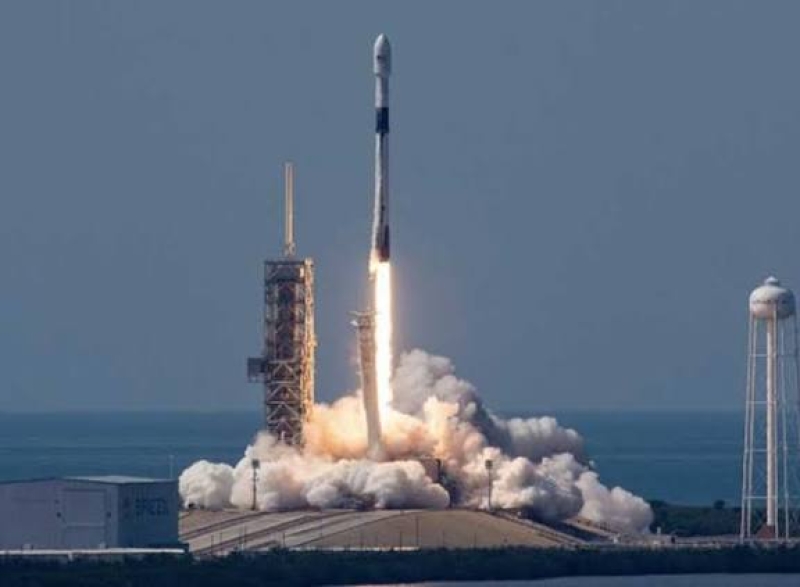
Bangladesh is taking a major step toward joining the global space economy by commissioning a feasibility study on building its own rockets, satellites, and a dedicated space industrial park.
The Bangladesh Space Research and Remote Sensing Organisation (SPARRSO) signed an agreement last month with Development Design Consultants Limited to conduct the study at an estimated cost of Tk1.35 crore. The consultant will submit a full feasibility report and preliminary project design by June 2026.
The study will focus on three key components: a rocket manufacturing and launch station, a satellite manufacturing industry with an Assembly, Integration, and Test (AIT) laboratory, and a high-tech space industrial park.
According to SPARRSO officials, the initiative aims to strengthen long-term space capability, enhance self-reliance, boost foreign revenue, develop skilled talent, and raise Bangladesh’s profile in global space science.
Mohammad Shohidul Islam, principal scientific officer at SPARRSO, said the first step is to import components and assemble rockets locally. “Once sufficient expertise develops, Bangladesh could manufacture its own rockets,” he said.
He noted that neighbouring India earns foreign currency by launching rockets for other countries and added that a launch station could provide similar opportunities for Bangladesh. Discussions have already begun with a Chinese company, while a US-based private firm will assist SPARRSO in promoting awareness of the space industry.
Subrata Kumar Aditya, professor of electrical and electronic engineering at Dhaka University, called the project ambitious but feasible, provided it receives sufficient foreign investment and advanced technology support.
Rocket and Launch Station:
SPARRSO’s feasibility study aims to develop indigenous launch vehicles capable of placing local and foreign satellites into orbit at lower costs. Potential sites under review include Patuakhali’s Kalapara, Chattogram’s Anwara, and the Sundarbans. The final site and investment proposal will be determined after the study.
Satellite Industry and Laboratory:
The satellite manufacturing facility will handle design, fabrication, integration, testing, and validation of multiple satellite classes. The AIT laboratory will support sectors including telecommunications, disaster management, agriculture, the blue economy, forestry, and space weather research. The initiative will also train skilled manpower and promote innovation in universities and research institutions.
Space Industrial Park:
The proposed industrial park will attract domestic and foreign investment in aerospace manufacturing, research, engineering, and commercial space applications. It is expected to create employment, foster international collaboration, and offer services in satellite data, navigation, energy management, marine tracking, aviation safety, and telecommunications. Sites under consideration include Mirsarai Economic Zone and Madhupur in Tangail.
Why Bangladesh Needs a Space Industry:
SPARRSO officials highlighted that the global space industry is a trillion-dollar market with over 11,000 satellites in orbit. Domestic capability is essential to reduce reliance on foreign satellites, lower costs, and provide real-time data for disaster preparedness, agriculture, and national security.
Currently, launching a satellite from Europe costs around Tk2,000 crore, whereas building and launching domestically could cost less than half. Rockets are essential for placing satellites into orbit, with initial production involving local assembly of imported components.
The initiative was first proposed by SPARRSO Chairman Md Rashedul Islam and gained support from Md Ashraf Uddin, secretary of the defence ministry. The feasibility work was awarded to Development Design Consultants Limited, selected from seven bidders for its international space research expertise.