

- SSC and Equivalent Exams Begin Nationwide |
- US, Iran Signal War Readiness as Talks Hang in Balance |
- Bangladesh, EU Push for FTA, Investment Pact Talks |
- Over 1.14cr workers sent to Middle East in 22 years |
- BNP finalizes 36 nominations for women’s seats in Parliament |
Artemis Crew Prepares for Historic Lunar Flyby
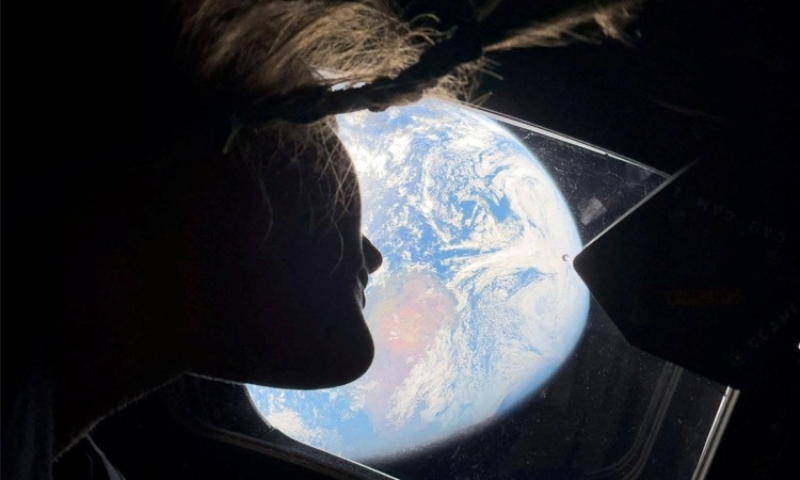
The four-member Artemis 2 crew was preparing on Saturday for its historic lunar flyby, as astronauts reviewed the key surface features they will analyse and photograph while circling the Moon.
“Morale is high on board,” commander Reid Wiseman told Mission Control in Houston as the crew began its workday.
According to NASA, the astronauts woke up while travelling about 169,000 miles (271,979 kilometres) from Earth and approximately 110,700 miles (178,154 kilometres) from the Moon.
The next major milestone in the nearly 10-day mission is expected late Sunday into Monday, when the spacecraft enters the Moon’s sphere of influence, the point at which lunar gravity becomes stronger than Earth’s pull.
If the mission continues as planned, the astronauts aboard Orion could travel farther from Earth than any humans in history as the spacecraft swings around the Moon.
The crew includes Americans Christina Koch, Victor Glover, and Reid Wiseman, along with Canadian astronaut Jeremy Hansen, on humanity’s first crewed mission around the Moon in more than 50 years.
Later in the day, Glover was scheduled to carry out a manual piloting demonstration to help NASA gather additional data on the spacecraft’s performance in deep space.
The astronauts were also set to review procedures for documenting their journey around the Moon, including photographing and describing important lunar features such as ancient lava flows and impact craters.
Unlike the Apollo missions, which flew roughly 70 miles above the lunar surface, Artemis 2 is expected to pass at a distance of just over 4,000 miles at its closest point. That will give the crew a broader and more complete view of the Moon, including areas near both poles.
NASA said the astronauts have also been taking photographs throughout the mission, including with smartphones recently approved for use in spaceflight.
Images released from Orion have already shown striking views of Earth, including its deep blue oceans and cloud-covered atmosphere.
NASA official Lakiesha Hawkins praised the crew’s photography and said the mission continues to provide valuable insight into how the spacecraft performs with humans on board in deep space.
Artemis 2 is part of NASA’s broader plan to return humans to the Moon on a sustained basis, with the long-term goal of establishing a permanent lunar presence to support future exploration.
For the astronauts, however, the mission is not only historic but also deeply personal, offering a rare chance to experience the wonder of human spaceflight up close.