

- Tk 9.38 lakh crore budget with Tk 2.43 cr deficit placed |
- Govt Rolls Out Three-Tier Plan for Economic Transformation |
- Budget is built around ten strategic priorities |
- Ad-din Hospital’s License Revoked Over Newborn Deaths |
- Finance Minister Presents Tk 9.38 Lakh Crore Budget |
Govt Boosts Renewable Energy Funding, Targets 35,000 MW
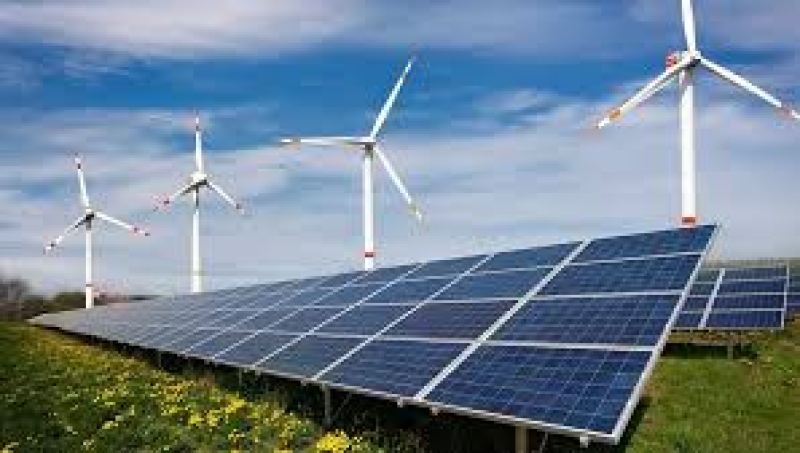
The government has stepped up its push toward a cleaner energy future with an expanded fiscal plan that places renewable power and sector reforms at the center of the national development agenda.
Under the latest national budget for the 2026–27 fiscal year, authorities have outlined an ambitious roadmap to raise the country’s total installed power generation capacity to 35,000 MW by 2030. A key pillar of the plan is a binding target to ensure that at least 20 percent of total electricity demand is met through renewable sources by the end of the decade.
To support this transition, the government has allocated Tk 17,345 crore for the power and energy sector, marking an increase of Tk 393 crore from the previous fiscal year. Officials say the enhanced allocation reflects growing pressure from declining domestic gas reserves and rising import costs of fossil fuels, which have strained the country’s energy balance in recent years.
A significant portion of the strategy focuses on scaling up solar energy, particularly rooftop installations, alongside expanded feasibility work for wind power projects in coastal and near-coastal regions. Policy planners have also emphasized the need for greater grid stability as renewable sources expand, introducing plans for a National Energy Storage Roadmap to support large-scale battery storage systems.
The budget further includes pilot initiatives for waste-to-energy projects, aimed at converting urban waste streams into usable electricity. These projects are expected to complement renewable expansion while addressing growing municipal waste management challenges.
Alongside generation targets, the government is also prioritizing domestic manufacturing capacity. Incentives will be offered to private investors to develop local production facilities for solar panels, wind turbine components, and battery energy storage systems. Officials say this approach is intended to reduce import dependency and strengthen supply chain resilience in the long term.
Despite steady progress, renewable energy currently accounts for only 5.39 percent of the national capacity mix, or about 1,745 MW. Solar dominates the segment with 1,452 MW, followed by hydropower at 230 MW, wind at 62 MW, and a small contribution from biomass and biogas sources.
In parallel with renewable expansion, the government is pursuing reforms in the conventional power sector. This includes reviewing capacity charges and power purchase agreements under a least-cost generation strategy aimed at improving efficiency and phasing out older, less productive fossil fuel plants.
At the same time, the Rooppur Nuclear Power Plant is expected to play a stabilizing role during the transition. The 2,400 MW facility is projected to add around 300 MW to the grid by August 2026, followed by another 1,200 MW by January 2027, providing a steady base-load supply as renewable capacity scales up.