

- 136 new drugs in 195 essential drugs list, pricing guidelines |
- BSF halts overnight road building near border as BGB intervenes |
- U.S. Pullout From Global Bodies Sparks Widespread Alarm |
- DU Syndicate for renaming Sheikh Mujib Hall after Osman Hadi |
A Year of High Hopes, Hard Lessons and Frustrations
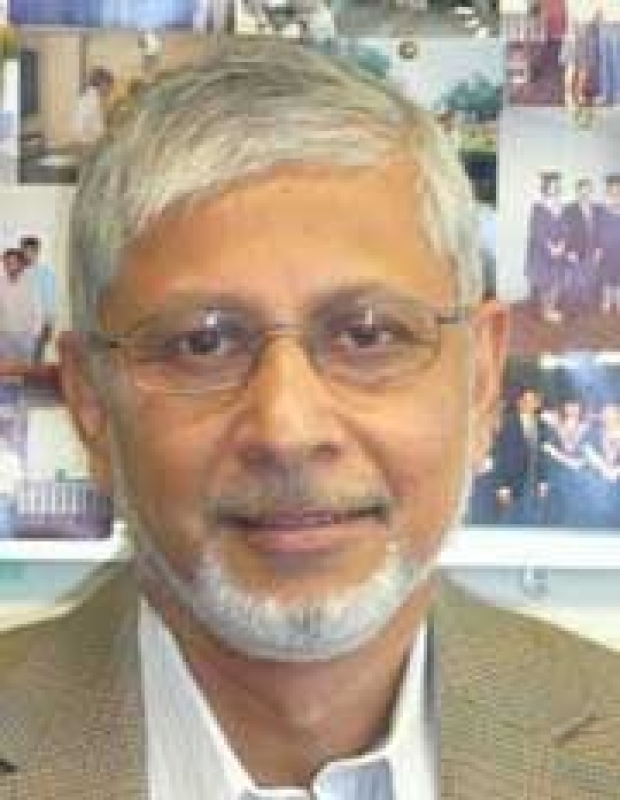
Anis Chowdhury
As many of you know, out of the blue, I was called in to assist the Interim Government, led by Nobel Laureate Professor Muhammad Yunus, in stabilising an economy left in ruins by a fallen autocratic-kleptocratic regime that looted banks, stole public money, and robbed small investors in the capital market to siphon off billions of dollars from the country. I had never served in a government, nor had I ever expected such an opportunity. However, my UN experience and understanding of political economy have proven useful.
Reflecting on the year that has just passed, I trust you have been well, as we wished each other good health and strong spirits at the start of 2025. Unfortunately, despite our earnest hopes, the world was far from peaceful throughout the year.
Hopes and global disorder
Hopes were briefly kindled for justice for the Palestinians as European powers, including Australia (a European settler colony), were forced to recognise the State of Palestine, and narcissistic Trump pushed for some peace in both Ukraine and Gaza in his desperate bid for a Nobel Peace Prize.
Yet Gaza continues to be bombarded with Israel’s genocidal intent, making a mockery of Trump’s deranged rhetorical claim of achieving “peace in the Middle East for the first time in 3,000 years”. Meanwhile, the illegal occupation of the West Bank, along with settler violence, continues unabated with complete immunity, in blatant violation of international law.
Trump sanctioned the International Criminal Court (ICC) and the International Court of Justice (ICJ) in a desperate attempt to shield Israeli war criminals, including Benjamin Netanyahu, and to justify Israel’s genocide and settler violence. He further upended the rules-based global order by imposing arbitrary so-called “reciprocal tariffs”.
Bangladesh
As for post-fascist Hasina Bangladesh, 2025 began with high expectations. For me personally, the year has been extraordinary.
Today, I am pleased to say that we have been able to avert a full-blown crisis. Heartfelt thanks go to our “remittance fighters”, who wholeheartedly trusted the Interim Government’s reform initiatives. Expatriate Bangladeshis sent a record $30.04 billion in remittances in the 2024–25 fiscal year—the highest ever received in a single fiscal year in the country’s history. Foreign exchange reserves surged to $33 billion, hitting a three-year high, as December remittances crossed $3 billion.
A detailed report card by Finance Adviser Dr Salehuddin and myself was published on 18 August 2025.
Of course, not everything has been rosy. The much-anticipated systemic transition remains fraught with uncertainty. I see systemic transition as the complete transformation of a caterpillar inside a cocoon. We still do not know whether the “caterpillar in the cocoon” will emerge as a butterfly or a moth. People are genuinely worried, as past opportunities for systemic transition were wasted.
I personally encountered roadblocks at every turn. Bureaucratic inertia and resistance repeatedly frustrated my efforts at genuine reform. It has been a real-life experience of the classic British political satire Yes, Minister. Like Sir Humphrey Appleby, bureaucrats often display extraordinary outward humility, only to politely defy reform by citing rules of business. Bureaucratic resistance remains the main stumbling block to coordination, coherence, and integration in policymaking and implementation, causing wasteful duplication, inefficiency, and ineffectiveness.
Nevertheless, some progress has been made. One notable achievement is the agreement to expand the voluntary Bangladesh National Cadet Corps programme to cover all youths aged 18 within the next 10–12 years, enabling the country to build a disciplined workforce ready to respond to national emergencies. This initiative is imperative for realising the demographic dividend, and we hope to roll it out from July 2026 to coincide with the July Revolution anniversary.
Despite frustrations and uncertainties, I remain hopeful as I see a seismic shift in the country’s political dynamics. This coincides with a demographic shift, with youths aged 15–30 representing nearly 30 percent of the population. They speak a different political language—demanding justice, inclusion, self-respect, and dignity—and they are fiercely nationalist.
The recently martyred Hadi embodies this generation. The establishment, feeling threatened, attempted to silence the youth by assassinating Hadi, but failed. Instead of extinguishing the flame, they turned everyone into a Hadi—standing firm in their commitment to building a just nation where citizens can live with dignity, free from fear, subjugation, and oppression. Hadi re-centred the national conscience on Insaf—justice, dignity, and fairness—not as slogans, but as non-negotiable ethical foundations of the state and society.
In an era of moral drift, Hadi reminded the nation that no political order can endure without justice at its core. He ignited a generation with civic courage and moral responsibility. Free from fear, patronage, or transactional politics, young people found in Hadi a new model of leadership—ethical, principled, and accountable. In doing so, he reshaped Bangladesh’s political future and challenged entrenched legacy power structures in favour of people-centric, principled governance. His life poses an enduring question to all who seek power: will you serve justice, or merely rule?
I conclude this year-end message with a personal tribute to Khaleda Zia, who recently passed away after a long illness—an illness exacerbated by years of vindictive persecution, false convictions, and imprisonment in substandard conditions. Like her husband, Shaheed President Zia, she was thrust into the whirlpool of history. Neither sought power, but when responsibility fell upon them, they served the nation wholeheartedly and selflessly, earning the status of true statespersons in the hearts and minds of the people.
Perhaps Khaleda Zia’s most enduring legacy lies in her extraordinary restraint and dignified composure under prolonged adversity. Her grace under pressure offers a powerful lesson for today’s often abrasive and confrontational political culture.