

- UNESCO Grants ‘Enhanced Protection’ to Mideast Sites |
- Solar Irrigation Cuts Diesel Use for Bangladesh Farmers |
- Trump claims Iran won’t close Hormuz strait again |
- Trump says Israel ‘prohibited’ from bombing Lebanon |
- Iran, US say Strait of Hormuz is fully open to commercial vessels |
Iran War Forces Gulf States Into Harsh Reckoning
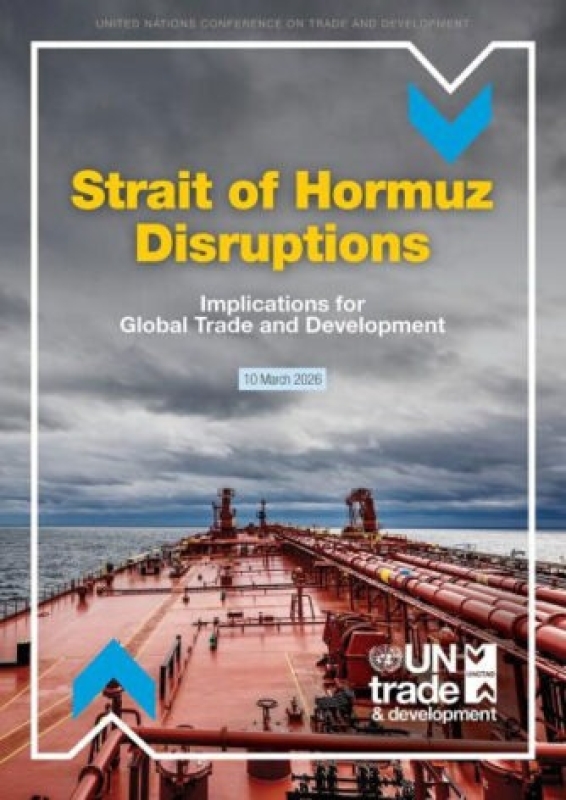
The Strait of Hormuz is one of the world’s most critical maritime chokepoints, carrying around a quarter of global seaborne oil trade and significant volumes of liquefied natural gas and fertilizers.
Trump’s war on Iran has left the Gulf deeply shaken, with US bases turning into targets, economies taking a hit, and the long-held “oasis” narrative in tatters. Gulf rulers are now facing a harsh reckoning over their dependence on Washington and the uncertain search for a new, fragile security order.
As Trump assembled major US naval and air assets in the eastern Mediterranean and the Gulf, Saudi Arabia, the UAE, Qatar and others quietly urged Washington to avoid a full-scale assault on Iran, fearing direct blowback on their territory and energy infrastructure.
Nevertheless, the joint US-Israeli air campaign began on February 28, 2026, without a clearly defined or publicly articulated political endgame beyond “crippling” Iran’s capabilities. This disconnect between military escalation and strategic purpose now lies at the heart of Gulf leaders’ anger and sense of betrayal towards Washington.
Trump’s strategic miscalculation
Trump’s decision to launch joint US-Israeli strikes on Iran has produced far greater strategic costs than his administration appears to have anticipated, from energy shocks and disrupted shipping to deeper regional fragmentation and rising anti-American sentiment.
Even if Iranian capabilities are significantly degraded, the war has exposed vulnerabilities in US power projection, unsettled allies and encouraged greater Russian and Chinese diplomatic activism in the Gulf. The long-term price for Washington will be measured less by battlefield metrics than by diminished trust and leverage among its traditional Arab partners.
US bases turned into liabilities
From the Gulf’s perspective, US bases in Qatar, Bahrain, Kuwait and the UAE were meant to deter Iran and guarantee regime security. Instead, they became priority targets once the war began.
Iran explicitly framed its strikes on these facilities as retaliation against Washington. But because many of them are located near densely populated and economically vital areas, surrounding civilian infrastructure also suffered severe damage.
This has reinforced a growing view in Gulf capitals that foreign military bases may attract attacks without necessarily delivering the reliable protection they were assumed to provide for decades.
A nightmare realised
Gulf leaders had long warned that a war with Iran would devastate their security and economies, and that nightmare has now materialised as Iranian missiles and drones struck oil facilities, ports, power plants and cities across the region.
They blame Washington for launching the campaign and Israel for pressing to “neutralise” Iran regardless of the collateral damage in neighbouring Arab states.
Across Gulf capitals, the prevailing feeling is that their caution was ignored while they have borne a disproportionate share of the cost through physical destruction, economic setbacks, disrupted exports and rising domestic anxiety.
Shattered oasis narrative
The image of Gulf hubs such as Dubai, Doha and Riyadh as insulated “oases” open to business, tourism and investment has been badly damaged by missile alerts, attacks on ports and airports, and the closure of key sea lanes.
Restoring confidence will require visible reconstruction, stronger civil defence, improved air and missile defences, and credible diplomacy aimed at reducing the risk of another sudden war.
Investors and tourists will want proof that the region can manage tensions with Iran, not just host high-profile events and mega-projects.
Trump’s misreading of Iranian escalation
Trump publicly argued that overwhelming force would quickly coerce Iran and pave the way for regime change while keeping the fighting “over there”. Yet he appears to have underestimated both the scale of Iranian retaliation against neighbouring Gulf states and the consequences of a prolonged closure of the Strait of Hormuz.
The IRGC’s effective shutdown of the strait, including attacks and threats against commercial shipping, has triggered global energy shocks and exposed the fragility of Washington’s planning assumptions.
For Gulf leaders, this has underscored how inadequate US war planning was in accounting for second- and third-order consequences.
Calculated decision not to retaliate
Despite suffering heavy damage, Gulf rulers have so far avoided direct retaliation against Iran, calculating that further escalation would expose their cities and infrastructure to even more punishing attacks.
Publicly, they have stressed restraint and international law. Privately, however, officials acknowledge a more enduring reality: they must continue living alongside a powerful and geographically close Iran long after this US-led campaign ends.
By holding back, they hope to preserve room for post-war de-escalation and avoid being drawn into a permanent state of open conflict.
Recasting security ties with Washington
Given their limited strategic alternatives, Gulf monarchies are unlikely to sever ties with Washington. But they are expected to seek more conditional and transactional security arrangements.
They are pressing for clearer US commitments to defend their territory, better integration of regional missile defence systems and greater influence over decisions that could provoke Iranian retaliation.
At the same time, they are likely to hedge by deepening ties with China, Russia, Europe and Asian energy importers, thereby reducing their exclusive reliance on the US while still keeping the American security umbrella in place.
Options to prevent another conflagration
To avoid a repeat of the current crisis, Gulf states are also exploring limited de-escalation channels with Tehran, tighter regional crisis hotlines and renewed maritime security arrangements that include non-Western actors such as China and India.
They may also push for new rules of engagement around energy infrastructure and shipping lanes, seeking informal understandings that would keep them off-limits even during periods of crisis.
Domestically, they are reassessing missile defence systems, hardening critical facilities and considering more diversified export routes that reduce dependence on Hormuz.
None of these options offers full reassurance, but together they may provide at least some reduction in future risk.
Prospects for normalisation with Iran
Speculation about full normalisation, including the possibility of a non-belligerency pact between Iran and Gulf states, builds on pre-war trends of cautious dialogue and economic engagement.
Whether such a shift is genuinely possible will depend on the outcome of the war, Iran’s internal politics and how Gulf states assess the threat from Tehran.
If Iran’s regime survives but remains hostile, Gulf states are likely to revert to hedging, combining deterrence, limited engagement and outreach to outside powers.
A more pragmatic leadership in Tehran, however, could make structured security arrangements and phased confidence-building measures more realistic over time.
No return to the old order
The Gulf states are unlikely to return to the pre-war status quo. Instead, they are expected to pursue a more diversified security architecture, combining a thinner US shield with expanded ties to China, Russia and Asian importers.
That shift will gradually reduce Washington’s centrality in Gulf security, complicating both US force posture and Israel’s assumption of automatic Arab backing against Iran.
For Israel, a more cautious and risk-averse Gulf may limit overt strategic alignment. For the United States, lingering mistrust may make coalition-building during future crises significantly more difficult.
Trump’s Iran adventure is not merely an isolated blunder. It is the latest, and perhaps most explosive, expression of his assault on an already fragile global order.
By discarding restraint, sidelining allies and weaponising American power for short-term political gain, he has accelerated the erosion of US credibility, weakened Western alliances and opened new strategic space for Russia and China.
The Gulf states are simply the latest casualties of that disorder, with their cities struck, economies shaken and long-standing security assumptions shattered.
Whatever emerges from this war, it will not be a restored status quo, but a more fragmented and volatile Middle East in which Israel and the United States operate with a far smaller margin for error and a much narrower circle of willing and trusting partners.