

- PM Issues Solar Plan to Tackle Energy Crisis |
- Passenger ferry fire in Indonesia leaves 5 dead, dozens missing |
- Sheikh Hasina To Make First Public Appearance |
- Dhaka's Air Quality Remains Moderate |
Fossil fuel-based mega project has negative impact on livelihoods
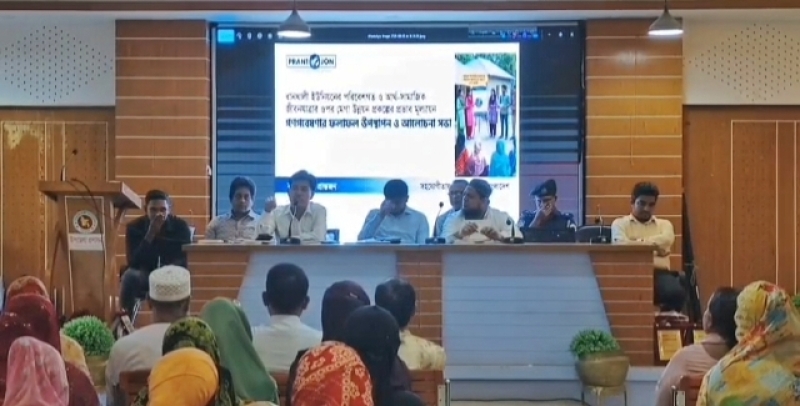
Results of a survey on local people of Kalapara were made public on Monday 03 August 2026
Patuakhali: The construction of a fossil fuel-based mega project in Kalapara, Patuakhali has had a major negative impact on the livelihoods of ordinary people. Such information has come out after a 2-year public survey of local people organized by the non-governmental organization Prantjon. The results of this public survey were released at the hall room of the Kalapara Upazila Parishad at 11 am on Tuesday.
Kalapara Upazila Executive Officer Md. Arifuzzaman, Action Aid Assistant Program Officer Marzia Jahan, Prantjon Field Coordinator Saifullah Mahmud, various administration officials and local residents of Dhankhali union were present at the time.
The study results show that after the construction of several unplanned fossil fuel-based mega projects (thermal power plants) in Dhankhali, there was an unprecedented change in the lives of local people. In this context, two years ago, a mass survey was conducted in the area with the assistance of Arifur Rahman, Assistant Professor of the Department of Environment and Science of Patuakhali University of Science and Technology, at the initiative of 'Prantjon'. The study revealed various negative aspects including deterioration in the financial well-being of local residents, increasing social crisis, extinction of traditional professions, environmental disaster, shortage of drinking water, lack of clean air, loss of biodiversity and ecosystem, increase in soil salinity, disruption in agricultural production, public health crisis, spread of multidimensional diseases, gender-based adverse effects on women, and damage to the fisheries and livestock sectors.
The study called for the implementation of a total of five recommendations, including stopping the spread of toxic coal waste and fly ash, ensuring the provision of renewable energy, including free solar home systems and biogas plants.
Later, crests were awarded to those who participated in the public survey. - Gofran Palash