

- AI Moves Closer To Decoding Human Thoughts |
- UNESCO Calls Iran School Strike Grave Violation |
- Oil Jumps, Asian Stocks Slide On Gulf Tensions |
- Death toll from central Israel strike rises to 5 |
- DSE sinks 138 points on broad sell-off; CSE also tumbles |
Oil Jumps, Asian Stocks Slide On Gulf Tensions
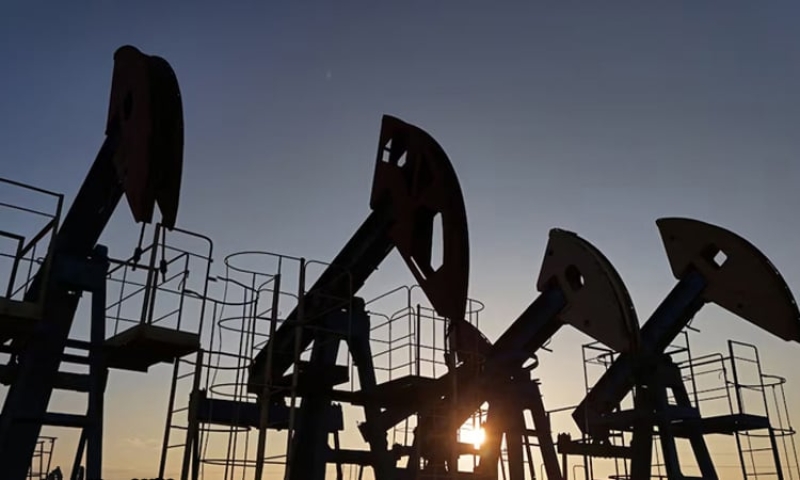
Oil prices surged and Asian stock markets retreated on Monday as escalating conflict involving the United States, Israel and Iran rattled global investors and threatened energy supplies through the strategic Strait of Hormuz.
In early Asian trading, Brent crude spiked to above $80 per barrel, jumping sharply from Friday’s close of $72.87, before easing to just under $79. The benchmark had already climbed last week amid mounting tensions ahead of the strikes that reportedly killed Iran’s supreme leader Ali Khamenei.
Equity markets reacted swiftly. Japan’s Nikkei index fell 2.2 percent in early trade, while Sydney slipped 0.5 percent as investors moved toward safer assets. Gold, often seen as a hedge in times of crisis, rose about two percent.
The flare-up follows coordinated US and Israeli strikes on Iranian targets, prompting retaliatory missile and drone attacks by Tehran. The UAE foreign ministry said four people were killed and dozens wounded in the Gulf region.
Although Iran has not formally declared the closure of the Strait of Hormuz — a key passage for roughly 20 percent of global seaborne oil — its Revolutionary Guards warned vessels against using the route. At least two ships were reportedly struck on Sunday, one off Oman and another near the UAE. Iranian state television said an oil tanker attempting to pass through the strait was hit and sinking.
Major shipping companies have already suspended transit through the waterway, citing security concerns. Analysts warn that even without an official blockade, soaring insurance costs and operational risks could severely disrupt flows.
Energy market specialists estimate that a prolonged closure could remove between 8 million and 10 million barrels per day from global supply — a shock that strategic reserves may struggle to offset. Some analysts say crude could climb toward $90 a barrel, with the risk of breaching $100 if the standoff drags on.
Higher oil and gas prices would likely fuel inflation worldwide. Qatar, a leading exporter of liquefied natural gas, is also exposed to disruptions, raising concerns over rising energy bills and production costs.
Economists caution that sustained energy price spikes could dent global growth, pushing up fuel and transport costs while weighing on sectors such as aviation, shipping and tourism. Defence-related stocks may see gains, but broader markets are expected to remain under pressure if instability persists.