

- Philip Sangma arrested for aiding Hadi murder suspects escape |
- Govt Issues Notice on Visa Extension for Expatriates |
- Khamenei Warns US, Israel in First Speech as Leader |
- Protests, Walkout Mark President’s Address in Parliament |
- UNSC fails to adopt resolution for halting Middle East crisis |
UN Warns $1 Billion Daily Cost of Middle East War
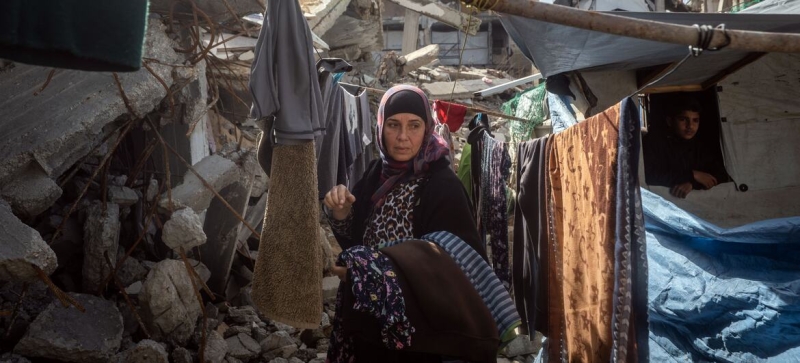
People living in Gaza have received humanitarian aid from the UN throughout the conflict with Israel.
The UN’s top humanitarian official on Wednesday condemned the “$1 billion-a-day” cost of the war in the Middle East, warning that the conflict is worsening global humanitarian crises while aid funding continues to fall dangerously short.
“We’re seeing the consequences spread faster than we can respond,” said Tom Fletcher, the UN’s emergency relief chief, as violence spreads across borders, triggering mass displacement and economic shocks.
Speaking to reporters in Geneva, the senior humanitarian official described the situation as “a moment of grave peril”, warning that without urgent support millions of lives could be at risk.
Over $14 billion still needed
A $23 billion humanitarian appeal launched last December to support 87 million of the world’s most vulnerable people remains about two-thirds underfunded, according to the United Nations.
Although the total number of people in need globally is far higher, Fletcher said the appeal focuses on those in the most critical conditions.
“We still need more than $14 billion to deliver this plan,” he said. “This comes at a time when conflict in the Middle East is costing $1 billion a day. Even a fraction of that amount could save millions of lives.”
He added that humanitarian crises in Gaza Strip and Sudan remain among the most urgent priorities for aid funding.
Concerns over Strait of Hormuz
Fletcher also raised concerns about the impact of the closure of the Strait of Hormuz, a key global shipping route responsible for about 20 percent of the world’s oil supply.
The disruption, he warned, could push up global prices for food, energy and fertiliser.
“I’m worried that further escalation could damage other supply routes,” he said, noting that such disruptions directly affect humanitarian supply chains, including aid deliveries to vulnerable communities in sub-Saharan Africa.
Rising risks for aid workers
Fletcher stressed that protecting civilians and civilian infrastructure must remain a top priority for the international community.
He also called on UN member states to help safeguard humanitarian operations following the recent deaths of aid workers in Sudan, Lebanon and the Democratic Republic of the Congo.
“Aid workers are increasingly under attack,” he said, adding that new technologies are being used in increasingly dangerous ways in modern conflicts.
According to UN data, around 90 percent of those killed in drone attacks last year were civilians, including many humanitarian workers.
“This is a difficult moment for humanitarian action,” Fletcher said. “We are overstretched, under sustained attack and under-resourced, but we will not retreat from our principles or our mission.”