
- Zaima Rahman calls for common platform to build inclusive BD |
- Uprising’s expectations failed to be met in last 18 months: TIB |
- World Bank to Provide $150.75m for Bangladesh RAISE Project |
- Press Secretary Alleges Indian Media, AL Spread Disinformation |
- Hasina Gets 10 Years in Purbachal Plot Corruption Cases |
WHO Warns Funding Cuts Put Global Health Systems at Risk
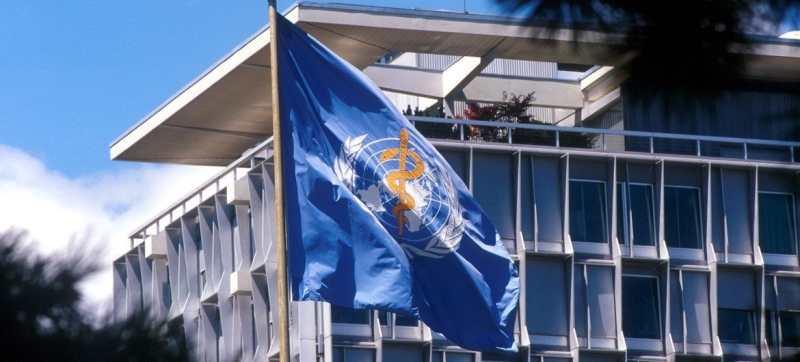
The flag of the UN World Health Organization (WHO) flies at its headquarters in Geneva, Switzerland.
The UN World Health Organization (WHO) warned on Monday that cuts to international aid and persistent funding gaps are undermining global health systems.
The warning comes at a time when risks from pandemics, drug-resistant infections and fragile health services are on the rise, said WHO Director-General Tedros Adhanom Ghebreyesus.
Addressing the WHO Executive Board in Geneva, Tedros stressed the impact of workforce reductions last year due to “significant cuts to our funding,” which have had serious consequences.
“Sudden and severe cuts to bilateral aid have also caused major disruptions to health systems and services in many countries,” he told health ministers and diplomats, describing 2025 as “one of the most difficult years” in the agency’s history.
While WHO has managed to keep its lifesaving work going, Tedros said the funding crisis has exposed deeper vulnerabilities in global health governance, particularly in low- and middle-income countries struggling to maintain essential services.
What’s on the agenda?
The WHO Executive Board has a broad agenda covering pandemic preparedness, immunisation, antimicrobial resistance, mental health and health emergencies in conflict zones.
Key issue: Members are also reviewing budget pressures, governance reform and formal withdrawal notifications from the United States and Argentina.
Why it matters: The discussions come as global health risks rise, even as international cooperation and predictable financing are under strain.
What’s next: Outcomes from this week’s meeting will be forwarded to the World Health Assembly in May, shaping WHO’s direction amid mounting geopolitical and public health pressures.
High stakes
The WHO funding crisis is part of a broader retreat from international health financing, forcing countries to make difficult choices, Tedros added.
“In response to funding cuts, WHO is supporting many countries to sustain essential health services and transition away from aid dependency towards self-reliance,” he said, pointing to domestic resource mobilisation — including higher health taxes on tobacco, alcohol and sugary drinks — as a key strategy.
Yet the scale of unmet needs remains vast.
According to WHO, 4.6 billion people still lack access to essential health services, while 2.1 billion face financial hardship due to health costs. At the same time, the world faces a projected shortage of 11 million health workers by 2030, more than half of them nurses.
Deeper crisis averted
Tedros said WHO has avoided a more severe financial shock only because Member States agreed to increase mandatory assessed contributions, reducing the agency’s reliance on voluntary, earmarked funding.
“If you had not approved the increase in assessed contributions, we would have been in a far worse situation than we are,” he told the Board.
Thanks to these reforms, WHO has mobilised about 85 per cent of the resources needed for its core budget for 2026–27. However, Tedros cautioned that the remaining gap will be “hard to mobilise,” particularly in a difficult global funding environment.
“Although 85 per cent sounds good — and it is — the environment is very difficult,” he said, warning of “pockets of poverty” in underfunded priority areas such as emergency preparedness, antimicrobial resistance and climate resilience.
Gains have been made
Despite the financial strain, notable gains have been made in recent months.
Tedros highlighted the adoption last year of the Pandemic Agreement and amended International Health Regulations (IHR), aimed at strengthening preparedness in the wake of COVID-19.
WHO has also expanded disease surveillance, rolled out artificial intelligence-powered epidemic intelligence systems, and supported countries in responding to hundreds of health emergencies in 2025 — many of which never reached public attention because outbreaks were contained early.
However, one in six bacterial infections globally are now resistant to antibiotics, Tedros said, describing the trend as worrying and accelerating in some regions.
‘Solidarity is the best immunity’
“The pandemic taught all of us many lessons — especially that global threats demand a global response,” Tedros said. “Solidarity is the best immunity.”
He warned that without predictable and sufficient financing, the world risks being less prepared — not more — for the next health emergency.
“This is your WHO,” Tedros told the Board. “Its strength is your unity. Its future is your choice.”