

- Govt Proposes 17-Member Panel for Constitution Reform |
- Energy Security Lies in in Solar Power |
- Breaking The Iron Grips of Oligarchy in Bangladesh |
- PM Unveils 12-Point Plan for Clean, Green Dhaka |
- Fuel shortage, rains hit Boro harvest in Habiganj haors |
Indigenous, Feminist Groups Push Just Energy Transition
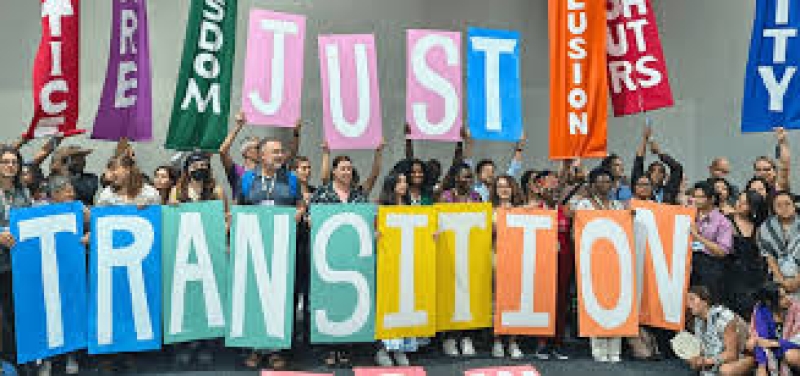
Photo collected
Indigenous Peoples and feminist movements have called for a rights-based and socially just global energy transition at the First International Conference on the Just Transition Away from Fossil Fuels, held in Santa Marta, Colombia.
As policymakers, experts, and civil society leaders gather to shape global climate pathways, Indigenous representatives issued a strong joint statement demanding that any transition away from fossil fuels must be grounded in self-determination, territorial rights, and Free, Prior and Informed Consent (FPIC). They emphasized that they are not stakeholders, but rights-holders and custodians of lands, waters, and biodiversity.
They warned that climate action efforts that ignore Indigenous rights risk repeating historical patterns of dispossession and environmental harm under new labels. According to them, a just transition cannot be achieved without legally recognizing and protecting Indigenous territories and governance systems.
Feminist organizations, including Shine Collab, have echoed these concerns while advancing an eco-feminist approach to climate justice. They argue that the global energy transition must address not only carbon emissions, but also deep-rooted systems of patriarchy, colonialism, and extractivism that disproportionately affect women and marginalized communities.
Dr. Mela Chiponda of Shine Collab stressed that justice cannot exist in a transition that continues patterns of exclusion. She said communities most affected by climate and resource extraction must be at the center of decision-making, not on the margins.
The conference discussions also highlighted concerns over “green extractivism,” particularly the rapid expansion of mining for critical minerals needed for renewable technologies. Indigenous leaders warned that without safeguards, this shift could replicate the same harms associated with fossil fuel extraction, including land loss, environmental degradation, and cultural disruption.
Feminist advocates added that these impacts often fall more heavily on women, increasing unpaid care burdens, reducing livelihoods, and heightening exposure to violence and insecurity.
Examples from the Global South were also shared, including Zimbabwe’s Bikita district, where rising lithium mining has intensified land and resource pressures. In response, Shine Collab and partners have launched the Hanyanya Solar Project, a community-led initiative that promotes women’s leadership in renewable energy access while strengthening awareness of land rights and local governance.
Leaders at the conference said this kind of community-driven model demonstrates that alternatives already exist. They argued that when women and Indigenous communities lead, energy transitions become more equitable, sustainable, and locally grounded.
Across discussions, there was a shared call for decentralised, community-owned energy systems, stronger recognition of care work in economic policy, and direct climate finance that reaches local communities without heavy intermediaries. Participants also urged the rejection of false solutions such as carbon market mechanisms and other approaches that commodify nature.
The conference co-hosts clarified that the Santa Marta gathering is intended to complement, not replace, formal UN climate negotiations. Its outcomes are expected to inform broader discussions, including the COP30 process and a proposed fossil fuel phaseout roadmap leading to COP31 in 2026.
As talks continue, Indigenous Peoples and feminist movements reiterated a clear message: a just transition must be built on rights, equity, and community leadership, not imposed from the top down.