

- PM Calls for Emission Cuts, Boost Carbon Credits |
- Bangladesh to Build Modern Four-Dimensional Force |
- Govt bans PM's image on official banners, billboards |
- PM asks PGR not to distance him from people on security ground |
- Mbappe Penalty Sends France Into World Cup Last Eight |
Renewables Reshape Energy Security in Four Nations
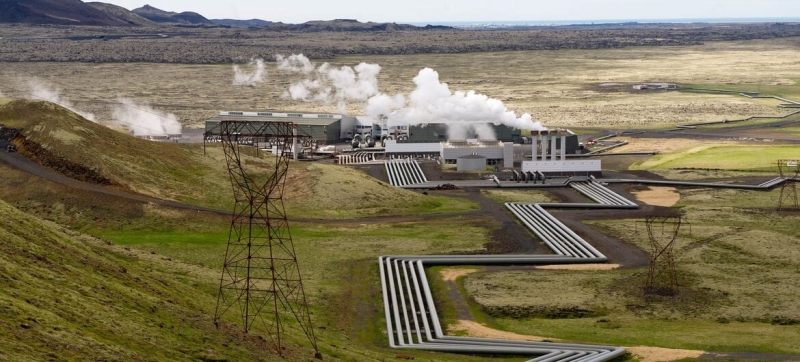
The Hellisheidi geothermal power plant in southwestern Iceland.
Ongoing instability in the Middle East, a key region for global oil and gas production, is pushing many countries to rethink their energy strategies and strengthen energy security through renewable sources.
A significant share of the world’s oil and gas passes through the Strait of Hormuz, a narrow waterway between Iran and Oman. Disruptions in the region have exposed global markets to price volatility, geopolitical shocks, and supply uncertainty.
“The turmoil we are witnessing in the Middle East makes it evident that we are facing a global energy system largely tied to fossil fuels,” said António Guterres. He warned that concentrated supply chains mean every conflict can trigger global economic shocks, especially affecting vulnerable populations.
Renewable energy sources such as solar, wind, and hydropower are increasingly seen as stable, domestic, and cost-effective alternatives. They are rapidly becoming central to modern energy systems, not only for climate goals but also for energy security and economic resilience.
The renewable energy shift
Guterres has previously noted that renewables are already close to matching fossil fuels in installed capacity. Unlike fossil fuels, they are not subject to price spikes or geopolitical restrictions. He described them as the foundation of future energy security and sovereignty.
Norway: Hydropower-driven stability
Norway remains a major oil and gas exporter, but its domestic electricity system is overwhelmingly renewable.
round 90–95% of electricity comes from hydropower
Wind power is expanding
Fossil fuel use in electricity generation is minimal
The country is also advancing electric transport and offshore wind development while gradually reducing fossil fuel dependence at home.
Paraguay: Nearly 100% clean electricity
Paraguay generates almost all of its electricity from hydropower, mainly through large binational dams such as Itaipú.
Nearly 100% hydropower-based electricity
Minimal fossil fuel use in power generation
Surplus energy exported regionally
This has given Paraguay low electricity costs and strong energy independence.
Nepal: Hydropower transforming access
Nepal has rapidly expanded hydropower and now generates nearly all grid electricity from renewable sources.
About 98% of power capacity is renewable
Hydropower dominates electricity generation
Solar and micro-hydro systems are growing
The country is also expanding rural electrification and shifting away from traditional biomass use to reduce household air pollution.
Ethiopia: Expanding renewable access
Ethiopia is emerging as a renewable energy leader in Africa.
Over 98% of electricity capacity is renewable
Large hydropower projects dominate supply
Solar and wind capacity are expanding
Renewables are central to efforts to expand electricity access and reduce dependence on imported fuels.
The broader picture
Despite differing economic and geographic conditions, these countries show a shared trend: renewable energy strengthens energy independence, stabilises costs, and improves public welfare through cleaner and more reliable power systems.
However, experts note that the transition is uneven, with financing and infrastructure challenges still significant in many regions.
As Guterres has emphasised, the global energy transition is accelerating, with renewable power increasingly placing control of energy “in the hands of people and governments.”
The second part of this series will examine how countries with limited natural resources are navigating the shift toward renewable energy security.