

- Telcos Seek Priority Power, Fuel to Avert Outages |
- IFRC, BDRCS 6-Month Lifesaving Response to Measles Cases |
- First cruise ship crosses Strait of Hormuz since war began |
- MDBs stress co-op support global stability amid uncertainty |
- PM opens first Hajj flight, visits Ashkona camp |
IFRC, BDRCS 6-Month Lifesaving Response to Measles Cases
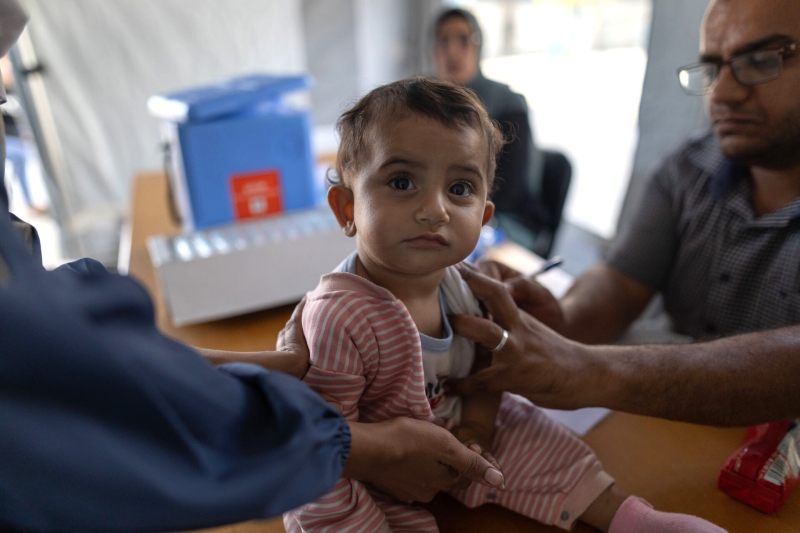
A measles attacked child under care at a hospital. Photo collected.
Dhaka, 19 April 2026: As Bangladesh faces a worrying rise in measles cases across the country, that is putting thousands of children at risk, the International Federation of Red Cross and Red Crescent Societies (IFRC) and the Bangladesh Red Crescent Society (BDRCS) have launched a six‑month emergency response to support government efforts and protect vulnerable families across the country.
Through mobilizing the IFRC’s Disaster Response Emergency Fund (DREF), the response aims to reach up to 600,000 people, with a strong focus on children under five, caregivers, and families struggling with rising healthcare costs and loss of income due to the sharp rise in measles cases across the country.
Working as an auxiliary to public authorities, BDRCS is supporting the Government of Bangladesh, in close coordination with the Directorate General of Health Services (DGHS), to strengthen community‑level response, reduce transmission, and ensure families are not left to cope alone. In Cox’s Bazar, where both guest and host communities face heightened vulnerability, the response will be adapted to high‑density and resource‑constrained settings, strengthening vaccination outreach, infection prevention, community engagement, and early referral in close coordination with government authorities and humanitarian partners.
Key actions under the measles response includes:
• Multi‑purpose cash assistance of BDT 6,000 for 1,950 vulnerable households, helping families cover healthcare costs, transport, and essential needs while caring for sick children.
• Hygiene items and awareness support for 50,000 people to strengthen infection prevention, including support to 10 high‑burden hospitals.
• Deployment of more than 1,000 trained Red Crescent Youth volunteers to support vaccination campaigns and community outreach at over 250 vaccination points nationwide.
• Provision of infection prevention and control supplies and support to health facilities in hotspot areas.
• Mental Health and Psychosocial Support (MHPSS) for caregivers, volunteers and frontline responders affected by stress, fear and burnout.
• Strengthened community‑based surveillance and risk communication to promote early care‑seeking, counter misinformation, and increase vaccine acceptance.
Dr. Kabir M. Ashraf Alam ndc, Secretary General of the BDRCS, said, “This rise in measles cases is a serious nationwide health emergency, and children are paying the highest price. As Bangladesh’s largest humanitarian organization, BDRCS is already working in communities to raise awareness and support for families. With the emergency support from IFRC, we can now expand our reach, providing cash assistance, supporting health facilities, and standing beside parents and caregivers when they need help the most.”
Alberto Bocanegra, Head of Delegation for IFRC in Bangladesh, added, “Behind every measles case is a child and a family facing fear, uncertainty and financial strain. BDRCS volunteers on the ground every day, sharing life‑saving information and helping communities access health services. Through this emergency fund, IFRC is supporting Bangladesh at a critical moment, strengthening community outreach, easing pressure on hospitals, and helping BDRCS deliver timely, life‑saving assistance. We remain committed to scaling up support as needs evolve.”
Since 15 March 2026, Bangladesh has seen a rapid increase in measles transmission among children nationwide. As of 18 April, health authorities reported over 22,400 suspected cases, 3,278 confirmed cases, and confirmed 35 deaths, underscoring the urgent need for coordinated action to close immunity gaps and protect children.
The IFRC‑BDRCS response complements government‑led vaccination campaigns by focusing on community engagement, protection, psychosocial support, and assistance to vulnerable families, ensuring that health services are accessible, trusted and inclusive.