

- Tragic: 2 dead as ambulance carrying body collides with Pabna bus |
- France's National Assembly finally approves assisted-dying bill |
- Dhaka's air remains unhealthy for sensitive groups |
- Argentina Rally Past England to Reach World Cup Final |
- Spain Beat France to Reach World Cup Final |
Titumir Seeks Stronger UN Support for Women, Girls
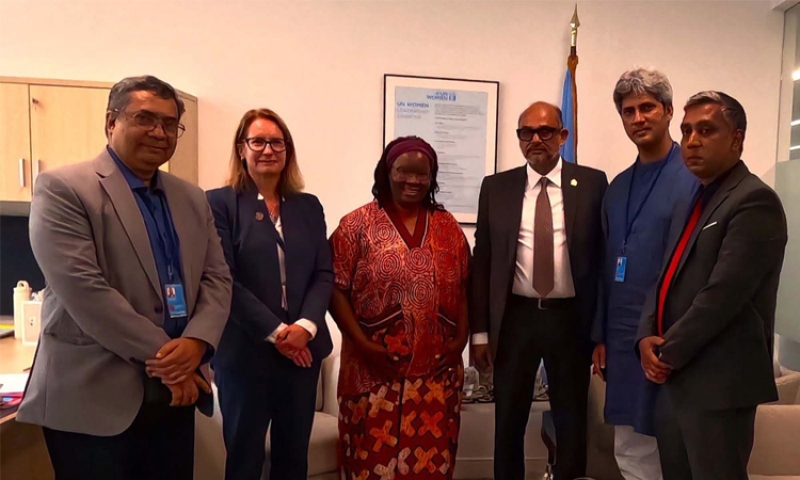
Prime Minister's Adviser on Finance and Planning Dr. Rashed Al Mahmud Titumir has called for stronger cooperation from UN Women to protect and empower women and girls in Bangladesh amid mounting global challenges, including conflicts, economic uncertainty, energy insecurity and supply chain disruptions.
During a meeting on Wednesday with UN Assistant Secretary-General and UN Women Deputy Executive Director Nyaradzayi Gumbonzvanda, Titumir said Bangladesh continues to host more than 1.2 million Rohingyas on humanitarian grounds, placing significant economic, environmental and security pressures on the country.
He urged UN Women to play a greater role in supporting the safe, voluntary and sustainable repatriation of the Rohingyas to Myanmar and ensuring that women and girls can return with dignity, enjoy their rights and access sustainable livelihood opportunities.
According to an official statement issued on Thursday, the adviser said the combined impact of global conflicts, economic instability and tighter lending conditions imposed by international financial institutions has significantly constrained Bangladesh's fiscal space and limited access to grants and concessional financing.
He stressed the need for expanded UN Women support to strengthen the protection and empowerment of women and girls while reinforcing inclusive social protection programmes.
Highlighting the government's women-focused development agenda under Prime Minister Tarique Rahman, Titumir outlined several initiatives, including the Family Card issued in the name of the female head of household, free education for girls up to the postgraduate level, expanded reproductive and mental health services, and plans to establish a universal life-cycle-based social protection system.
Gumbonzvanda praised Bangladesh's progress in advancing gender equality and described the Family Card initiative as an innovative women-centred social protection programme.
Recalling her visit to Cox's Bazar, she also commended Bangladesh's humanitarian response to the Rohingya crisis and reaffirmed UN Women's continued partnership in promoting gender equality, women's economic empowerment, social protection, the Women, Peace and Security agenda, and support for Rohingya refugees.