

- Tropical Forest Loss Slows in 2025, Still Alarming |
- Interbank Dollar rate remains stable at Tk 122.75 |
- Killing of two BD students in US: Suspect held without bond |
- Dhaka’s air quality recorded ‘moderate’ Wednesday morning |
- UK freezes assets worth over £250mn linked to BD individuals: HC |
Open Drug Trade Spreads Across Dhaka Slum Areas
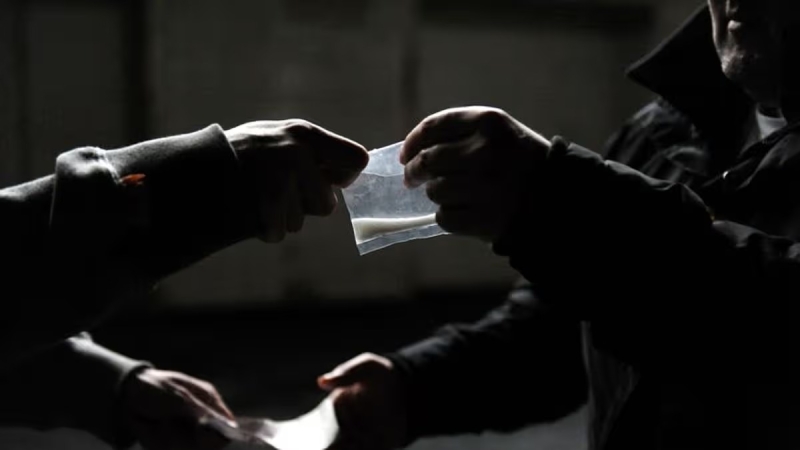
Drug trading is unfolding almost in the open across several slums and densely populated neighborhoods in Dhaka, raising serious concerns about public safety. Areas such as Mugda, Moghbazar, Malibagh, Karwan Bazar, and the Korail slum have become hotspots where illicit substances are sold and consumed with little concealment.
Residents say the problem is no longer hidden. Around key locations like the Mohakhali and Moghbazar flyovers, drug dealers have established visible bases, operating with increasing confidence.
Field observations show that as evening sets in, drug use becomes more pronounced. Under the flyover near Abul Hotel in Malibagh, makeshift enclosures built with blankets and polythene appear on the roadside, where users gather openly. Nearby alleys behind the hotel lead to Madhubagh, where a steady flow of buyers and sellers keeps a local drug market active. In some spots, drugs are even lowered by rope from tin-shed structures attached to residential buildings.
Similar scenes are reported in slums near Hatirjheel and Madhubagh. Small tea stalls and rickshaw garages have reportedly turned into hubs for drug distribution. A local teacher described the situation as alarmingly normalized, saying drug sales in certain alleys now resemble routine market activity. Substances such as heroin, cannabis, and yaba are widely available, while addiction is pushing some youths into mugging and extortion, making daily movement unsafe for residents.
The railway-side slums in Karwan Bazar remain a known transit point, where traffickers take advantage of train noise and crowded surroundings to move heroin and phensedyl. Meanwhile, a more dangerous trend is emerging in Mugda and Malibagh, where crystal meth, locally known as “ice,” is gaining popularity among young users.
In East Merul Badda, a narrow stretch locally dubbed “Guti Lane” is suspected to host drug production activities. Nearby open spaces are reportedly used for trading throughout the day, alongside operations linked to theft and snatching.
Korail slum stands out for its organized networks. Along the Banani Lake entry point, open sales of yaba and cannabis are visible. Locals allege that powerful groups provide protection to these operations. From here, drugs are distributed to nearby upscale areas including Gulshan, Banani, Badda, and Vatara. In the Bou Bazar section, drug markets regularly emerge in the evenings, accompanied by a growing web of criminal activity.
Experts point to a mix of poverty, lack of education, unemployment, and social insecurity as key drivers pushing young people into the drug trade. Criminal groups are taking advantage of these vulnerabilities to expand their reach, contributing to a rise in crime and long-term social damage.
A criminology academic at the University of Dhaka warned that a culture of impunity is fueling the problem, noting that without accountability, criminal activity tends to spread rapidly across communities.
Law enforcement officials acknowledge the growing challenge. A senior officer from Dhaka Metropolitan Police said operations against drugs, illegal arms, and related crimes are ongoing, with plans to intensify efforts in the affected areas.