
- President, PM offer Eid prayers at National Eidgah |
- President hosts Eid reception for diplomats at Bangabhaban |
- State Minister, DNCC Admin inspect waste removal activities |
- Dhaka Cattle Prices Drop Sharply Before Eid-ul-Azha |
- Fresh rain spell triggers waterlogging in Dhaka, hampers Eid prep |
Courage Is Contagious: Inside A Whistleblower’s Fight To Protect USAID
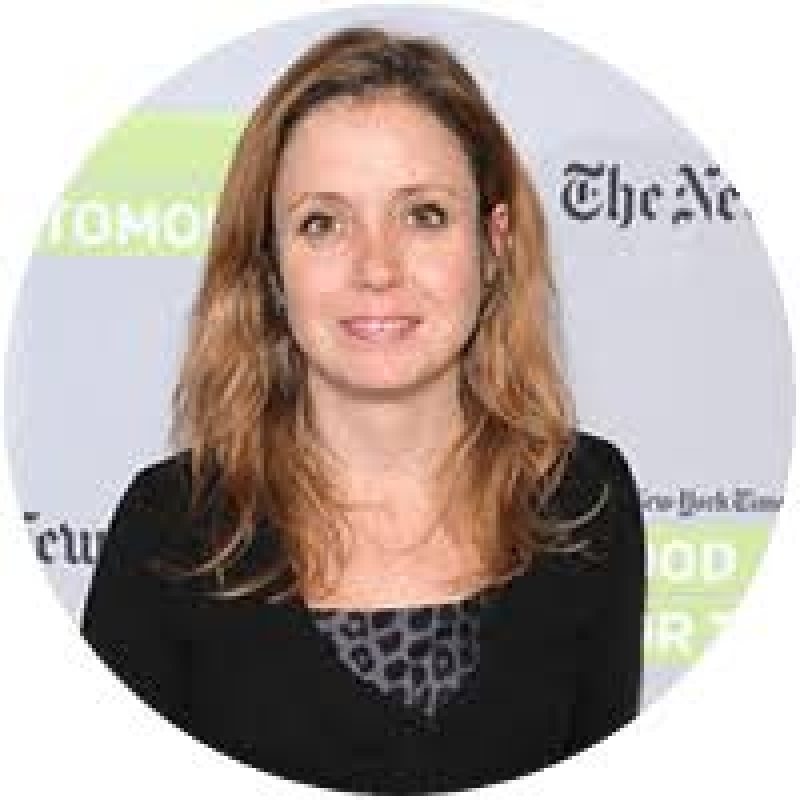
Danielle Nierenberg
Danielle Nierenberg
Nicholas Enrich knew he had to go public.
Enrich was one of the top global health officials at the United States Agency for International Development (USAID), where he’d worked under four Presidential administrations. When the Trump-Vance Administration and Elon Musk’s Department of Government Efficiency began taking steps to dismantle USAID, Enrich knew the results would be devastating.
In March 2025, Enrich released a set of whistleblowing memos exposing the Administration’s actions and the harm they caused. He warns that the destruction of the agency “will no doubt result in preventable death, destabilization, and threats to national security on a massive scale.”
This year, Food Tank has been exploring these far-reaching consequences—and, crucially, exploring how we rebuild and strengthen these life-saving aid programs—in an ongoing monthly podcast series. In your podcast feeds today, we’re featuring my conversation with Enrich, who recently published a book called “Into the Wood Chipper: A Whistleblower's Account of How the Trump Administration Shredded USAID.” You can listen to the episode HERE.
“People have been focusing a lot on the impacts that have already happened, and they’ve been enormous,” he told me. “But it's that next generation that is really what keeps me up at night. We’ve abandoned a generation of children who we had been committed to providing immunizations against the world's deadliest diseases.”
Enrich is right. As I’ve traveled on ground-truthing research trips, I’ve observed the effects of the dismantling of USAID and similar aid programs first-hand. Disease prevention work and other scientific research is slowing down or stalled, food security efforts are facing existential budget shortfalls, and vital steps to support women and girls are threatened.
“I don't think anybody expected that the rug would be pulled out from under humanity in an instant,” Nabeeha Kazi Hutchins, President and CEO of PAI, told me on a previous episode of our USAID podcast series. “This wasn’t just about cuts…This was really a dismantling of systems that advance health, human rights and economic development.”
Ultimately, Enrich told me, it was too late for whistleblowers like him to save USAID—but it’s not too late to protect and even strengthen other institutions against political threats like the ones we’ve seen in recent years. His book ends with a series of recommendations for civil servants and other advocates to speak out against unethical behavior and take actions that can literally save lives.
“You cannot wait for somebody else to take responsibility,” he reminded us. “We all think that there's somebody else who's more senior, or who has seen more, or (that) somebody else is better positioned to be the one to speak out. And I think my story is a good example of the fact that there is nobody else…You need to speak out when you're being asked to do things that you know are not right.”
Food Tank’s USAID podcast series has also featured a conversation with Abby Maxman, President and CEO of Oxfam America, and some of our next conversations will be with food and nutrition economist Patrick Webb and global food policy researcher and professor Caitlin Grady. Throughout the summer and beyond, we’ll look at what the agency’s closure means for public health (HIV/AIDS and malaria), climate resilience on farms, agricultural research and development, and US farmers.
It’s overwhelming to wrap our heads around the full effects of the dismantling of USAID. But if there’s one thing I’ve taken away from my conversations on the Food Talk podcast, it’s this: If one person’s decision-making can have such a destructive impact, imagine the scale of positive change that a global community of citizen eaters can have!
“What does a better world look like? It's about caring for common humanity. And I'm seeing people mobilizing, taking action,” Maxman told me.
Again, you can CLICK HERE to tune in to my full conversation with Nicholas Enrich, and I want to close this note to you with something he said that I found particularly motivating.
We cannot afford to be bystanders—not ever, and especially not in a precarious moment like right now. Not everyone is in a position like Enrich was, to be a whistleblower, and not everyone can put their livelihood on the line. But, in one way or another, everyone can step up and stand up for what’s right.
“Courage is contagious,” Enrich said. “And I hope that people will, as you see other people, speak out. It'll be an additional encouragement to know that sometimes you have to say the right thing.”
(Danielle Nierenberg is the President of Food Tank and can be reached at danielle@foodtank.com)