

- Covered van hits Gazipur police patrol team, killing SI, BNP leader |
- Korean City scrambles to rescue dusky shark after it returns to canal |
- PM inspects Mongla Port, Sundarbans, proposed economic zone |
- Early winter cucumber brings hope of bumper harvest in Sirajganj |
- Saudi coalition intercepts Houthi missile after blasts in Riyadh |
Aging Cumilla Victoria College hostel awaits reconstruction
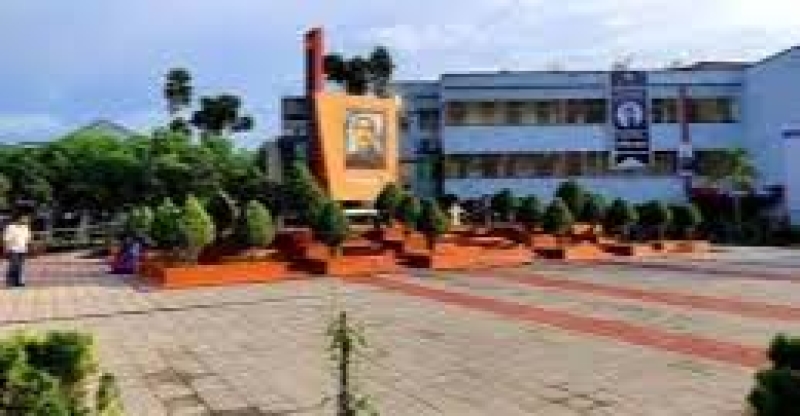
Once known as the New Hostel of Cumilla Victoria Government College, the century-old residential facility near Tomchom Bridge now stands in ruins, its abandoned wings swallowed by thick vegetation, broken walls and the quiet encroachment of drug users and vagrants.
A major portion of the hostel has remained abandoned for more than a decade, leaving hundreds of students without accommodation.
Once home to nearly 450 students, the complex now houses barely 80 in its only surviving building, students said.
With almost 30,000 students enrolled in the 126-year-old institution, many arriving from distant districts say the reconstruction of the new hostel has become urgent to ease the college’s chronic accommodation crisis.
Founded on 24 September 1899 by Rai Bahadur Anand Chandra Roy, Cumilla Victoria Government College originally built several hostels for students: Nazrul Hall, Faizunnesa Hall, Sher-e-Bangla Hall, and the New Hostel—officially known as Suhrawardy Hall—located beside the Tomchom Bridge area.
Although the four hostels together can accommodate around 1,200 male and female students, the New Hostel remains in the worst condition.
Three of its four buildings became unusable after 2000 and were fully shut down by 2013.
A visit to the site reveals a stark contrast between the surrounding urban landscape and the hostel’s decaying structures.
Once arranged around a central pond, the blocks now resemble relics of neglect:
• West block: Collapsed, covered by dense vines and parasitic plants.
• East block: Mostly vanished, with only scattered remains.
• North block: Barely standing, now a hangout spot for drug users; vagrants have set up makeshift latrines nearby. A fading inscription on the wall still reads: PWD 1947.
• South block: A 1990s building, currently housing the remaining 80 students, though its condition is also worsening.
Former residential student Jahangir Alam Tipu, who stayed at the hostel in 1986–87, fondly recalled its vibrant past.
“My home was in Chandpur. Without hostel accommodation, studying would have been very difficult,” he said.
“We used to catch fish from the pond at dawn and cook together. I still miss those days. Seeing the hostel in ruins is heartbreaking. It should be rebuilt,” he added.
Echoing the former resident, current students Arafat Hossain Jihad, Md Rahmat Ullah and Hasan Al Kabir said many learners from distant districts exhaust themselves commuting daily, while others live in poor conditions in messes and lodgings.
Admitting the accommodation crisis, college principal Prof Abul Bashar Bhuiyan said, “We are aware of the accommodation shortage. We have proposed constructing two 10-storey buildings in the New Hostel and Nazrul Hall areas. If approved, they will provide residential facilities for an additional 2,400 students.”
Students now hope the proposal wins swift approval—so the ‘New Hostel’ may finally live up to its name once again, reports UNB.