

- Bangladesh to Introduce New Law to Curb Extortion, IGP Says |
- UN Marks 81 Years of Global Cooperation and Peace |
- Dhaka's air 5th worst in the world this morning |
- Around 7,500 Bangladeshis imprisoned in Saudi Arabia: Shama Obaed |
- Bangladesh Outperforms India in Global Hunger Index 2026 |
Dhaka tops global air pollution index on Friday
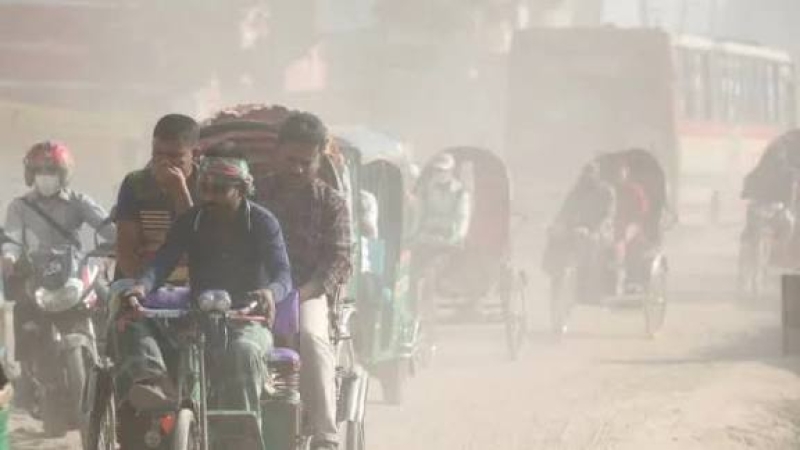
Dhaka ranked first among the world’s most polluted cities on Friday morning, with an Air Quality Index (AQI) of 195 at 9:30am.
The city’s air was classified as ‘unhealthy’, indicating a serious risk to public health, according to the AQI report.
India’s Delhi and Vietnam’s Hanoi ranked second and third, with AQI scores of 192 and 171 respectively.
In contrast, San Francisco in the United States and Oslo in Norway recorded some of the cleanest air, with AQI scores of 6 and 11 respectively.
According to the AQI scale, a reading between 50 and 100 is considered ‘moderate’, meaning air quality is generally acceptable, although sensitive people should limit prolonged outdoor activity.
Levels between 101 and 150 are described as ‘unhealthy for sensitive groups’, while 151 to 200 is ‘unhealthy’. Readings of 201 to 300 are ‘very unhealthy’, and levels above 301 are considered ‘hazardous’, posing severe health risks.
The AQI provides daily information on air quality, indicating how clean or polluted the air is and the possible health effects. In Bangladesh, the AQI is based on five major pollutants: particulate matter (PM10 and PM2.5), nitrogen dioxide (NO₂), carbon monoxide (CO), sulphur dioxide (SO₂), and ozone.
Dhaka has long struggled with air pollution. Air quality usually worsens in winter and improves during the monsoon season.
The World Health Organization (WHO) estimates that air pollution causes around seven million deaths worldwide each year, mainly due to stroke, heart disease, chronic obstructive pulmonary disease, lung cancer, and acute respiratory infections, reports UNB.