

- Protecting health demands no money: Bangladeshi expert |
- EU Deploys 56 Long-Term Observers Across Bangladesh |
- Appeals over nomination papers:18 more regain candidacies back |
- More than 100 dead in torrential rains and floods across southern Africa |
- Islami Andolan to Contest Election Alone in 13th Poll |
EU and Mercosur sign landmark free trade agreement
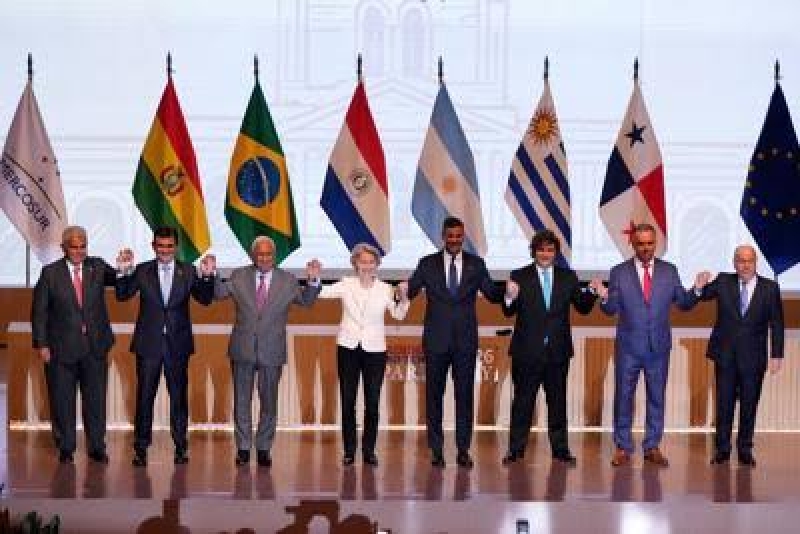
The European Union (EU) and the Mercosur bloc of South American countries formally signed a landmark free trade agreement on Saturday, ending more than 25 years of negotiations and aiming to strengthen commercial ties amid rising global protectionism and trade tensions.
The signing took place in Asuncion, Paraguay, with leaders from Argentina, Brazil, Paraguay, Uruguay, and EU officials attending. Bolivia, Mercosur’s newest member, is not part of the deal but may join in the future, while Venezuela remains suspended.
The agreement will gradually remove over 90% of tariffs on goods such as Argentine beef and German cars, creating one of the world’s largest free trade zones, benefiting more than 700 million consumers.
EU Commission President Ursula von der Leyen called the deal a stand against protectionism, emphasizing fair trade and long-term partnerships. Brazilian President Luiz Inácio Lula da Silva hailed it as a victory for global cooperation, highlighting the commitment of both regions to democracy and multilateralism.
The deal faced delays over European demands for environmental standards, deforestation rules, and protections for farmers. Some European nations, including France, remain cautious, and the agreement still requires ratification by the European Parliament.
The accord has also revitalized Mercosur’s relevance. Argentine President Javier Milei, who previously criticized the bloc, expressed strong support, saying Argentina recognizes that protectionism leads to economic stagnation.
Once ratified, the EU-Mercosur free trade deal will mark a major geopolitical and economic milestone, deepening ties between South America and Europe and signaling a commitment to open trade in a protectionist global environment, reports UNB.