

- Dhaka Ranks 6th Among World's Most Polluted Cities on Thursday |
- World Leaders See Tarique as Transformative Leader: Adviser |
- Guterres Urges Climate Justice Pact at COP31 |
- Global Climate Action Stalls for Five Years: Report |
- COP31 Update: Developing Nations Demand Action, Reject |
Trump Plans to Sell Federal Public Lands: Report
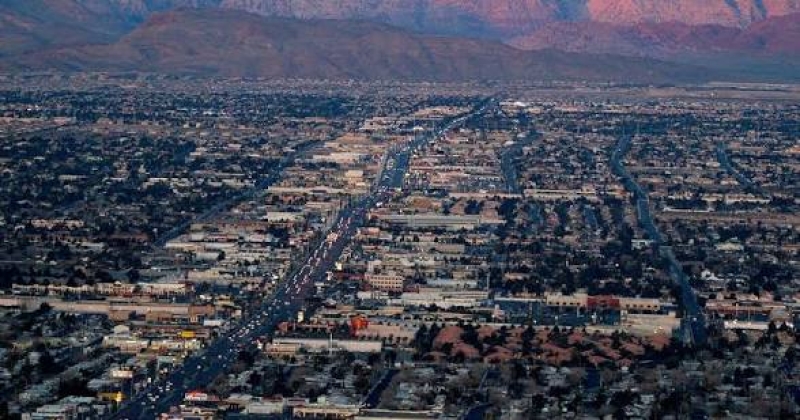
US President Donald Trump's administration plans to sell public lands to state, tribal and local governments as part of an effort to reduce federal landholdings, according to a new strategic plan unveiled by the Interior Department.
The department said selling federal property would allow the government to focus its resources on lands of national significance, although it did not define what qualifies as nationally significant.
Officials provided no details about which properties could be sold or the potential scale and locations of the proposed sales.
The proposal has already faced opposition from some lawmakers, including Republican Representative Ryan Zinke, Trump's former interior secretary, highlighting the political challenges it could encounter in Congress.
The Interior Department's five-year strategic plan also proposes land transfers and exchanges to support increased energy production, a key element of the administration's pro-fossil fuel policies. The plan reflects the administration's approach of treating most public lands as resources for economic use rather than primarily as areas for preservation.
The department manages more than 750,000 square miles (1.9 million square kilometres) of land, an area larger than Texas and California combined, along with extensive underground mineral reserves. This places it at the centre of a decades-long debate over the extent of federal land ownership.
Most public lands are located in Western states, where federal ownership accounts for a significant portion of the territory. While federal control can protect land from potential exploitation, it can also limit development. In Nevada, for example, nearly 80% of the land is under federal control.
Interior officials said part of the proceeds from any land sales would be returned to buyers to support conservation efforts elsewhere.
However, it remains uncertain whether Interior Secretary Doug Burgum can achieve the administration's objectives without congressional approval.
Federal law places significant restrictions on the sale of public lands, said Mark Squillace, a professor of natural resources law at the University of Colorado Law School.
Lands with protected status cannot be sold, while other properties must meet specific criteria before being considered for sale. These include cases in which land is uneconomical to manage or a sale would serve important public objectives, such as community expansion and economic development.
Zinke's office said in a statement that he "remains firmly opposed to the sale or transfer of public lands." It added that he would vote against any legislation on the issue before leaving Congress at the end of his current term.
Democratic lawmakers leading the House and Senate natural resources committees have also pledged to oppose the proposed land sales, encouraged by their party's success in last week's midterm elections.
Democratic Senator Martin Heinrich of New Mexico said federal lands belong to the American people, not private interests seeking to profit from them.
California Democratic Representative Jared Huffman also vowed to resist the administration's move.
"Americans love their public lands and sent a clear message last week: the Trump administration's schemes to auction off our treasured resources and silence opposition must stop now. Democrats in Congress are going to deliver," Huffman said.
Last year, some Western lawmakers proposed selling large areas of federal land in Utah and Nevada, arguing that the move could generate revenue and ease development pressures in rapidly growing cities.
Among those proposals, Republican Senator Mike Lee of Utah suggested selling more than 2 million acres (8,000 square kilometres) to states or other entities. However, the initiatives failed amid bipartisan opposition.
The strategic plan outlines the Interior Department's priorities and activities for 2026-2030, but future administrations will not be bound by it.
The department oversees mining, drilling, grazing, recreation and other activities over which many state and local officials want greater authority. Its agencies include the Bureau of Land Management, National Park Service, Fish and Wildlife Service and Bureau of Indian Affairs.
The department last updated its strategic plan four years ago under former Democratic President Joe Biden.
Last year, Burgum and Housing and Urban Development Secretary Scott Turner proposed making "underutilized" federal land available for affordable housing. Turner said the country needed around 7 million homes.
The Biden administration had also pursued the use of public lands for affordable housing, although its efforts were on a smaller scale.