

- Man beaten to death in Chuadanga over financial dispute |
- Dhaka's air 5th worst in the world Saturday morning |
- Rooppur NPP: Rosatom installs automated control system at Unit-1 |
- Mount Everest season opens late, despite huge ice block, high travel costs |
- 2 more children die with measles-like symptoms in Sylhet |
US fires on, disables 2 more Iranian tankers amid Hormuz tensions
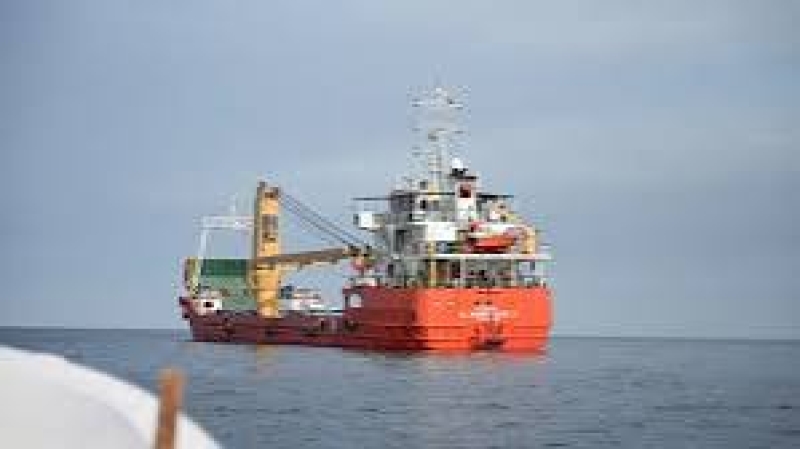
U.S. forces disabled two more Iranian oil tankers on Friday after an overnight exchange of fire with Iranian troops in the Strait of Hormuz, while the UAE reported fresh Iranian missile and drone attacks.
The developments have raised further doubts about the fragile ceasefire that the U.S. says remains in place as Washington waits for Iran’s response to a proposed agreement aimed at ending the conflict, reopening the strait, and limiting Tehran’s nuclear activities.
U.S. Secretary of State Marco Rubio said he expects a “serious offer” from Iran soon. According to the U.S. military, the tankers were targeted because they allegedly attempted to break an American blockade on Iranian ports. Earlier, the military also claimed it had intercepted attacks on three U.S. Navy vessels and retaliated by striking Iranian military sites in the strait.
Since the war began on Feb. 28 between Iran, the U.S., and Israel, Iran has largely obstructed the strategically important Strait of Hormuz, disrupting global energy supplies and increasing fuel prices worldwide. In response, the U.S. has enforced its own blockade on Iranian ports.
The UAE’s Defense Ministry reported that air defense systems intercepted two ballistic missiles and three drones launched by Iran, though it remains unclear whether every projectile was destroyed. Three people were injured in the incident.
The U.S. military released footage showing American fighter jets striking the smokestacks of the two Iranian tankers. Earlier this week, another Iranian tanker reportedly had its rudder disabled by a U.S. jet after attempting to breach the blockade.
Following the overnight clashes, the U.S. said it had successfully defended its Navy ships in the Strait of Hormuz and carried out retaliatory strikes without suffering any damage. Rubio warned that any threats against Americans would be met with force.
Iran strongly criticized the U.S. military actions, calling them hostile and a violation of the ceasefire. Iranian Foreign Minister Abbas Araghchi accused Washington of choosing military escalation over diplomacy whenever negotiations appear possible.
Meanwhile, an overnight U.S. strike reportedly killed one sailor and injured 10 others aboard a cargo ship that caught fire, according to an Iranian judiciary-linked news outlet. It was unclear whether the ship was among the two tankers hit by U.S. forces.
President Donald Trump maintained that the ceasefire is still holding but repeated warnings that the U.S. could resume heavy bombing if Iran refuses a deal to reopen the strait and curb its nuclear program.
Pakistan’s Prime Minister Shehbaz Sharif said Islamabad has been working continuously with both Tehran and Washington in an effort to preserve the ceasefire and secure a broader peace agreement.
Satellite images reviewed by AP revealed what appears to be a significant oil spill near Iran’s Kharg Island export terminal in the Persian Gulf. Maritime intelligence analysts estimate around 80,000 barrels of oil may have leaked since Tuesday. The exact cause remains uncertain, with possibilities including technical failure or military strikes.
Experts warned that the spill could spread toward the coasts of the UAE, Qatar, or Saudi Arabia within weeks, though Greenpeace researchers suggested the slick may disperse offshore without severely affecting land areas.
The Pentagon declined to comment on whether it was monitoring the spill or if recent U.S. strikes had targeted Kharg Island.
Rubio also criticized Iran’s reported creation of a new authority to regulate and tax ships passing through the Strait of Hormuz, saying it was unacceptable for Iran to control such a crucial international waterway.
Shipping concerns have intensified as hundreds of commercial vessels remain stuck in the Persian Gulf. Iran’s restrictions on the strait continue to disrupt global trade in oil, gas, and petroleum products, while the U.S. blockade has further increased tensions.
China also expressed concern after a Chinese-crewed oil tanker near the strait was attacked. Despite the instability, China continues importing Iranian oil. South Korea, another country heavily reliant on the strait for crude oil imports, has introduced fuel price controls amid growing uncertainty in global energy markets, reports UNB.