

- 100 CSOs rally against Trump’s trade tactics, urge access to drugs |
- BNP believes in multiparty democracy, not revenge: Moyeen Khan |
- Bangladesh reaffirms commitment to revitalise SAARC process |
- Bangla Academy assures inclusive Ekushey Book Fair From Feb 26 |
- 2 former National University VCs face travel ban |
100 CSOs rally against Trump’s trade tactics, urge access to drugs
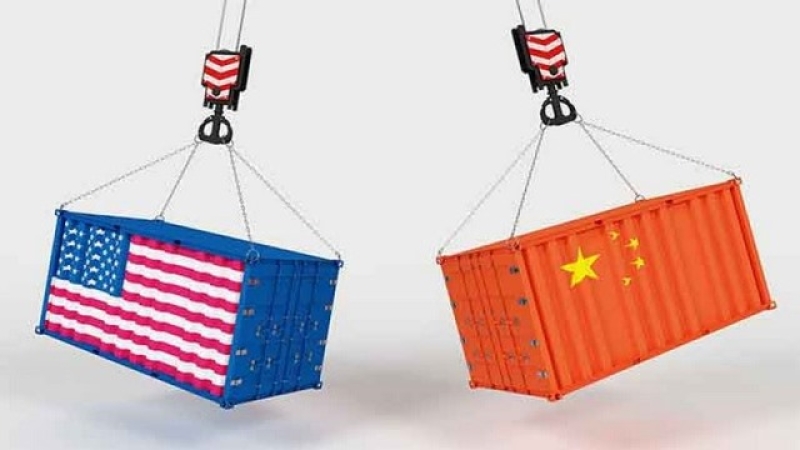
Trade war between the US and China.
Penang, 23 Feb (Kanaga Raja) — More than 100 civil society organizations (CSOs) from around the world are calling for a global trade policy framework that safeguards access to affordable medicines and rejects agreements negotiated under coercive conditions.
They argued that the Trump administration is leveraging US trade power – particularly through the imposition of extreme tariffs – to pressure countries into binding commitments that could weaken the availability and affordability of essential medicines, raising concerns about public health and equity in the global trading system.
The US-UK “Big Pharma” agreement in principle, borne out of an abuse of trade power and weaponized tariffs, must not be replicated, they warned, according to a press release issued by Public Citizen on 19 February.
They noted that in the weeks following the UK deal, the US coerced Argentina into an Agreement on Reciprocal Trade (ART) that pushes Big Pharma’s monopolistic agenda at the expense of public health.
Against this backdrop, the organizations working in the public health, trade, labour, climate, and faith spaces released a full set of Principles for Access to Medicines and Trade, in which they insisted that trade approaches must preserve countries’ abilities to: ensure affordable prices for all; reject corporate bullying; enable plentiful supply of medicines; ensure the safety, efficacy, and quality of medicines; freely determine which international treaties are beneficial; and adhere to transparent and accountable trade processes.
Among the signatories to the document are Public Citizen, Health GAP, Accion Internacional para la Salud Peru, Alliance Sud, Center for Economic and Policy Research, Global Justice Now (UK), Health Action International, People’s Health Movement – North America, Public Eye, Public Services International (PSI), Southern and Eastern Africa Trade Information and Negotiations Institute (SEATINI), Third World Network, and Treatment Action Group.
“Trump’s tariff threats lead only to worsening medicine scarcity and rationing. His dishonest alliance with Big Pharma to raise medicine prices abroad risks peoples’ lives while distracting from the real change and pharma accountability we need in the United States to make medicines affordable,” said Peter Maybarduk, Director of Public Citizen’s Access to Medicines campaign.
“Instead of raising costs and making threats, governments should be investing to expand medicine production everywhere, and learning from each other’s best practices to lower prices at home,” he added.
“The Trump administration has decimated global health programming and service delivery via reductions and restrictions in foreign assistance for health, but also seeks to enshrine Big Pharma’s monopoly power via hasty, secretly negotiated trade agreements and trade threats,” said Brook Baker, Senior Policy Advisor at Health GAP.
“Rather than encouraging adequate supplies, affordable prices, and equitable access of medical technologies, Trump pursues heightened intellectual-property, price-protection, regulatory rules that maximize Pharma profits at the expense of health by bullying countries with tariffs and other measures,” he added.
“The six principles for trade and access to medicines counter Pharma’s hegemony and Trump’s coercive efforts on its behalf,” said Baker.
Accion Internacional para la Salud Researcher Javier Llamoza said: “Latin America has the sovereign right to regulate, produce, and acquire safe and affordable medicines, prioritizing life over profit. We reject agreements that strengthen monopolies, increase the cost of treatments, and weaken our local capacities. Health is not negotiable under pressure or commercial threats.”
“For years, the UK has used sensible price controls to limit the impact of pharma companies’ notorious overcharging for medicines,” said Global Justice Now Policy and Campaigns Manager Tim Bierley.
“By capitulating in talks with Trump and the pharma industry and agreeing to water these down, our government has committed the UK to more expensive healthcare with nothing tangible in return,” he added.
“This terrible deal also sets a worrying precedent, incentivising pharma companies to use ransom-seeking tactics to raise medicine prices around the world. Instead of going it alone, countries must work together to fight the monopoly power of pharma corporations who will always put the opportunity for profit over our health,” he said.
“Governments have a legal and moral duty to realise the right to health for their people. Trade policy must never be weaponised to undermine that responsibility or to coerce countries into dismantling their public health safeguards,” said Third World Network Legal and Policy Advisor Sangeeta Shashikant.
“Any trade framework that restricts policy space, weakens local production, or limits access to affordable medicines is fundamentally incompatible with human rights, especially the right to health, and must be rejected,” she added.
According to the Principles for Access to Medicines and Trade, the Trump administration is using US trade power and extreme tariffs to bully other countries into binding agreements that undermine affordable and readily available access to medicines.
Trump’s trade chaos demands higher drug prices outside the US, elevates corporate interests over health needs, promotes steep pharmaceutical tariffs that shrink global supply, undermines local capacity development, and pursues all of its demands through secret negotiations, it said.
“Countries that rush to appease US demands risk agreeing to terms – including harmful intellectual property provisions and restraints on medicine price negotiation, procurement, and production – that compromise access to medicines and the right to health.”
Trump wants drugmakers to raise their prices in many countries, risking treatment rationing and busting health budgets, said the CSOs.
His excuse: that this will somehow lead to lower prices for Americans. But there is no reason to think that higher prices in some countries will lead to lower prices, or “most-favored nation” pricing, in the United States.
Instead, they warned, this policy threatens to fuel already high prices by giving companies with monopoly power more freedom to set excessive prices.
Medicines must be affordable for individuals and public and private payers, and sustainable for health systems, they said, adding that to enable fairer prices, measures that seek to deregulate pharmaceutical pricing should be avoided.
The document noted that many countries negotiate prices and evaluate clinical and cost effectiveness to support affordability of new drugs.
The United Kingdom employs such systems to help counter unreasonably high prices set by pharmaceutical companies and mitigate budgetary impacts.
However, as a result of pressure from the Trump administration and the pharmaceutical industry, the UK has agreed to change its drug pricing standards, resulting in higher drug spending. Moreover, some drug companies are already agreeing to raise entry prices in the UK, the CSOs noted.
While sustained pressure forced international trade rules to recognize the importance of safeguarding public health and access to medicines, trade agreements nonetheless frequently include intellectual property terms that go beyond internationally agreed-upon standards – including by requiring lower standards of patentability, data/ marketing exclusivity (monopolies), patent term extensions, and linkage of patent and regulatory status, said the document.
“Trade and other political threats are frequently deployed to limit the use of compulsory licensing. This has narrowed the space available for countries to facilitate access to affordable generic medicines and to combat anti-competitive practices.”
In addition, the CSOs said the US often pursues heightened trade secret protection in trade agreements that allow companies to keep important information confidential and to hide behind non-disclosure agreements.
Countries must be free to enact and use policies that enable access to medicines without constraint of trade rules or external pressures, the document stressed.
It said trade pressure should never be used to undermine or seek removal of internationally agreed policy space related to public health and intellectual property.
“Governments should not encourage the adoption of or agree to intellectual property commitments in trade agreements that limit the ability to protect or increase access to affordable medicines.”
Countries should remain free to require public disclosure of R&D and manufacturing costs, prices, supply agreements, and other publicly relevant pharmaceutical information, said the CSOs.
The document noted that governments have the right to implement public interest safeguards in their intellectual property law and practice.
For example, it said that India’s Patents Act includes important safeguards that support affordable access to medicines by preventing the grant of poor-quality evergreening patents that lengthen monopolies on medicines.
Following the deadly shortages of COVID-19 vaccines and treatments, there is a growing consensus toward strengthening local and regional biopharmaceutical capacities to support emergency response, address local health needs, ensure timely and adequate supply, and advance global science and research, the document also said.
However, trade approaches can run counter to these goals, it said, stressing that timely, affordable, and equitable supply of medicines requires participation from a diversity of producers worldwide.
In this regard, the CSOs called for fostering broader production and research capacities, especially in low- and middle-income countries, including by enabling the sharing of intellectual property, technology, and knowledge needed to produce medical tools.
Trade policies intended to support industrial policies should align with health objectives and support sustainable access to medicines everywhere, they suggested.
According to the CSOs, efforts to increase domestic or regional production should prioritize health needs and should not harm global supply chains, including by avoiding disruptive and chaotic trade measures such as high tariffs on pharmaceuticals.
The document noted that while targeted investments in domestic production, guided by health needs, can help add to supply security for essential medicines, President Trump’s plan to boost domestic pharmaceutical capacity relies largely on threatening high tariffs on pharmaceutical imports.
It said that Trump’s chaotic tariffs ignore more effective policies to increase domestic production and threaten broader global capacity that can support timely access to affordable medicines for all.
Meanwhile, it cautioned that the Trump administration may pressure other countries to buy American products as part of bilateral health aid agreements which could hinder the development of local or regional manufacturing capacity in developing countries and lock in unaffordable prices for medicines.
The CSOs said that to help reduce regulatory burden and facilitate timely access to medicines, many regulatory authorities participate in efforts to align regulatory requirements and rely on assessments performed by other regulators.
This is sensible where public agencies maintain the flexibility to balance safety, efficacy, and access in the public interest.
“But trade agreements can obligate countries to apply certain assessment standards or wholly accept external regulatory decisions, which can constrain agencies’ ability to act in the public interest or accommodate local needs and can create avenues for dominant corporate actors to influence regulatory assessment processes in ways that inhibit each party’s discretion in administering policies to regulate medicines,” said the document.
In this context, it called for countries to preserve sovereign decision-making over the regulation of medicines.
To fulfill the obligation to certify that medicines are safe, effective, and of good quality, national regulatory authorities must retain their autonomy, while engaging in practices – including external collaboration – that avoid unnecessary duplication, facilitate timely access, and contribute to regulatory strengthening, it said.
The CSOs also underlined that trade agreements should not impinge upon space to regulate in the interest of public health.
The Principles also noted that bilateral trade agreements often require or urge adoption of or compliance with international intellectual property treaties.
“Many of these treaties address procedures for patent applicants to simplify processes and requirements across countries. Accession to treaties may not necessarily be beneficial to developing countries, particularly treaty obligations that impose new burdens exceeding local capacity or conflicting with other domestic interests,” said the CSOs.
It this regard, they called on governments to resist economic coercion to adopt international treaties.
Governments must consider whether it is in their interest to adopt international agreements, as these may impose potentially burdensome additional requirements beyond those required by a bilateral agreement, they stressed.
They noted that recent trade agreements under the Trump administration require the partner country to accede to and fully implement many additional agreements.
For example, the US-Malaysia Agreement on Reciprocal Trade and US-Cambodia Agreement on Reciprocal Trade name 13 international intellectual property agreements, including those that affect pharmaceutical patent regulation.
Furthermore, the document said the Trump administration has used its tariff chaos to force other countries into secretive trade negotiations.
While civil society has long criticized free trade agreement negotiations for their lack of transparency, the current US administration’s trade negotiations have reached a new level of secrecy, the CSOs charged.
“This lack of accountability increases the risk of corporate capture, leading governments to commit to harmful provisions that could endanger health. Decisions that will shape people’s health cannot be negotiated behind closed doors or dominated by corporate interests.”
In this context, the CSOs emphasized that trade policy and trade negotiations must be transparent, participatory, and accountable to the public to ensure that any agreement reflects democratic input and advances the public interest.
Importantly, they said before governments share texts of their proposals in negotiations, those texts should be published in an on-the-record public comment process, and all consolidated texts after any negotiating round should also be made public so that citizens and civil society experts can influence the contents before a re-negotiated text is finalized.
“Pro-corporate, pro-monopoly models reinforced by the current trade order and exploited by the powerful are failing the world. Health must be a guarantee, not a bargaining chip,” the CSOs concluded. – Third World Network