

- Cultivation of Black Baby watermelons on a rooftop in Kalapara |
- Low pressure area on Bay; Maritime ports to hoist cautionary signal 3 |
- Nandini killing: Man sentenced to death in Lalmonirhat |
- Four of a Rangpur family killed for objecting to Yaba taking: Police |
- Bangladesh Rise to Highest-Ever Sixth in Test Rankings |
Trump Imposes 25% Tariff on India Over Russian Oil Imports
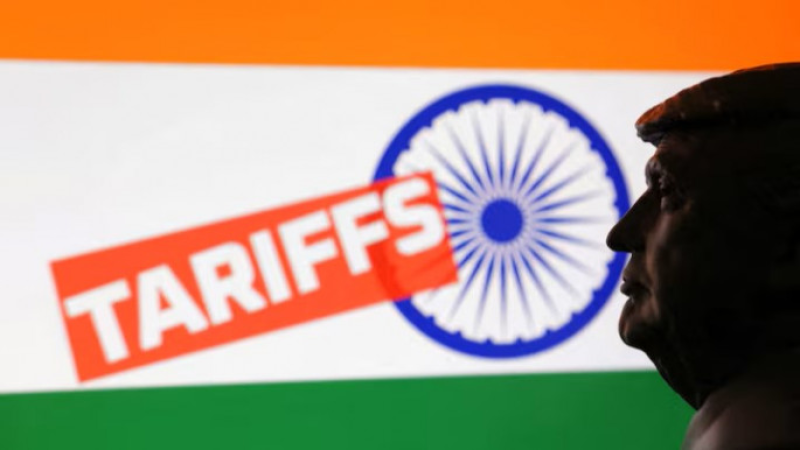
A 3D-printed miniature model of US President Donald Trump, the Indian flag and the word "Tariffs" are seen in this illustration taken July 23, 2025.
US President Donald Trump issued an executive order on Wednesday imposing an additional 25% tariff on Indian goods, citing New Delhi’s continued imports of Russian oil. This move sharply escalates tensions between the two countries following the collapse of recent trade talks.
The new tariffs raise duties on some Indian exports to as high as 50%, among the steepest rates imposed by the US on any trading partner. Key Indian export sectors likely to be affected include textiles, footwear, and gems and jewellery.
This development marks the most serious downturn in US-India relations since Trump’s return to office in January. It also coincides with Indian Prime Minister Narendra Modi’s upcoming visit to China — his first in over seven years — suggesting a potential realignment as ties with Washington worsen.
India’s external affairs ministry described the tariffs as “extremely unfortunate,” stating that the country’s imports are based on market factors and aimed at ensuring energy security for its population of 1.4 billion. The ministry added that India would take all necessary actions to protect its national interests.
Trade analysts warn the tariffs could severely disrupt Indian exports. The additional 25% tariff will take effect 21 days after 7 August, as outlined in the order.
“Trade between the two nations would be practically dead at such high tariff rates,” said Madhavi Arora, economist at Emkay Global.
Indian officials have privately acknowledged mounting pressure to return to trade negotiations. A potential compromise might involve a phased reduction in Russian oil imports and diversification of energy sources.
A senior Indian official said New Delhi was caught off guard by the sudden and steep tariff imposition, noting that trade discussions are ongoing.
Trump’s decision follows five rounds of inconclusive trade talks, stalled mainly over US demands for greater access to Indian agricultural and dairy markets.
India’s refusal to curb its Russian oil imports — which reached a record $52 billion last year — triggered the tariff escalation.
“Exports to the US become unviable at this rate. Risks to growth and exports are rising, and the rupee may face renewed pressure,” said Garima Kapoor, economist at Elara Securities.
The executive order does not mention China, which also imports Russian oil. A White House official declined to comment on whether similar tariffs could be applied to China.
Last week, US Treasury Secretary Scott Bessent warned Chinese officials that continued purchases of sanctioned Russian oil could trigger tariffs under pending legislation, but China responded it would protect its energy sovereignty.
Meanwhile, the US and China remain in talks to extend a 90-day tariff truce set to expire on 12 August, after which their bilateral tariffs could return to triple-digit rates.