

- NCP Demands Impeachment, Arrest of President |
- PM Pledges to Modernise, Strengthen Border Force |
- Dhaka Tops Global Pollution List with Hazardous Air |
- Country Observes Martyred Army Day Today |
- 100 CSOs rally against Trump’s trade tactics, urge access to drugs |
Generative AI May Widen Inequality, Hit Creative Industries
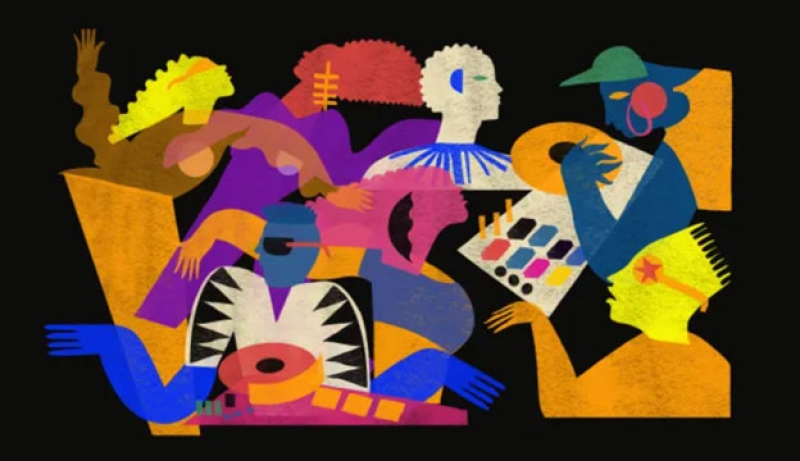
Cover photo of the new UNESCO report, Re|Shaping Policies for Creativity.
As generative artificial intelligence (AI) rapidly expands across nearly every sector, workers in cultural and creative industries are expected to face some of the greatest challenges. With AI-generated content projected to dominate global markets in the coming years, and amid weak regulatory frameworks to protect intellectual property, UNESCO warns that generative AI may deepen inequality and threaten the livelihoods of millions of cultural workers worldwide.
“It is no longer sufficient to simply celebrate the potential of digital tools,” said Lodovico Folin-Calabi, Director of the UNESCO Liaison Office in Brussels. “We must critically examine how these technologies are deployed, who is designing them, and whose voices are represented or excluded.”
On February 18, UNESCO released the latest edition of its report Re|Shaping Policies for Creativity, examining how digital transformation and emerging technologies are reshaping the global cultural landscape. Drawing on data from more than 120 countries, the report highlights AI’s growing impact, shifting global trade dynamics, and rising pressures on artistic freedom. It calls on governments, international institutions, and technology platforms to strengthen policy frameworks to prevent widening inequalities and protect creators’ rights, offering a roadmap of over 8,100 policy measures.
While emerging technologies provide new opportunities for innovation and allow artists to expand reach and streamline production, they have also deepened existing inequalities and increased economic uncertainty. UNESCO projects that generative AI could result in global revenue losses of up to 24 percent for music creators and 21 percent for audiovisual creators by 2028. These losses are compounded by artists’ reliance on digital income, which now accounts for nearly 35 percent of their earnings, up 17 percent since 2018.
The rise of AI-generated content, intellectual property risks, and market volatility makes it increasingly difficult for cultural workers to remain sustainable. Streaming platforms and content curation systems often prioritise popular creators, leaving emerging artists with fewer opportunities.
“I think emerging artists struggle more than established artists with the rise of AI,” said Kiersten Beh, a traditional illustrator. “Senior artists already have networks and client relationships. Emerging artists like me are competing directly with AI.”
The report also highlights gaps in countries’ protection of artists. Only 61 percent of countries surveyed had adequate frameworks to safeguard artistic freedom and prevent IP infringement by AI. About 85 percent included cultural and creative sectors in national development plans, but only 56 percent outlined specific objectives, and just 37 percent had measures to support cultural workers in conflict-affected or politically unstable areas.
“We must ensure AI does not limit the rights of anyone involved in artistic creativity,” said Alexandra Xanthaki, UN Special Rapporteur in cultural rights. “This includes all creators and participants in artistic life.”
Challenges are especially severe in the Global South, where digital divides and limited access to technology increase vulnerability. UNESCO notes that 67 percent of people in developed countries have essential digital skills, compared with just 28 percent in developing nations. Only 48 percent of surveyed countries track digital cultural content consumption.
Colombian expert Viviana Rangel told UNESCO that the region consumes rather than produces these technologies, making local artists more exposed to unintended consequences and marginalisation.
Support for vulnerable artists remains inconsistent and underfunded, leaving them exposed to risks such as algorithmic bias and digital surveillance. Public funding for cultural sectors is below 0.6 percent of global GDP and may decline further. Gender disparities also persist: although women’s leadership in cultural institutions rose from 31 percent in 2017 to 46 percent in 2024, women still hold 64 percent of leadership roles in developed countries compared to 30 percent in developing nations.
UNESCO stresses that achieving a sustainable future for artists in the AI era requires equitable policy reform, global collaboration, and investment to protect artistic freedom and livelihoods. Creativity must remain a source of economic opportunity, cultural diversity, and social cohesion in a rapidly digitising world.