

- Rivers Must Remain Alive Until They Meet Seas – Basin Summit |
- Monsoon Sets In Bangladesh With Erratic Signals |
- Freeing Bourses From Evil Grips of Cronies And Oligarchs |
- Uneasy Calm In BD Political Arena Over Amendment Or Reform |
- UN experts for urgest action to support Rohingya Refugees in BD |
Freeing Bourses From Evil Grips of Cronies And Oligarchs
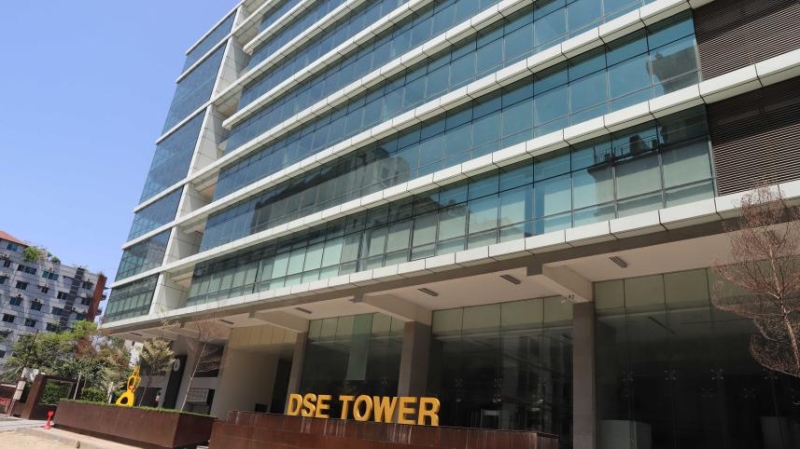
Dhaka Stock Exchange Tower
Asif Showkat Kallol
For much of the past decade and a half, Bangladesh's capital market symbolised lost opportunities rather than economic progress. Despite steady economic growth, expanding exports and a rising middle class, the stock market failed to evolve into a credible source of long-term financing for businesses or a reliable investment destination for households. Confidence eroded after repeated episodes of market manipulation, regulatory inconsistency, prolonged trading restrictions and weak corporate governance.
Millions of investors gradually lost faith. During the 15-year (2009–2024), the government manipulated the Bangladesh stock market through a network of political cronies, compromised regulatory bodies, artificial price inflation, and corrupt Initial Public Offering (IPO) processes. This systemic exploitation led to multi-trillion-Taka embezzlements and historic market crashes, including the devastating 2011 stock market scandal. After investigations, the reconstituted Bangladesh Securities and Exchange Commission (BSEC) and subsequent government inquiries have uncovered the primary mechanisms used to manipulate the market.
1. Infiltration of Regulators by Political Loyalists
The previous political government appointed highly partisan individuals and corporate insiders to lead the BSEC. It systematically ignored recommendations from the stock exchanges. Regulatory bodies historically protected heavyweights by issuing minor fines for hundreds of crores in illegal profits generated.
2. Flawed IPO Processes and Artificial Overvaluation
Near-defunct, weak, and financially unviable companies with fraudulent financial statements were routinely granted approval to launch IPOs. Politically connected firms artificially inflated their assets—sometimes by thousands of percent—to drive up starting stock values and lure small retail investors. Inside syndicates used pre-IPO placement shares to siphon money out before public trading even commenced.
3. Exploitation by Oligarchic Business Syndicates
A well-known syndicate of around 30 politically backed business tycoons, policymakers, and directors dictated market swings. High-profile figures like Beximco Group Vice Chairman Salman F. Rahman (who also served as PM’s private sector adviser) and the S Alam Group ran massive manipulation operations. Beximco-linked entities faced a record fine of Tk 428.52 crore for stock manipulation. High-profile party loyalists and celebrities, such as cricketer Shakib Al Hasan (a former MP), were utilized to artificially pump insurance and textile stocks, pocketing millions over short-term trades while small investors suffered the losses.
4. Implementation of the Floor Price Mechanism
The BSEC implemented a "floor price" mechanism under the guise of protecting investors from a market plunge. This policy severely backfired by killing liquidity, locking up investor capital, and suppressing true price discovery, allowing insiders to trade through off-market mechanisms while public trading dried up.
Following the political transitions after the July 2024 uprising, extensive independent reports like the White Paper on the Economy have documented the scale of the damage. The government has since shifted towards aggressive accountability:
The BSEC has slapped manipulators with fines totalling Tk 1,497 crore. Major perpetrators like Salman F. Rahman have been jailed, and multiple cases transferred to the Anti-Corruption Commission (ACC) for asset recovery and money laundering investigations. The floor price has been entirely abolished, and new regulations—including whistleblower protection policies—are being drafted to dismantle the residual oligarchic networks.
At the end of 2025, during Bangladesh's interim government, the shares of five Shariah-based banks—First Security Islami, Social Islami, Global Islami, Union, and EXIM—were written down to zero following their merger into Sammilito Islami Bank PLC under the Bank Resolution Ordinance 2025. Bangladesh Bank said the banks had negative net asset values, leaving shareholders with no equity.
The move wiped out around Tk 4,500 crore in face-value investments (about Tk 1,022 crore at market value), dealing a major blow to thousands of investors and denting confidence after the end of the autocratic era.
Mutual Fund Investors and stakeholders in the capital market have demanded the suspension and revision of the recently introduced Mutual Fund Rules 2025, expressing concern that several provisions could undermine investor confidence and disrupt the long-term development of the sector.
A key demand centres on the repeal of Section 62(2) of the new rules, which requires closed-end mutual funds to be compulsorily liquidated or converted into open-end funds based on their market price or trading value.
Investors fear that the mandatory conversion or liquidation of funds based solely on prevailing market prices could severely disrupt the normal operations of long-term investment vehicles.
The Dhaka Stock Exchange (DSE) has regained momentum, with the benchmark DSEX index climbing above the 5,800-point mark for the first time in nearly 22 months. Daily turnover has risen sharply, reflecting stronger liquidity and renewed investor participation.
While these developments deserve recognition, it is to be recalled, the country's capital market experienced several short-lived rallies before.
The removal of floor prices marks an important milestone. Introduced during periods of market stress, floor prices were intended to prevent panic selling. In practice, they did the opposite. By preventing normal price discovery, they trapped investors inside declining stocks, destroyed liquidity and discouraged institutional participation.
Markets cannot function efficiently when prices are determined by regulation instead of supply and demand. Every mature stock market occasionally experiences corrections. Preventing this only postpones the inevitable while damaging market credibility.
Newly appointed BSEC Chairman Masud Khan has described the removal of floor prices as a landmark decision. Equally encouraging is the commission's willingness to revisit outdated regulations governing margin loans. However, such reforms must balance flexibility with prudent risk management.
For years, Bangladesh's IPO process has been criticised for excessive bureaucracy, lengthy approvals and inconsistent valuations. The commission's proposal to simplify approvals and reduce processing times addresses one of the most persistent complaints. But speed alone cannot guarantee success.
An efficient IPO market also requires transparency, independent due diligence and rigorous disclosure standards. Faster approvals should never come at the expense of investor-protection. If regulators reduce bureaucratic delays while strengthening disclosure requirements, Bangladesh could finally create a healthy pipeline of quality public offerings.
Perhaps the most transformative proposal is the review of direct listing regulations. Allowing large, well-governed private companies to list by offering only a portion of their shares could fundamentally reshape the country's capital market. There are numerous successful private corporations, multinational subsidiaries and foreign banks with strong profitability. Yet many remain absent from the stock exchange.
Large institutional investors require liquid, fundamentally strong companies. Pension funds, insurance companies and foreign asset managers cannot build diversified portfolios if only a limited number of quality stocks are available. Expanding the universe of investable companies could therefore attract both domestic and international institutional capital.
As Chairman Masud Khan observed, herd behaviour remains one of the market's biggest vulnerabilities. Investors frequently buy simply because others are buying and sell because others panic. Such behaviour creates fertile conditions for manipulation. Professional institutional investors typically analyse financial statements, assess business fundamentals and maintain longer investment horizons.
Increasing institutional participation would naturally reduce speculative trading while improving overall market stability. The commission's intention to strengthen direct listing regulations therefore deserves careful support.
At the same time, greater market autonomy for the Dhaka Stock Exchange represents another positive institutional development. Modern exchanges increasingly function not merely as trading venues but also as frontline market supervisors.
Granting the DSE greater authority with stronger accountability to monitor abnormal trading, investigate suspicious price movements and respond quickly to potential manipulation could improve regulatory efficiency.
The history of Bangladesh's stock market includes repeated examples of weak disclosures, questionable related-party transactions, delayed financial reporting and inadequate protection of minority shareholders. Investor confidence depends not only on rising indices but also on trust in listed companies. Corporate governance reforms should therefore receive equal priority alongside trading reforms.
When investors believe the regulatory framework is stable, temporary market declines no longer trigger panic. Instead, corrections become normal components of a functioning market. The BSEC’s emerging reform agenda offers an opportunity to rebuild precisely that confidence.
Bangladesh finally has an opportunity to build a capital market worthy of one of South Asia's largest economies. Achieving that goal will require regulatory courage, institutional independence and an unwavering commitment to transparency long after today's market optimism fades.
(Writer Asif Showkat Kallol is the Head of News at Mirror Asia, a Germany-based news outlet.)
(From the GreenWatch print edition July 2026)