

- Tarique Warns of Fresh Conspiracies, Vows to Defend Sovereignty |
- National Revolution and Solidarity Day Today |
- Tarique Rahman Pays Tribute at Zia, Khaleda’s Graves |
- Dhaka’s air quality 4th worst in the world this morning |
- US Launches Fresh Strikes on Iran Amid Peace Efforts |
National Revolution and Solidarity Day Today
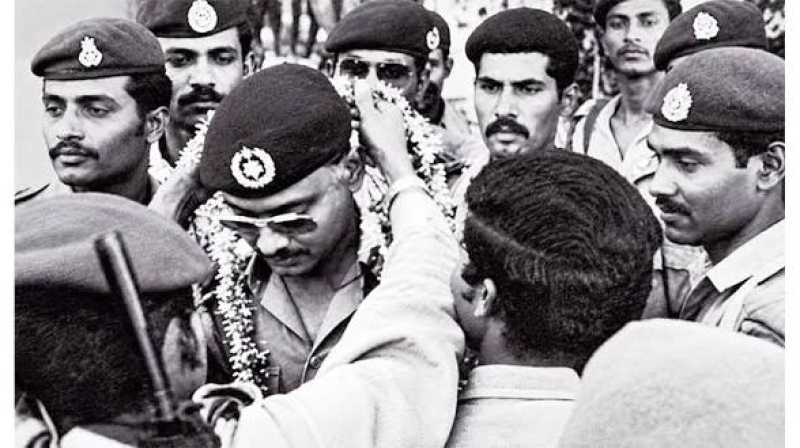
A day that would alter the course of the nation’s politics
Bangladesh observes National Revolution and Solidarity Day today, November 7, commemorating the events of 1975 that changed the course of the country's politics.
The day holds deep significance in the political history of independent Bangladesh. On this day in 1975, soldiers and civilians took to the streets in a historic uprising, dramatically altering the country's political landscape. The events gave the nation a new direction at a time of uncertainty.
The day is remembered not merely as a change of power or a specific political event, but also as a symbol of the struggle to preserve Bangladesh as a sovereign state amid internal and external challenges. The spirit of unity demonstrated by soldiers and civilians continues to serve as an inspiration during national crises.
The president and the prime minister have issued messages marking the occasion.
Background of November 7, 1975
Following the assassination of Sheikh Mujibur Rahman and most of his family members on August 15, 1975, and the killing of four national leaders inside Dhaka Central Jail on November 3, Brigadier General Khaled Mosharraf, then deputy chief of army staff, led an uprising with troops loyal to him.
During the takeover, Army Chief Major General Ziaur Rahman was confined to his residence in Dhaka Cantonment.
Khaled Mosharraf declared himself army chief and went to Bangabhaban on November 6, where he detained then-President Khondaker Mostaq Ahmad and announced the dissolution of the cabinet and parliament. Chief Justice Abu Sadat Mohammad Sayem was subsequently made president.
That night, ordinary soldiers in the army organised resistance. Civilians from different walks of life also took to the streets in support of the uprising.
The joint movement of soldiers and civilians led to Ziaur Rahman's release from confinement. Khaled Mosharraf and several of his associates were killed on the morning of November 7 while attempting to resist the counter-coup.
The events brought about a major political shift, placing Ziaur Rahman at the centre of the country's power structure.
Political analysts say the political changes of November 1975 under Ziaur Rahman's leadership strengthened Bangladesh's independent identity and opened the way for multiparty democracy.
The BNP has observed November 7 as National Revolution and Solidarity Day since then. The day was a public holiday during BNP-led governments.
However, the party faced restrictions in observing the occasion during the more than 15 years of Awami League rule. This year, the BNP is celebrating the day in government after nearly 20 years, with programmes announced by the party and its affiliated organisations.
BNP announces weeklong programmes
The BNP and its affiliated organisations have announced a weeklong programme to mark the occasion, running from November 5 to 11.
As part of the main programme, Prime Minister Tarique Rahman will inaugurate a colourful rally at 3pm today in front of the BNP's central office in Nayapaltan.
The announcement was made by BNP Acting Secretary General Ruhul Kabir Rizvi at a press briefing at the party's central office on Friday.
Rizvi said rallies would be held in most districts and metropolitan areas across the country on November 7.
In Dhaka, the rally will begin after the prime minister delivers the inaugural address. It will proceed from Nayapaltan through Kakrail, past the Chief Justice's residence, towards the Hotel InterContinental intersection, Banglamotor and Farmgate, before concluding at Manik Mia Avenue.
Before the rally, at 8:30am, the prime minister and senior party leaders will pay tribute by placing wreaths at the graves of Shaheed President Ziaur Rahman and former Prime Minister Khaleda Zia in Sher-e-Bangla Nagar.
The party's affiliated organisations will also arrange separate programmes, including discussions and photographic exhibitions.
The Jubo Dal will hold a discussion on November 10, while the Sramik Dal held a discussion on November 5. The Krishak Dal will organise a discussion at 11am on November 9, followed by a discussion and cultural programme arranged by the Jatiyatabadi Samajik Sangskritik Sangstha (JASAS) at 3pm the same day.
The Jatiyatabadi Chhatra Dal will organise a photographic exhibition at Dhaka University at 11am on November 7 and a discussion on November 8. The Olama Dal will distribute educational materials among students from orphanages.
The BNP will also hold rallies at police station and upazila levels across the country on November 8.
President's message
In a message marking the day, President Mirza Fakhrul Islam Alamgir extended greetings to all citizens and paid tribute to the soldiers and patriotic civilians who took part in the November 7, 1975 uprising.
Calling for the building of a humane country, he said people should draw inspiration from the spirit of November 7 and unite beyond political differences to eliminate corruption, inequality and all forms of conspiracy.
He said the state would be guided by the philosophy of “Bangladesh First”, with national interests, equality, justice and democratic practices receiving the highest priority.
Describing the significance of the revolution and solidarity in national life as immense, the president said Shaheed President Ziaur Rahman had subsequently restored multiparty democracy, the rule of law, freedom of speech and press freedom.
He also said Ziaur Rahman had pursued economic emancipation, promoted social peace, moved the country away from what he described as a subservient foreign policy and advanced development and prosperity on the basis of Bangladeshi nationalism.
The president said the nation had been united and good governance established at all levels under his leadership.
He added that Bangladesh had once again begun its journey towards democracy under an elected government through the collective efforts of its people. Strengthening democratic institutions and all state institutions, he said, was essential to sustaining that progress.
Prime Minister's message
In his message, Prime Minister Tarique Rahman said the historic November 7 uprising of soldiers and civilians in 1975 had determined Bangladesh's path.
He said those who wanted to turn Bangladesh into a subservient state, deprive people of their democratic political rights and establish one-party authoritarian rule had been defeated through the uprising.
He also said the movement had thwarted attempts to undermine the honour and reputation of the armed forces.
Wishing success to all nationally organised programmes marking the day, the prime minister said soldiers and civilians had united on November 7 to resist conspiracies against Bangladesh's independence and sovereignty.
He described the day as a historic moment when the country's friends and adversaries were identified.