

- Rivers Must Remain Alive Until They Meet Seas – Basin Summit |
- Monsoon Sets In Bangladesh With Erratic Signals |
- Freeing Bourses From Evil Grips of Cronies And Oligarchs |
- Uneasy Calm In BD Political Arena Over Amendment Or Reform |
- UN experts for urgest action to support Rohingya Refugees in BD |
Uneasy Calm In BD Political Arena Over Amendment Or Reform
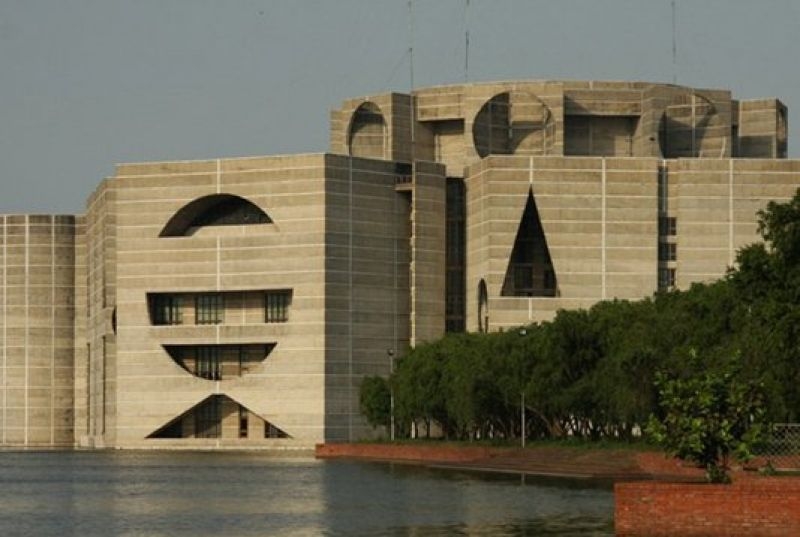
JS Building
GreenWatch Desk
An uneasy calm has descended upon Bangladesh’s political arena. The July Uprising of 2024, which dislodged a nearly sixteen year autocracy, promised a new dawn of constitutional renewal. Yet two years later, the nation finds itself locked in a struggle over how that promise should be interpreted — as amendment within continuity or as reform through rupture.
The government, led by the BNP, insists that the July Declaration was never meant to rewrite the Constitution wholesale. They point out that the Declaration itself mentioned at least twenty five times that the party winning the election would govern according to its manifesto. In their telling, they are simply fulfilling that mandate. The opposition, however, led by Jamaat and supported by other forces, argues that the Declaration was a revolutionary charter — a foundational document demanding a new Constitution tuned to the ethos of the uprising.
This divide has now crystallised around the government’s initiative to form a special parliamentary committee for constitutional amendment. The opposition has refused to nominate members, claiming the government is disowning the July Declaration by treating it as a matter of amendment rather than reform. Their suspicion deepened when the government did not ratify 16 of the 133 ordinances promulgated by the interim government, including ones on judicial independence, caretaker government, and dismissed the July Declaration Implementation Order as beyond jurisdiction.
BNP leaders argue that their position is consistent. They signed the July Declaration with notes of dissent, making clear from the outset that they would not accept every clause uncritically. They stress that many of the reforms proposed in the Declaration were already embedded in their 31 point programme initiated in 2022 and updated later along with political allies, a blueprint for repairing statecraft that predates the uprising. In their view, the July Declaration was a transitional document, not a revolutionary rupture. Mirza Fakhrul Islam Alamgir, BNP Secretary General and Minister for LGRD, has called for ending the reform debate, reiterating that the government is implementing the Declaration “according to their understanding.” He has also stressed that Parliament is the forum where differences should be resolved, urging that disputes be settled within the chamber to safeguard liberal democracy. Home Minister Salahuddin Ahmed has gone further, branding the July Charter Implementation Order of 2025 as “legislative fraud” and “colourable legislation.” For him, everything — from the formation of government to the oath of lawmakers — has taken place under the Constitution, and reforms must be pursued through amendments, not rewriting.
This framing allows the government to argue that the dispute is one of emphasis, not fundamentals. They say they are not rejecting the July Declaration but integrating it into a constitutional framework guided by their manifesto. The ordinances not ratified, they say, will be reenacted in new formulations. The July Charter, in their telling, is historic but subordinate to constitutional continuity.
Prime Minister and the Leader of the House Tarique Rahman who spelt out that the BNP would implement the July Declaration word for word went a step further and called upon the opposition that represents 26 percent of seats in the House to work in a way that the Parliament formed after nearly 16 years of movement against fascist rule doesn't fail or fall.
The opposition sees things differently. For them, the July Declaration was not a manifesto subordinate document but a revolutionary charter demanding fidelity to its spirit. They argue that the government’s selective adoption of ordinances and dismissal of the Implementation Order amounts to disowning the uprising’s legacy. Dr. Shafiqur Rahman, leader of the opposition in Parliament, has refused to nominate members to the special committee, insisting that reform — not amendment — is the mandate of the July Declaration. The opposition points to the Constitution Reform Council envisioned in the Implementation Order of November 2025, which provided for Parliament itself to function as the Council and implement over forty eight constitution related reforms out of a total of 84 recommendations. Opposition MPs took two oaths — one as members of Parliament and another as members of the Constitutional Reform Implementation Council — underscoring their belief that the July Declaration created a parallel mandate. They staged walkouts when the President addressed Parliament, arguing that the uprising had delegitimised his authority. For them, the July Declaration was a rupture, a break from the authoritarian past, and its authority cannot be subordinated to party manifestos.
The National Citizen Party (NCP) has added fuel to the fire. Akhter Hossen, NCP Member Secretary and Rangpur 4 MP, accused the BNP of abandoning both the July Charter and its own 31 point commitments. He claimed the government had backed away from promises of caretaker government reform, voting rights, and judicial transparency. He also criticised economic management, pointing to rising debt and prices even before the national budget. NCP leaders argue that the government is not only rejecting constitutional reform but also undermining the referendum held alongside the February 2026 election. They urge full implementation of the referendum’s verdict, warning that failure to do so risks betraying the uprising’s spirit.
The debate originated in Parliament, through motions and speeches, but inside the chamber the tone remains cordial. Treasury and opposition leaders continue to maintain talking terms, engaging in adjournment debates and motions without descending into hostility but there are walkouts whenever there are discords. Outside Parliament, however, the atmosphere is sharper. The opposition has already staged programmes — rallies, roundtables, and public campaigns — and now threatens to settle its demand on the streets. The government, by contrast, urges an amicable settlement within Parliament, warning that street confrontation risks destabilizing the fragile post uprising order. This duality is striking: Parliament is the House of dialogue, while the streets are the places of confrontation. The government appeals to institutional continuity, while the opposition mobilizes mass politics to assert revolutionary legitimacy. There however still remains a thread of communality in their stand against fascist forces.
At its core, Bangladesh’s constitutional debate is about ownership of the July Uprising’s legacy. The government frames the Declaration as a transitional bridge, subordinate to electoral mandates and party manifestos. The opposition frames it as a foundational charter, demanding a new Constitution that embodies the uprising’s ethos. Both sides accuse each other of risking a return to authoritarianism. The government warns that ignoring constitutional continuity could smooth the path for fascists to return. The opposition warns that subordinating the uprising’s spirit to party priorities could betray the sacrifices of those who fought for change.
Bangladesh today stands at a crossroads. The July Uprising was a moment of rupture, a collective demand for freedom from authoritarianism. Yet uprisings are always followed by struggles over interpretation. The government insists on continuity, the opposition demands renewal, and smaller parties accuse both of betrayal. The uneasy calm in the political arena reflects this unresolved tension. Whether through amendment or reform, the Constitution will change. But the deeper question is whether those changes will honour the spirit of the uprising or dilute it into party manifestos.
In the end, the debate is not about legal mechanics but about legitimacy. The July Declaration was both a historic document and a contested one. Its authority lies not only in its text but in the sacrifices that birthed it. To treat it as a manifesto subordinate charter risks eroding its symbolic power. To insist on rewriting without consensus risks undermining constitutional continuity. Bangladesh must find a path that honours both continuity and rupture — a Constitution that reflects the uprising’s ethos while grounding itself in democratic legitimacy. Anything less risks turning the July Uprising into a memory rather than a mandate.
(From the GreenWatch Print edition - July 2026)