

- Nation Votes Tomorrow in 13th Poll, Referendum |
- Key in your hands, use it wisely: Prof Yunus tells voters |
- Yunus Urges Voters to Shape a ‘New Bangladesh’ |
- Bangladesh Polls: Campaign Ends as Voters Weigh Pledges |
- Bangladesh Heads to First Gen Z-Driven Competitive Poll |
New START Expiry Raises Arms Race Fears
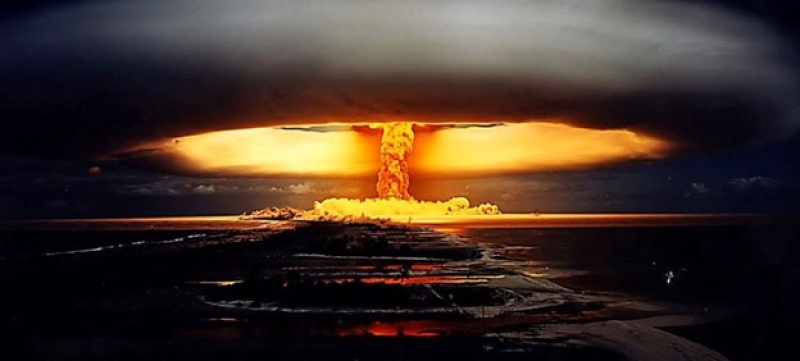
A photograph of the 1971 Licorne nuclear test, which was conducted in French Polynesia in the Pacific Ocean.
The most recent agreement limiting US and Russian strategic nuclear arsenals, New START, expired on February 5, and prospects for any follow-on agreement remain highly uncertain.
Progress made over several decades to halt the growth of nuclear arsenals and reduce them now faces serious risk. This comes despite the objective of the “cessation of the nuclear arms race” being embedded in the Nuclear Non-Proliferation Treaty (NPT), a cornerstone of global security.
In a US statement delivered on February 6 at the Conference on Disarmament, Under Secretary of State for Arms Control and International Security Thomas DiNanno said a “new architecture” is required. He said it must take into account all Russian nuclear weapons, both novel and existing strategic systems, and address the rapid growth of China’s nuclear stockpile.
That is a complex and demanding task. An informal arrangement between the United States and Russia to continue observing New START limits transparently for a limited period appears possible. However, significant obstacles stand in the way of negotiating a new treaty involving the United States, Russia and China.
China has shown no interest in discussing limits on its arsenal, which remains smaller than those of the United States and Russia. Russia, meanwhile, wants any negotiations to address US missile defence systems and non-nuclear strategic strike capabilities.
The United States seeks to include Russia’s non-strategic nuclear weapons and novel systems, such as a long-range nuclear-armed torpedo, which were not covered by New START. More broadly, rising authoritarian nationalism and heightened geopolitical tensions are not favourable to arms control progress.
With the next five-year NPT Review Conference scheduled for this spring, it is important to recall that the United States, Russia and China are bound by Article VI of the treaty. That provision commits them to pursue negotiations in good faith on the cessation of the nuclear arms race and on nuclear disarmament.
When NPT negotiations concluded in 1968, ending the nuclear arms race was understood to involve capping US and Soviet strategic arsenals, banning nuclear explosive testing and halting the production of fissile material for weapons.
After the treaty entered into force in 1970, the United States and the Soviet Union moved to curb arms competition through bilateral agreements limiting delivery systems and missile defence. However, the Soviet nuclear warhead stockpile continued to grow until the mid-1980s.
Subsequent agreements, particularly the 1991 START I treaty, significantly reduced both arsenals, though they still left thousands of warheads in place.
With New START now expired, no treaty currently regulates the strategic arsenals of the United States, Russia or China. China is expanding its capabilities, and the United States and Russia appear ready to respond in kind. All three are also modernising and diversifying their nuclear forces.
This expansion and modernisation risk undermining the NPT’s objective of ending the nuclear arms race and raise questions about compliance with the treaty’s requirement to pursue disarmament in good faith.
The upcoming NPT Review Conference could provide an opportunity to launch efforts aimed at reversing this dangerous trend. At the same time, any arms control dialogue among the major powers should remain open to broader multilateral negotiations toward a world free of nuclear weapons.