

- Govt Orders Shops, Markets to Close by 8pm |
- US Deal to Supply 117 LNG Cargoes Over 12 Years |
- Health impact of development plans should also be assessed: Shaikh Faridul |
- Dhaka Records ‘Moderate’ Air Quality Wednesday Morning |
- India Invites PM Tarique Rahman for Two Separate Visits |
Another barrage on Teesta River under consideration: PM
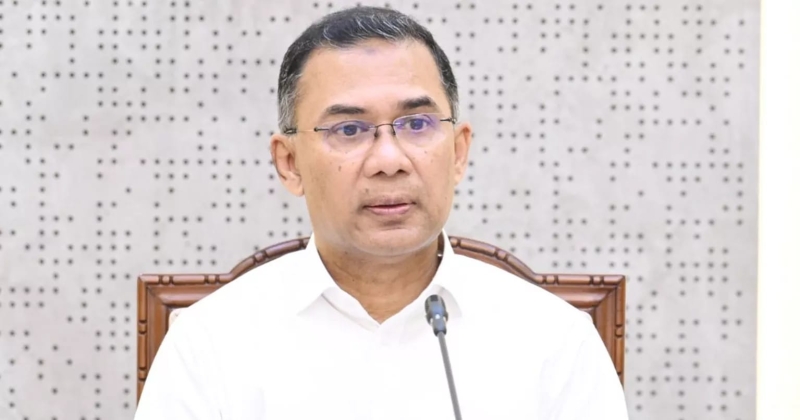
Prime Minister Tarique Rahman on Wednesday told Parliament that the
government is considering construction of another barrage on the Teesta
River to conserve water during the dry season.
“Technical and
financial aspects are being examined for constructing another barrage on
the Teesta River to conserve water during the dry season,” he said
while replying to a question from NCP lawmaker Akhter Hossen
(Rangpur-4).
He said the Teesta is vital for livelihoods in
northern Bangladesh, but upstream dams and other limitations reduce
water flow during the dry season, affecting irrigation and agriculture,
while excessive rainfall upstream often causes sudden floods and
riverbank erosion during the monsoon.
The Prime Minister said
riverbank protection works covering 42.5 kilometres are underway in five
Teesta basin districts—Rangpur, Nilphamari, Kurigram, Gaibandha and
Lalmonirhat—at a cost of Tk 230 crore and are scheduled for completion
this month.
He said a feasibility study for a sustainable and integrated Teesta development plan has already been completed, he said.
According
to the study, the proposed Teesta Master Plan includes river training
and protection works along 110 kilometres, dredging of another 110
kilometres, construction of 224 kilometres of flood control embankments
with roads on top, and reclamation and development of 170 square
kilometres of land.
Replying to a tabled question from treasury
bench lawmaker Robiul Awal (Tangail-6), the Prime Minister said
implementation of the Tk 34,347-crore Padma Barrage project will add an
extra 0.45 percent growth to the country's Gross Domestic Product (GDP).
“Once
the project is implemented, it will be possible to generate 113 MW of
hydropower and achieve an additional 0.45 percent GDP growth,” he said.
The
Prime Minister said the current government's election manifesto has
attached importance to tackling climate change and that a number of
multi-dimensional programmes have been undertaken in the water resources
sector to address its adverse impacts.
These include
implementation of the Padma Barrage project, the Teesta Master Plan,
riverbank erosion prevention, flood protection measures and reduction of
salinity in agricultural lands, he said.
Noting that the first
phase of the Padma Barrage project involving Tk 34,347 crore was
approved on May 13 last, he said, "Through the implementation of this
project, the river system in the Padma-dependent areas will be
revitalised by conserving water in the Padma River during the dry season
and increasing the flow of water."
Besides, it would reduce
salinity intrusion in the southern region, restore the ecological
balance of the Sundarbans, improve drainage systems, reduce
waterlogging, expand irrigation facilities and strengthen water
security, said Tarique Rahman.
Highlighting different climate
initiatives, he said a programme has been undertaken to plant 25 crore
trees in the next five years.
He said the Bangladesh Climate
Change Trust has prioritised research, innovation, training and
extension activities to address climate risks and has taken several
initiatives, including the creation of rural natural reservoirs in
coastal districts to preserve rainwater and ensure drinking water
security.
The Prime Minister said the government has taken an
initiative to formulate a National Adaptation Plan (NAP) Investment
Roadmap with support from the Asian Development Bank (ADB) to implement
the NAP under the United Nations Framework Convention on Climate Change
to combat the adverse impacts of climate changes.
Alongside
adaptation efforts, he said, the government has started preparing the
Third Nationally Determined Contributions (NDC 3.0) to reduce greenhouse
gas emissions.
Under the NDC 3.0, some 25 percent of the
country's total electricity demand will be met from renewable sources by
2035, four waste-to-energy plants and 26 integrated landfill and
resource recovery facilities will be established, while afforestation
and reforestation programmes covering 100,000 hectares in coastal,
island and degraded areas will be implemented.
He said work has also begun on formulating Long-Term Low Emission Development Strategies to reduce emissions.
Replying
to a question from BNP lawmaker Md Abdullah (Munshiganj-1), the Prime
Minister said the government has adopted various measures to increase
the tax-to-GDP ratio and the National Board of Revenue has already
adopted a Medium and Long-Term Revenue Strategy (MLTRS) in this regard.
“We
hope that implementation of these plans will increase the tax-to-GDP
ratio by two percentage points within one year and raise it to 10
percent within five years,” he said.
He added that various
initiatives, including the Strengthening Domestic Revenue Mobilisation
Project and gradual rationalisation of tax exemptions, have been
undertaken with a target of increasing the tax-to-GDP ratio to 15
percent by 2035.
Responding to a question from BNP lawmaker
Mobasser Alam Bhuiyan (Cumilla-10), Tarique Rahman said the government’s
electoral manifesto put importance on the improvement of road and rail
connectivity.
To improve the road connectivity, he said plans
have been taken to gradually establish an expressway grid on national
highways and develop a multimodal transport system to reduce pressure on
roads.
Regarding railways, the PM said 24 projects have been
identified under short-term (up to 2026-27), medium-term (2027-2030) and
long-term (2031-2045) action plans to implement the Railway Master Plan
and establish Bangladesh Railway as the backbone of the national
transport system.
According to the formulated Railway Master
Plan, railway services will be gradually brought to the doorsteps of
every district and major towns with the aim of establishing Bangladesh
Railway as the backbone of the national transport system, he said.
The
government has also decided to introduce electric traction on major
routes to reduce travel time and ensure safer and environment-friendly
transportation, he added.
Replying to a question from treasury
bench lawmaker Shamsur Rahman Simul Biswas (Pabna-5), the Prime Minister
said the government is working to gradually increase the use of surface
water in Dhaka and all divisional cities to reduce pressure on
groundwater.
He said Dhaka WASA currently collects around 65 to
70 percent of its water from groundwater sources and the remaining 30 to
35 percent from surface water sources such as the Padma, Meghna and
Shitalakkhya rivers.
To address alarming depletion of groundwater
levels in Dhaka, water treatment plants at Gandharbpur in Rupganj and
Saidabad are increasing the supply of treated water from the Meghna and
Shitalakkhya rivers, he said.
Tarique Rahman said Chattogram WASA
now sources about 92 percent of its water from surface sources, while
only eight percent comes from groundwater.
He said Rajshahi WASA currently supplies two percent of its water from surface sources and 98 percent from groundwater.
Responding
to a question from BNP lawmaker Mostafizur Rahman Babul (Jamalpur-3),
the Prime Minister said the government is attaching the highest priority
to implementing the Expanded Programme on Immunisation (EPI) to prevent
measles outbreaks.
He said the causes and spread of measles, as
well as the impact of policy and operational issues on vaccination
activities, are being regularly reviewed and evaluated.
He said
the matter will be examined based on necessary data and technical
assessments to determine whether any changes in vaccine procurement
procedures have negatively affected immunisation activities.
If any negligence of any person or institution is found, necessary action will be taken in accordance with existing laws and regulations, he said, reports UNB.