

- BNP govt solved Rohingya crisis twice before, will do so again: FM |
- Venezuela earthquakes kill 920, tens of thousands missing |
- Search Continues After Venezuela Quakes Kill 235 |
- Dhaka, Beijing sign 13 MoUs to deepen cooperation across key areas |
- China Eyes Teesta Project, Trade Boost With Bangladesh |
24,000 die annually in BD due to high-sodium foods
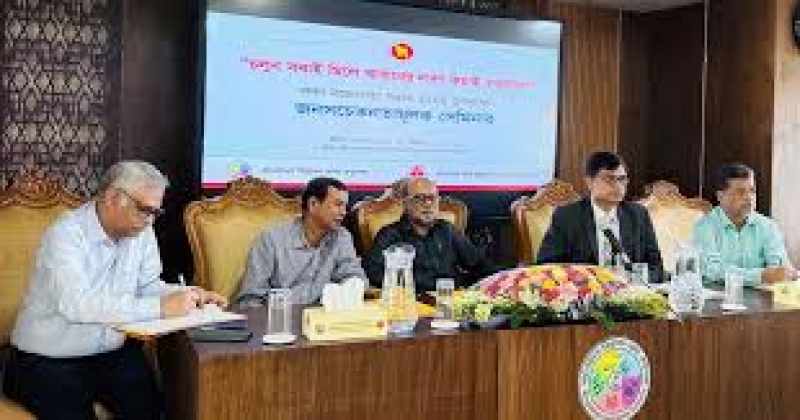
Processed and ultra-processed foods including packaged snacks and processed meat are among the leading contributors to excessive salt intake in Bangladesh, speakers said at an awareness seminar on Wednesday.
According to the World Health Organization (WHO), excessive salt consumption causes nearly 1.7 million deaths globally each year. In Bangladesh, high-sodium foods are linked to around 24,000 deaths annually.
The information was shared at a public awareness seminar organised to mark Salt Awareness Week 2026, being observed globally from May 11 to 17 with the slogan, ‘Let’s reduce salt in our food together.’
The seminar jointly organised by the BFSA and the National Heart Foundation of Bangladesh (NHFB) was held at the conference room of the Bangladesh Food Safety Authority (BFSA).
BFSA Chairman (Additional Secretary) Md Anwarul Islam Sarkar chaired the event. Director General of the Directorate of National Consumer Rights Protection Faruk Ahmed attended as chief guest, while BFSA member Prof Dr Mohammad Shoaib also addressed the programme.
Prof Shoaib said that although salt is essential for the human body many diseases caused by excessive intake can be prevented through simple dietary changes.
He warned that excess sodium raises blood pressure and significantly increases the risk of hypertension, heart disease, stroke, heart attack, heart failure, kidney disease, vascular dementia, osteoporosis, stomach cancer and other non-communicable diseases (NCDs).
“Excessive salt intake can also lead to fluid retention, swelling, a heavy feeling in the body, reduced joint flexibility and unhealthy weight gain,” he said.
Regular consumption of salty foods puts additional pressure on the heart, brain, kidneys and blood vessels, increasing long-term health risks, he added.
Citing the 2023 Global Burden of Disease Study by the Institute for Health Metrics and Evaluation (IHME), Prof Shoaib said around 11 million deaths worldwide in 2023 were linked to high blood pressure, including 1.67 million directly associated with high-sodium diets.
“Excessive salt intake has become one of the leading preventable dietary risk factors driving the global epidemic of non-communicable diseases,” he said.
He noted that NCDs are now the leading cause of death in Bangladesh, accounting for nearly 570,263 deaths annually — around 71 percent of total deaths in the country.
Of these, about 51 percent are premature deaths while heart disease alone accounts for 34 percent of fatalities.
The recommended daily salt intake for an adult is less than five grams, but the average consumption in Bangladesh exceeds nine grams, he added.
Instead of adding extra salt, people can use spices such as garlic, onion and ginger to enhance flavour, he suggested.
NHFB researcher Ahmed Khairul Abrar said many young people mistakenly believe they do not need to reduce salt intake because they currently have no health complications, reports UNB.
“However, reducing salt consumption is important at every stage of life,” he said.
WHO Bangladesh official Dr Samina Israt said non-communicable diseases claim 43 million lives globally every year.
“To prevent premature deaths, we must reduce salt consumption,” she said.