
- NCP Demands Impeachment, Arrest of President |
- PM Pledges to Modernise, Strengthen Border Force |
- Dhaka Tops Global Pollution List with Hazardous Air |
- Country Observes Martyred Army Day Today |
- 100 CSOs rally against Trump’s trade tactics, urge access to drugs |
Over a Billion Fear Losing Land and Homes in 5 Years
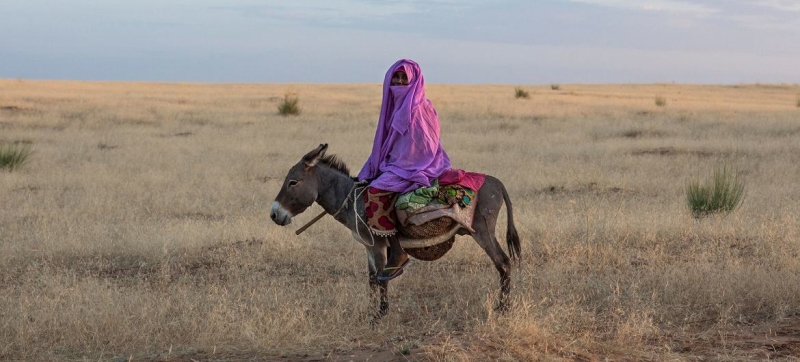
The ownership of only 35 per cent of the world’s land has been formally documented according to the UN.
Despite global progress in strengthening land tenure and governance, more than a billion people worldwide, nearly one in four adults, fear they could lose the rights to some or all of their land and housing within the next five years.
The finding comes from a UN-backed report that underscores the need for stronger political commitment and more inclusive land policies amid growing concerns over climate change, biodiversity protection, gender equality and rural transformation.
Over the past two decades, governments have adopted national and international frameworks on issues such as land policy in Africa and the responsible regulation of land, fisheries and forests, resulting in more than 70 countries undertaking land reform efforts.
‘Land insecurity’ and inequality
Yet progress remains slow. Currently, the ownership, tenure or use rights of only 35 percent of the world’s land are formally documented, according to the report produced by the Food and Agriculture Organization (FAO), the International Land Coalition (ILC) and CIRAD.
More than 1.1 billion people consider themselves “land-insecure”, believing it is likely or very likely they could lose their homes or property in the coming years.
“Land insecurity is one of the most damaging forms of inequality, paid for in lower productivity, weaker resilience and poorer nutrition,” said FAO Chief Economist Maximo Torero Cullen.
“Secure land tenure enables sustainable investment and is the difference between short-term survival and long-term food security.”
Who owns land?
The Status of Land Tenure and Governance report is described as the first comprehensive global assessment tracking how land is owned, used and governed.
It reveals that states hold legal ownership of more than 64 percent of land worldwide, including customary lands with recognised tenure rights but without formal documentation.
Just over a quarter of all land is privately owned by individuals, companies or collectives, while the tenure status of the remaining roughly 10 percent is unknown.
Specifically, around 18 percent of global land, or 2.4 billion hectares, is owned by private individuals and corporations.
When agricultural land is considered, about 37 percent of the world’s land area, the largest 10 percent of landholders control nearly 90 percent of cultivated land.
Diverse ownership systems
Land tenure systems vary widely across regions. In sub-Saharan Africa, 73 percent of land is held under customary tenure, though only one percent is formally recognised, with most land undocumented and technically under state ownership.
In North America, about 32 percent of land is privately owned; in Latin America, 39 percent; and in Europe, 55 percent, excluding Russia, where state ownership dominates.
Indigenous Peoples and women
Although Indigenous Peoples and other customary rights holders occupy about 5.5 billion hectares, roughly 42 percent of global land, only about one billion hectares have documented ownership rights.
Data also shows that in most countries women are less likely than men to own land or hold secure land rights for housing or agriculture, highlighting the importance of legal documentation.
“Too many people still live with the fear of losing their land and homes, with women and young people among the most excluded,” said ILC Director Marcy Vigoda. “This undermines food security, climate action and biodiversity protection.”
According to custom
The report examines customary land systems stewarded by Indigenous Peoples, pastoralists and tribal communities. These lands include forests, grasslands, wetlands and fisheries and are increasingly recognised as vital for biodiversity conservation and climate action.
Approximately 4.2 billion hectares of customary land have been mapped globally, representing over 32 percent of the Earth’s land area excluding Antarctica.
Carbon release alert
These territories contain an estimated 45 gigatons of irrecoverable carbon, largely stored in forests, about 37 percent of the global total. Once released, this carbon cannot be reabsorbed quickly enough to prevent additional global warming.
The report warns that customary lands face growing pressure from urban expansion, industrial agriculture, oil and gas extraction and mining.
Some climate-related initiatives, including renewable energy projects, biofuels, conservation schemes and carbon offset programmes, may also increase pressure on lands that lack formal legal recognition or protection.