

- Human Rights Record ‘Alarming’ Over 17 Months, Says HRSS |
- Tarique Warns of Deep Plot, Urges Vigilance Nationwide |
- Son of late ruler Gadhafi is killed in Libya |
- Special prayers, foods, charity mark Shab-e-Barat in Old Dhaka |
- Exiled Awami League Leaders Plan Political Comeback from India |
Rafah Crossing Reopens, but Gaza Aid Still Falls Short
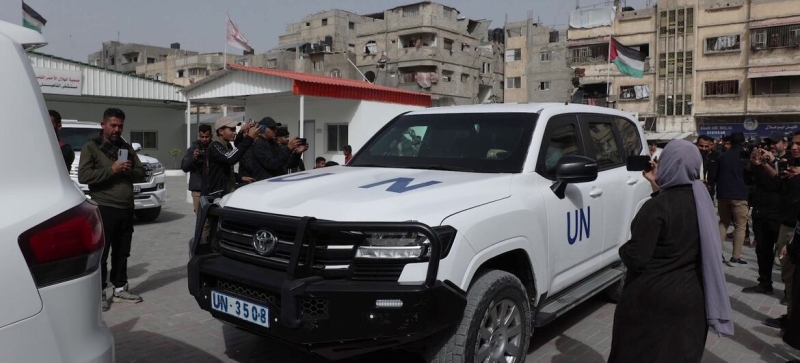
The World Health Organisation is overseeing the transportation of patients to the Rafah border crossing on the first day of its reopening.
The partial reopening of the Rafah crossing between Gaza and Egypt has allowed a small number of people to leave and return to the Strip—including critically ill patients—but the UN has warned that much more is needed for the crossing to function as a genuine humanitarian lifeline.
Briefing journalists in New York on Tuesday, UN spokesperson Stéphane Dujarric said UN relief chief Tom Fletcher welcomed the reopening but stressed that it must go beyond limited movements of people.
“Rafah must function as a real humanitarian corridor so we can have a surge in aid deliveries,” Fletcher said, underlining that current access remains insufficient to meet the vast and growing needs across Gaza.
Only five evacuated
The World Health Organization (WHO) confirmed that when the crossing briefly opened on Monday, it facilitated the evacuation of five patients and seven companions from Gaza into Egypt. WHO said its role focused on ensuring the safe transfer of patients from inside Gaza to the Rafah crossing after security clearance was obtained.
Speaking separately in Geneva, WHO spokesperson Christian Lindmeier described the evacuations as the first through Rafah in months, calling them “the start of a process” and a test of whether a sustained flow could be established. “Obviously, we need many more,” he said.
According to WHO, more than 18,500 patients in Gaza still require specialised medical care that is no longer available in the Strip, including people suffering from severe trauma, cancer, and chronic diseases such as diabetes.
‘Human disaster’
“18,500 waiting, five managed to get out… That’s not just math—it’s a human disaster for those having to wait,” Lindmeier said, highlighting the tragedy of patients who have died while awaiting evacuation, despite life-saving treatment being available just across the border. A major challenge remains finding countries willing to receive patients.
Further movements are expected through Rafah in the coming days. WHO continues to facilitate the transfer of patients and their companions, while the UN Development Programme (UNDP) is providing bus transportation for returnees from an internal checkpoint to Nasser Hospital in Khan Younis.
At the hospital, OCHA and several UN and NGO partners have established a reception area offering medical, psychosocial, and referral services.
Widespread needs
Beyond medical evacuations, UN agencies and humanitarian partners continue to respond to widespread needs across Gaza. Food security partners reported that by the end of January, around 25 organisations were producing and distributing 1.7 million meals daily through more than 180 kitchens, with over half a million meals in the north and 1.2 million in the south.
Partners also brought in around 650 metric tonnes of animal feed during January, now being distributed to livestock holders and donkey owners who support essential services.
Schooling and shelter
In the shelter sector, more than 83,500 families received assistance last month, including tents, mattresses, kitchen utensils, and warm clothing, though partners stress the urgent need to move towards more sustainable housing solutions. Education partners are also working to expand learning capacity by setting up new spaces and supporting community-led initiatives as supplies gradually arrive.
Despite these efforts, the UN has reiterated that without sustained access through crossings such as Rafah, humanitarian needs will continue to outpace the response.