

- Net FDI in BD jumps over 200 percent in Q3 of 2025: BIDA |
- Quilt makers race against time as severe cold grips Lalmonirhat |
- Dhaka's air quality turns ‘very unhealthy’ on Monday |
- Rohingya Pin Hopes on UN Genocide Hearing for Justice |
- Trump Says Open to Meeting Venezuela’s Interim Leader |
Rohingya Pin Hopes on UN Genocide Hearing for Justice
Hope remains fragile but enduring in the vast Rohingya refugee camps of Cox’s Bazar, where more than a million people who fled violence in Myanmar continue to live in harsh and overcrowded conditions.
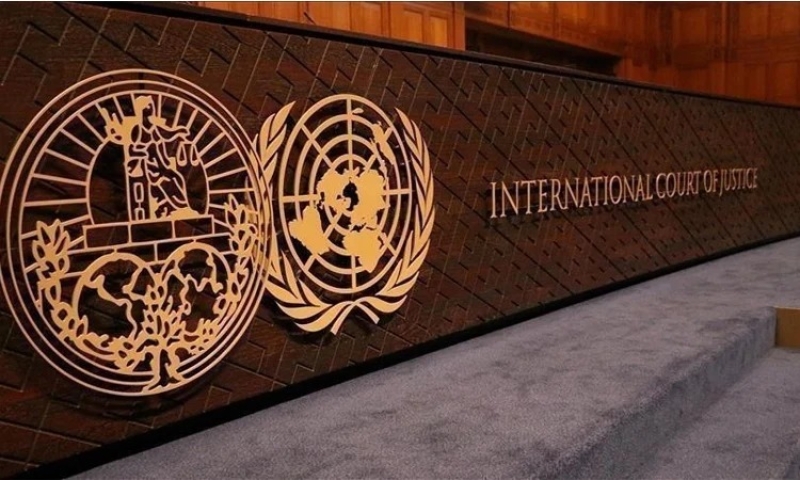
Amid rows of bamboo shelters and muddy pathways, refugees who escaped nearly a decade ago are closely following developments unfolding more than 8,000 kilometres away at the International Court of Justice (ICJ) in The Hague. On Monday, the court will begin hearings in a genocide case filed against Myanmar.
“We want justice and peace,” said Janifa Begum, 37, a mother of two. “Our women lost their dignity when the military launched the crackdown. Villages were burned, men were killed, and women were subjected to widespread violence.”
The case was brought by The Gambia, which accuses Myanmar of violating the 1948 Genocide Convention during the military’s 2017 campaign against the Rohingya. Hundreds of thousands of Rohingya Muslims fled the violence and crossed into Bangladesh. Myanmar’s ruling authorities have denied the allegations.
“My house was burned down,” Begum said. “I fled with my husband and two brothers-in-law with nothing—no food, no belongings. Later, I heard our land had been seized.”
Lingering trauma, distant justice
For many refugees, the ICJ hearings represent rare international recognition of years of suffering that they believe has long been ignored.
“I hope the court brings some comfort to the deep wounds we still carry,” said Mohammad Sayed Ullah, 33, a former teacher and now a member of a Rohingya refugee organisation. While acknowledging that the ICJ lacks enforcement power, he said accountability still matters.
“The perpetrators must be held responsible,” he said. “If justice is done fairly and without delay, it could open the door to a genuine repatriation process.”
Ullah fled Myanmar in 2017 following what he described as a brutal military campaign. His journey to Bangladesh took more than two weeks through jungles and swamps.
“My elderly mother suffered the most,” he said. “Along the way, we saw villages burning. My neighbouring village was soaked in blood.”
He recalled scenes of violence as troops surrounded villages, killed men, and subjected women to abuse. “People gathered in one place for safety, but the soldiers laid siege and carried out massacres,” he said.
A fight for recognition
Rohingya human rights activist Maung Thein Myint said the hearings carry deep symbolic importance for the community.
“My expectations are rooted in lived suffering and long-denied truth,” he said. “I hope the court clearly recognises that what was done to the Rohingya was genocide—systematic, state-led, and intended to erase our existence.”
Though aware of the court’s limitations, he said a strong ruling could still have far-reaching impact. “Such recognition can restore dignity to victims, strengthen global accountability, and keep alive our hope for justice, protection, and a safe, voluntary, and dignified return home,” he said.
In the camps of Cox’s Bazar, justice still feels distant. Yet the ICJ proceedings offer a rare sense of hope that Rohingya voices may finally be heard.
“I want to see whether the suffering we endured is reflected in the hearings,” said Begum, holding her infant daughter while watching her young son play nearby. “I hope one day we can return home and live with dignity.”