

- Islami Andolan to Contest Election Alone in 13th Poll |
- 3 killed in Uttara building fire; 13 rescued |
- Late-night deal ends standoff: BPL resumes Friday |
- Global Marine Protection Treaty Enters into Force |
- US Immigrant Visa Suspension Triggers Concern for Bangladesh |
Ukraine Families in Survival Mode Amid Strikes and Cold
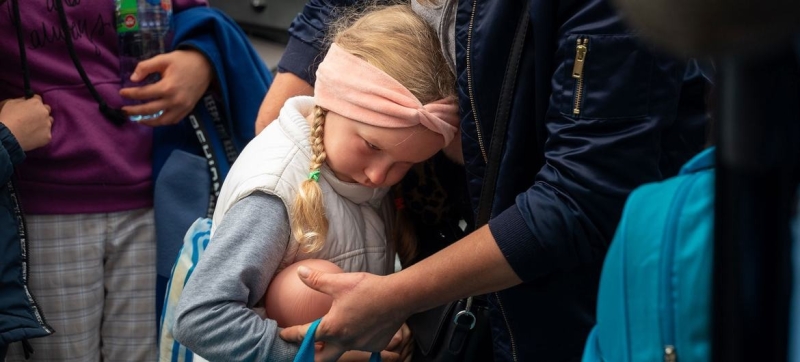
Families across Ukraine are in “constant survival mode” amid ongoing waves of Russian missile and drone strikes that have left residential blocks without power for days at a time, while temperatures plunge to deadly lows, the UN Children’s Fund (UNICEF) said on Friday.
“Families have actually resorted to stuffing even soft toys into their windows to block some of the freezing cold,” said Munir Mammadzade, UNICEF country representative in Ukraine.
The warning follows another night of reported attacks on power infrastructure in Zaporizhzhia oblast in the south and Kharkiv oblast in the east, leaving many residential areas without electricity and heating.
The deadly threat posed by cold weather due to attacks on energy networks is becoming a “national-scale emergency, on top of the war,” Mr Mammadzade told journalists in Geneva during a scheduled briefing.
Pointing to temperatures of minus 15 degrees Celsius (5°F) in Kyiv on Friday, the UNICEF official warned that next week could be even colder, while millions of families across the country continue to live without heating. “Children and families are in constant survival mode because of that,” he said.
Aid shift
While humanitarian efforts have so far focused on frontline areas, continued Russian strikes on urban infrastructure, including residential neighbourhoods, have highlighted a far more complex set of needs among people living in apartment buildings.
One such resident is Svitlana from Kyiv, who is doing everything she can to care for her three-year-old daughter, Adina, on the 10th floor of her building. “She told us she had no heating or electricity for more than three days, and that was during the first week of disruption. We are now already in the second, or almost third, week, and many families continue to go without,” Mr Mammadzade said.
Echoing those concerns, Jaime Wah of the International Federation of Red Cross and Red Crescent Societies (IFRC) said that although power had been restored “within days” following earlier attacks on Kharkiv and Odesa, the situation appeared more difficult in the capital. Speaking via video link from Kyiv, she said, “We are facing sustained outages here, with larger populations affected.”
Nearly four years after the full-scale Russian invasion of Ukraine, “children’s lives are still dominated by thoughts of survival rather than childhood,” Mr Mammadzade warned, noting an 11 percent increase in verified child casualties in 2025 compared with the previous year.
UNICEF supports vulnerable people in Ukrainian cities by helping to set up large communal tents where families can warm themselves and where children can play with games and toys.
“Svitlana can’t bathe Adina or prepare hot food, so she wraps her child in multiple layers and climbs down 10 floors of a dark stairwell to reach a tent set up outside by Ukraine’s State Emergency Services,” Mr Mammadzade explained. “There, they can warm up, get hot food, charge their devices and speak with a psychologist, or simply sit in the warmth.”
UNICEF warned that children are particularly vulnerable to the physical and mental effects of prolonged darkness and freezing temperatures, which can intensify fear and stress and may lead to, or worsen, respiratory and other health conditions.
“The youngest children are the most vulnerable,” Mr Mammadzade said. “Newborns and infants lose body heat rapidly and face a heightened risk of hypothermia and respiratory illness, conditions that can quickly become life-threatening without adequate warmth and medical care.”