

- Bangladesh Exports Rise 13.14% in August to $4.43bn |
- Bay of Bengal turbulent due to clear low pressure, Sgnal No 03 at Payra Port |
- Govt puts rural Bangladesh at heart of development agenda |
- BNP celebrates its 48th founding anniversary Tuesday |
- Dengue situation worsens in Pirojpur |
Nepal Floods Kill 987, Raise Concern for Women and Girls
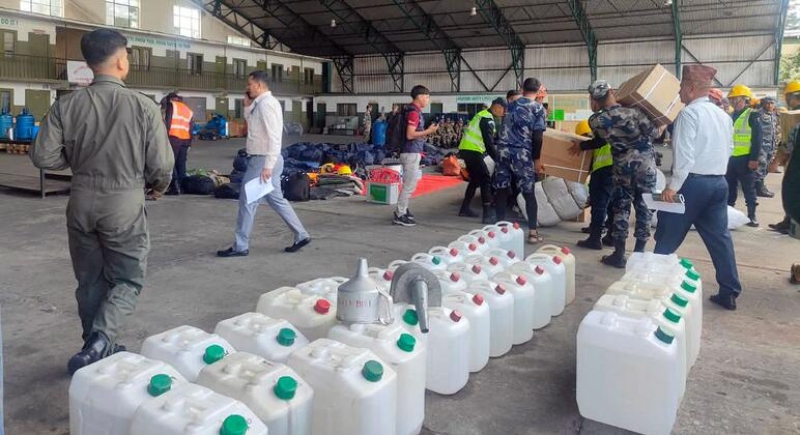
In Kathmandu, critical emergency supplies are prepared for delivery to cut-off mountain villages affected by the catastrophic flash floods and mudslides in central-northern Nepal.
Rescue operations are continuing in Nepal after devastating flash floods left 987 people dead and 4,247 missing, with humanitarian agencies warning of growing risks for women and girls.
The floods were triggered by a glacier collapse in the Himalayas along the China-Nepal border. Authorities reported 16 deaths and 546 people missing in the affected area, according to UN aid coordination officials.
Nearly a week after the disaster began, rescue teams are still struggling to reach some of the hardest-hit areas, including Rasuwa district.
The International Federation of Red Cross and Red Crescent Societies said search and rescue operations remain underway, while continued monsoon rains are keeping the threat of further flooding and landslides high.
Blocked waterways and damaged infrastructure are creating additional risks as survivors return to assess their homes and recover what remains of their belongings.
Women and girls face heightened risks
Around 43,000 women and girls in Nepal now require immediate humanitarian assistance, according to UN Women.
Humanitarian partners report that women survivors in the worst-affected areas are running short of food, while access to safe water has been severely disrupted. Protection concerns are also increasing.
Women and girls also face a heightened risk of gender-based violence, exploitation and trafficking following the disaster. Damage to roads and communication networks can make it more difficult for survivors to seek help or access protection services.
UN Women warned that women could also be excluded from decision-making during relief and recovery efforts.
The disaster has exposed existing inequalities, with pregnant women, nursing mothers and people with disabilities among those particularly vulnerable because they may have difficulty reaching higher ground or accessing assistance.
In Rasuwa, women were already spending hours collecting water before the floods. The destruction of water systems, roads and bridges has now severely restricted access to safe water.
Humanitarian agencies say food is the most urgent need for women in the worst-affected communities.
They have also stressed that women and girls must be included in Nepal's recovery planning and treated as key participants in rebuilding affected communities.
Health services under pressure
Access to healthcare remains another major concern.
Six health facilities have been damaged or destroyed, while two others remain inaccessible, leaving affected communities without adequate medical services when they need them most.
The World Health Organization warned that flooding, displacement, overcrowding and stagnant water could increase the risk of disease outbreaks.
Health authorities are monitoring affected and downstream areas for potential increases in dengue, scrub typhus and other communicable diseases.
The WHO is also helping identify priority medicines, diagnostic kits and other essential health supplies while providing technical guidance on infection prevention and the safe and dignified management of bodies.
Humanitarian agencies say immediate rescue and relief efforts must continue alongside measures to protect vulnerable groups and prevent secondary health crises as Nepal begins the difficult process of recovery.