

- Bangladesh Exports Rise 13.14% in August to $4.43bn |
- Bay of Bengal turbulent due to clear low pressure, Sgnal No 03 at Payra Port |
- Govt puts rural Bangladesh at heart of development agenda |
- BNP celebrates its 48th founding anniversary Tuesday |
- Dengue situation worsens in Pirojpur |
Bangladesh Exports Rise 13.14% in August to $4.43bn
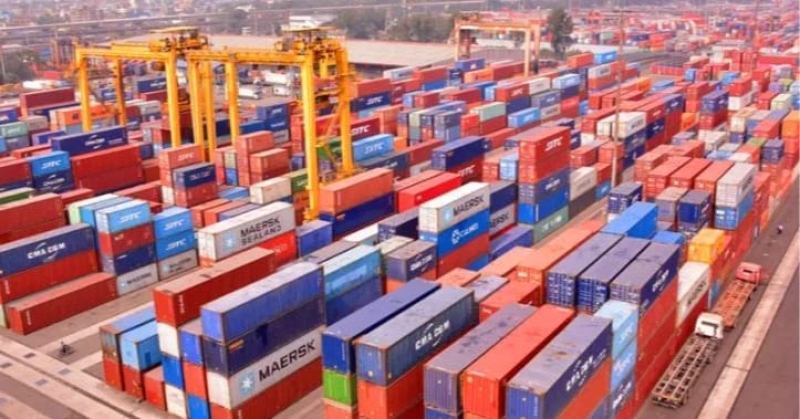
Bangladesh’s merchandise exports increased 13.14 percent year-on-year to $4.43 billion in August, compared with $3.92 billion in the same month last year, according to data from the Export Promotion Bureau (EPB).
Exports in the first two months of fiscal year 2026-27 also grew 5.43 percent to $9.16 billion from $8.69 billion during the corresponding period of the previous fiscal year.
The ready-made garment (RMG) sector remained the main driver of export growth, with earnings rising 13.92 percent year-on-year to $3.89 billion in August. RMG exports during July-August increased 5.12 percent to $7.50 billion.
Both major apparel segments posted strong growth in August. Knitwear exports rose 14.88 percent, taking cumulative growth for July-August to 6.17 percent, while woven garment exports increased 12.70 percent, bringing cumulative growth to 3.81 percent.
Several non-RMG sectors also recorded double-digit growth in August, supporting efforts to diversify Bangladesh’s export base.
Jute and jute goods exports increased 37.09 percent in August and 22.26 percent during July-August. Pharmaceutical exports surged 28.52 percent in August and 38.94 percent cumulatively.
Leather and leather goods exports grew 24.85 percent in August, while printed materials increased 24.83 percent, with cumulative growth reaching 41.89 percent.
Engineering products posted 23.88 percent growth, while other footwear exports increased 15.29 percent, with cumulative growth reaching 27.32 percent.
The United States remained Bangladesh’s largest export destination, with exports to the country rising 26.09 percent in August and 11.90 percent during July-August.
The United Kingdom regained its position as the second-largest export market, followed by Germany, Spain and the Netherlands.
Among emerging markets, exports to Türkiye surged 141.03 percent, while shipments to South Korea and Saudi Arabia increased 42.37 percent and 42.09 percent, respectively.
The growth in export earnings was attributed to stronger demand in key international markets, improved buyer confidence, expanded production capacity, higher shipments of value-added products and efforts to diversify export destinations.