

- Sher-e-Bangla was leader of all communities: PM |
- Lightning Strikes Kill 12 Across Bangladesh |
- War Fallout: Urge to Revive Strategic Autonomy of President Zia |
- Trump cancels Pakistan talks trip, says Iran war on hold |
- Trump assures first lady, VP safe; White House event postponed |
FBCCI, UNOCHA explore private role in humanitarian response
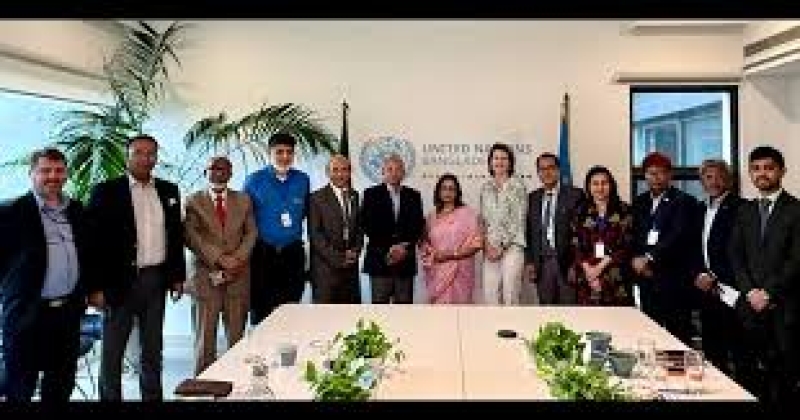
A high-level meeting was held at the UN House in Dhaka between the United Nations Office for the Coordination of Humanitarian Affairs (UN OCHA) and the Federation of Bangladesh Chambers of Commerce and Industry (FBCCI) to discuss structured private sector engagement in humanitarian preparedness and response in Bangladesh.
The meeting brought together Lisa Doughten, Director of the Financing and Outreach Division of UN OCHA, along with senior officials from OCHA headquarters in Geneva and its Asia-Pacific regional office, according to a press release.
The FBCCI delegation included senior business leaders, former directors, representatives of major industry groups, and officials from the FBCCI Safety Council.
Discussions focused on how the private sector can play a more structured role in humanitarian response, particularly in disaster preparedness, emergency coordination, and post-disaster recovery. Both sides highlighted Bangladesh and Myanmar as priority countries for OCHA’s humanitarian work in Asia.
Participants reviewed OCHA’s global coordination mechanisms, including the Central Emergency Response Fund (CERF), Country-Based Pooled Funds, and Humanitarian Response Plans, which ensure timely and targeted aid delivery.
FBCCI’s recent inclusion as the 22nd member of the Connecting Business Initiative (CBI), a joint platform of OCHA and UNDP, was highlighted as a key step toward stronger private sector involvement in crisis response.
The meeting also emphasized aligning private sector capabilities—such as logistics, supply chains, financing, and technology—with national disaster management systems to improve response efficiency.
Future cooperation areas discussed included joint capacity-building programmes, development of a pilot private sector emergency coordination model, and integration of FBCCI Safety Council into national and international coordination frameworks.
Both sides stressed the importance of gender-responsive and inclusive approaches, particularly in supporting women-led enterprises and MSME resilience during crises.
The session concluded with a shared commitment to build a scalable public-private partnership model in humanitarian action, with potential application beyond Bangladesh.