

- Deadly Inani Beach Fire Exposes Gaps in Tourism Safety |
- PM Tarique Rahman Pledges Inclusive Dev in Dialogue with Persons with Disabilities |
- PM Inspects 13 Dhaka Sites, Sets Deadlines for Cleanliness |
- Efforts to build a clean Bangladesh must start now, PM tells students |
- Five killed as fire breaks out in Cox’s Bazar resort |
Silent Killers In Hospital ICUs - Drug-Resistant Superbugs
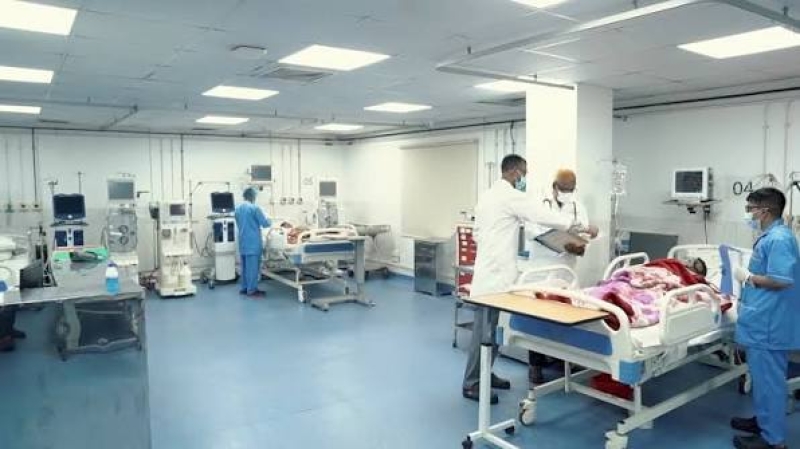
Hospital ICUs infect patients with new drug resistant germs instead of curing them, study finds
Special Correspondent
Hospitals are meant to be places of healing. Yet, for a growing number of critically ill patients in Bangladesh, admission to an intensive care unit (ICU) in a hospital carries another grave risk: acquiring dangerous bacteria that are resistant to nearly all available antibiotics.
Two landmark studies by the International Centre for Diarrhoeal Disease Research, Bangladesh (icddr,b) have revealed an alarming picture of how difficult-to-treat drug-resistant bacteria are spreading inside the country's ICUs and neonatal intensive care units (NICUs). The findings expose a silent public health crisis that not only claims lives but also threatens to undermine decades of progress in modern medicine.
The research, however, offers a measure of hope. It demonstrates that relatively simple and cost-effective infection prevention measures can dramatically reduce infections and save lives.
Published recently in the peer-reviewed journals Microbiology Spectrum and Antimicrobial Resistance & Infection Control, the studies call for urgent national action to strengthen infection prevention, improve hospital hygiene and promote responsible antibiotic use before antimicrobial resistance (AMR) spirals further out of control.
Antimicrobial resistance has become one of the world's fastest-growing health threats. The World Health Organization (WHO) considers it among the top ten global public health challenges, warning that routine infections may once again become fatal as antibiotics lose their effectiveness.
Bangladesh, where antibiotics are widely used and often misused, has long been regarded as one of the countries that are most vulnerable to antimicrobial resistance. Until now little evidence existed on how drug-resistant bacteria spread within the country's intensive care units.
The new icddr,b studies provide one of the clearest pictures yet.
Researchers followed 373 critically ill adult patients admitted to the ICU of a tertiary government hospital in Dhaka between July 2023 and February 2024. They also studied 363 newborns admitted to the hospital's neonatal intensive care unit between December 2023 and September 2024.
Supported by the US Centres for Disease Control and Prevention (CDC), the studies investigated difficult-to-treat Gram-negative bacteria, a group of pathogens that have become resistant to many commonly prescribed antibiotics.
These bacteria are responsible for severe pneumonia, bloodstream infections, urinary tract infections, wound infections and other life-threatening illnesses, particularly among patients whose immune systems are already compromised.
The four organisms examined were: Escherichia coli, Klebsiella pneumoniae, Acinetobacter baumannii and Pseudomonas aeruginosa. Each has become increasingly difficult to treat worldwide because of growing antibiotic resistance.
Perhaps the most alarming finding was how rapidly resistant bacteria spread within the ICU itself.
Researchers found that nearly half (48.5 percent) of ICU patients already carried drug-resistant bacteria in their intestines when admitted. Although these patients showed no symptoms, they remained capable of transmitting the organisms to others.
Even more worrying was what happened afterward.
Among 198 patients who initially tested negative, 105—or 53 percent—acquired drug-resistant bacteria during their ICU stay.
The findings point to extensive transmission inside hospital wards.
Lead author Dr Gazi Md. Salahuddin Mamun, Assistant Scientist at icddr,b, said researchers monitored patients throughout their ICU stay using advanced laboratory testing and whole-genome sequencing.
"We followed ICU patients throughout their stay and used laboratory testing and whole-genome sequencing to understand how resistant bacteria spread within the hospital and how colonisation later progressed to infection. This allowed us to identify links between bacteria carried by patients and those causing subsequent deadly infections," he said.
Whole-genome sequencing further confirmed that bacteria silently carried by patients later caused serious infections in many cases.
In other words, harmless colonisation often became deadly disease.
The consequences proved devastating. Among patients who developed confirmed infections caused by difficult-to-treat resistant bacteria, more than 90 percent died in the ICU.
Although many ICU patients are already critically ill, researchers described the mortality rate as exceptionally high. Several factors contributed to these deaths.
Limited treatment options, delayed diagnosis, overcrowded ICUs, inadequate infection prevention practices and the extraordinary resilience of multidrug-resistant bacteria all combined to worsen patient outcomes. These findings underline a harsh reality confronting physicians. Even the most advanced critical care cannot save patients when antibiotics no longer work.
The studies raise difficult questions about infection control practices inside healthcare facilities.
Colonisation itself does not necessarily cause illness.
However, patients carrying resistant bacteria serve as reservoirs from which infections spread to others through contaminated hands, medical equipment, hospital surfaces or invasive procedures such as ventilators, urinary catheters and intravenous lines.
Dr Fahmida Chowdhury, Lead of the Antimicrobial Resistance Research Unit at icddr,b and principal investigator of the study, said hospitals should never become places where patients acquire life-threatening infections.
"A hospital should be a place of healing, not a place where patients acquire another potentially life-threatening infection while seeking treatment."
She noted that more than half the patients who initially carried no resistant bacteria became colonised during their ICU stay.
"This is deeply concerning. Strengthening infection prevention and control practices, hospital hygiene, and responsible antibiotic use is essential to better protect critically ill patients."
Newborns offer a message of hope
While the ICU findings paint a grim picture, the companion study conducted in the neonatal intensive care unit tells a remarkably different story.
Researchers introduced a comprehensive infection prevention and control programme involving:
Regular hand hygiene training, improved environmental cleaning, better waste management, surveillance of infections, monitoring of healthcare workers' compliance, first responder training, stronger infection prevention practices. The intervention lasted seven months. The results were dramatic.
Bloodstream infections among newborns dropped from 28 to just four per 100 admissions—an 86 per cent reduction.
Mortality also declined sharply, falling from 26 deaths to only four per 100 admissions.
The findings demonstrate that expensive technology is not always necessary.
Simple practices such as proper hand washing, environmental cleaning, sterilisation of equipment and adherence to infection control guidelines can save hundreds of lives.
The new findings add to growing evidence that antimicrobial resistance is becoming one of Bangladesh's most pressing health challenges.
Earlier icddr,b studies documented widespread colonisation with resistant bacteria not only in hospitals but also in communities and among new-born babies.
Several factors have contributed to the crisis.
Antibiotics remain widely available without prescription.
Patients frequently stop treatment before completing full courses.
Broad-spectrum antibiotics are often prescribed unnecessarily.
Livestock and poultry production also consume large quantities of antibiotics, increasing environmental exposure.
Meanwhile, overcrowded hospitals, limited laboratory facilities and inadequate infection control accelerate transmission once resistant organisms enter healthcare settings.
Experts warn that unless action is taken quickly, infections once easily treated could become increasingly untreatable.
Drug-resistant infections impose enormous economic costs. Patients often require prolonged hospital stays, expensive second-line antibiotics and repeated laboratory investigations.
Families face catastrophic medical expenses, while hospitals experience shortages of ICU beds because patients remain admitted longer.
Nationally, antimicrobial resistance threatens labour productivity, healthcare financing and economic growth.
Globally, experts estimate antimicrobial resistance could claim up to 10 million lives annually by 2050 unless effective interventions are implemented.
Unlike the development of new antibiotics, which may take years and billions of dollars, infection prevention measures can be implemented immediately.
The icddr,b researchers recommend several priority actions:
Strict hand hygiene by healthcare workers; regular cleaning and disinfection of hospital environments; Surveillance of resistant bacteria; antimicrobial stewardship to reduce unnecessary antibiotic use; improved laboratory capacity; isolation of infected patients where feasible; continuous staff training; and stronger hospital infection prevention committees.
These measures are widely recognised internationally but remain inconsistently implemented in many resource-constrained hospitals.
icddr,b Executive Director Dr Tahmeed Ahmed said the studies should serve as a wake-up call for policymakers.
"These studies reveal a troubling reality: patients are acquiring difficult-to-treat drug-resistant bacteria while receiving care in our hospitals, and the consequences can be devastating."
"But they also show that strengthening basic infection prevention and control measures can dramatically reduce infections and deaths."
He urged hospital authorities and policymakers to make infection prevention, surveillance, hospital hygiene and responsible antibiotic use core patient safety priorities.
From the August print edition