

- Dhaka Ranks Ninth Globally With ‘Unhealthy’ Air Today |
- IRGC Says Supertanker Caught Fire After Hitting Sea Mine |
- $7.3 Trillion Fuels Nature Destruction, Guterres Warns |
- Infantino apologizes for World Cup furore but critics unhappy |
- Teesta irrigation project: Water in canals inadequate to enter fields |
Dhaka Ranks Ninth Globally With ‘Unhealthy’ Air Today
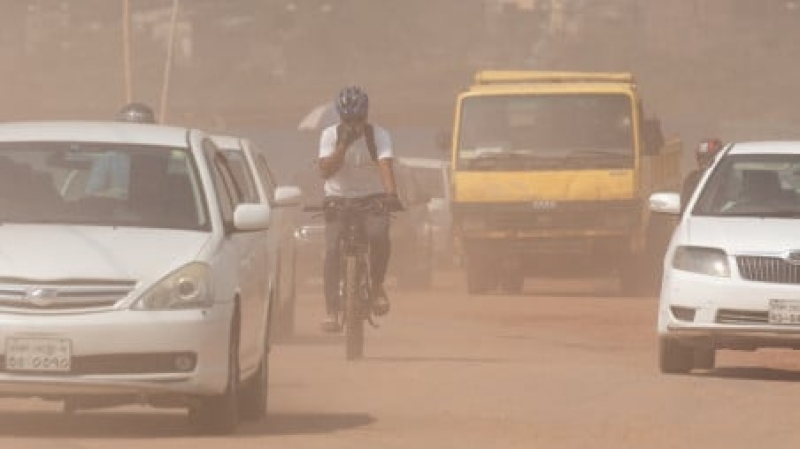
Dhaka's air quality remained ‘unhealthy’ on Saturday morning, with an Air Quality Index (AQI) score of 166 recorded at 9:14am.
With this score, the capital ranked ninth among the world's most polluted cities.
Baghdad in Iraq topped the list with an AQI score of 378, followed by Singapore at 206, Lahore in Pakistan at 201 and Mumbai in India at 192.
An AQI score between 50 and 100 is considered ‘moderate’, indicating acceptable air quality. Scores between 101 and 150 are classified as ‘unhealthy for sensitive groups’, while readings between 151 and 200 fall into the ‘unhealthy’ category.
AQI readings between 201 and 300 are considered ‘very unhealthy’, while scores above 300 are classified as ‘hazardous’ and may pose serious health risks.
The AQI provides daily updates on air quality, indicating how clean or polluted the air is and highlighting potential health impacts.
In Bangladesh, the AQI is calculated using five major pollutants: particulate matter (PM10 and PM2.5), nitrogen dioxide (NO2), carbon monoxide (CO), sulfur dioxide (SO2) and ozone.
Dhaka has long struggled with air pollution, with air quality typically deteriorating during winter and improving during the monsoon season.
The World Health Organization estimates that air pollution causes around seven million deaths worldwide each year, mainly from stroke, heart disease, chronic obstructive pulmonary disease, lung cancer and acute respiratory infections.