

- Govt Proposes 17-Member Panel for Constitution Reform |
- Energy Security Lies in in Solar Power |
- Breaking The Iron Grips of Oligarchy in Bangladesh |
- PM Unveils 12-Point Plan for Clean, Green Dhaka |
- Fuel shortage, rains hit Boro harvest in Habiganj haors |
Orbis CEO Urges Stronger Eye-Care Workforce in Bangladesh
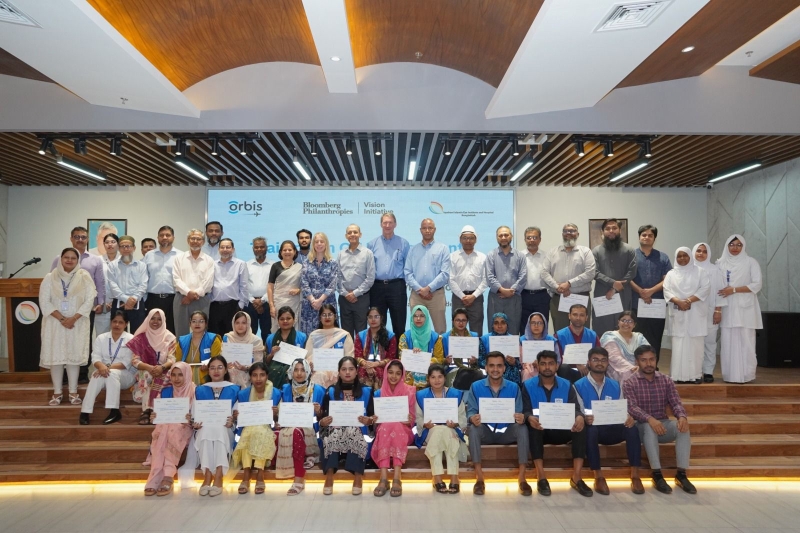
The President and CEO of Orbis International, Kathleen Sherwin, has called for renewed and intensified efforts to build a highly skilled and well-trained workforce to strengthen eye care services across Bangladesh.
She made the remarks while addressing a certificate distribution ceremony for nurse trainees at the Ispahani Islamia Eye Institute and Hospital (IIEI&H) on Tuesday. The event marked the successful completion of a three-day specialised training programme conducted under Orbis’s Comprehensive Cataract Services Project, supported by the Bloomberg Philanthropies Vision Initiative.
The programme brought together nursing professionals for hands-on training designed to enhance their clinical skills and improve patient care standards, particularly in cataract treatment—one of the leading causes of preventable blindness in Bangladesh.
Among those present at the event were IIEI&H Adviser Zahida Ispahani, CEO Brig Gen (retd) AKM Akhtaruzzaman, Orbis International’s Chief Financial and Administrative Officer Mark White, Director of Program Finance Oury Diallo, and Orbis Country Director for Bangladesh Dr Munir Ahmed.
In her speech, Sherwin highlighted the indispensable role nurses play in delivering quality eye care services. She stressed that continuous professional development is essential not only for improving surgical outcomes but also for ensuring that patients receive compassionate and patient-centred care.
“Skilled nurses are at the heart of effective eye care delivery,” she said. “Investing in their training strengthens the entire health system—improving outcomes, increasing efficiency, and ensuring dignity in patient care.”
Reaffirming Orbis’s long-term commitment to Bangladesh, Sherwin emphasised the need for sustained investment in capacity building, innovation, and strategic partnerships. She noted that addressing avoidable blindness requires a coordinated effort involving government institutions, healthcare providers, and international partners.
During her visit, Sherwin also held meetings with the leadership of IIEI&H, where she reviewed ongoing collaborative initiatives and explored ways to further strengthen institutional capacity, enhance service quality, and expand access to advanced eye care technologies.
Earlier, she visited Bangladesh Medical University (BMU), where she observed a range of initiatives aimed at advancing specialised eye care. These included programmes addressing complex conditions such as retinopathy of prematurity (ROP), a potentially blinding disease affecting premature infants.
Sherwin engaged with senior healthcare professionals and discussed opportunities to expand training, promote research, and improve service delivery. Among those present were BMU Neonatology Department Chairman Dr Mohammad Abdul Mannan and Ophthalmology Department Chairman Dr Syed Abdul Wadud.
Her visit is part of a broader tour focused on reviewing Orbis’s ongoing programmes in Bangladesh, strengthening partnerships, and identifying new opportunities to improve national eye health systems.
Orbis International has been working in Bangladesh for more than four decades, supporting efforts to prevent avoidable blindness, restore vision, and build sustainable eye care systems—impacting millions of lives across the country.