

- Govt Committed to Making Bangladesh a Dignified Nation: PM |
- Rights Groups Urge Sanctions on Myanmar After ICJ Ruling |
- PM Pays Tribute at Shikha Anirban on Armed Forces Day |
- COP31 Nations Push for Fossil Fuel Action, More Finance |
- WFP Seeks $12.1bn to Feed 91 Million People in 2027 |
Bangladesh Eyes Shrimp Export Growth Through Modern Farming
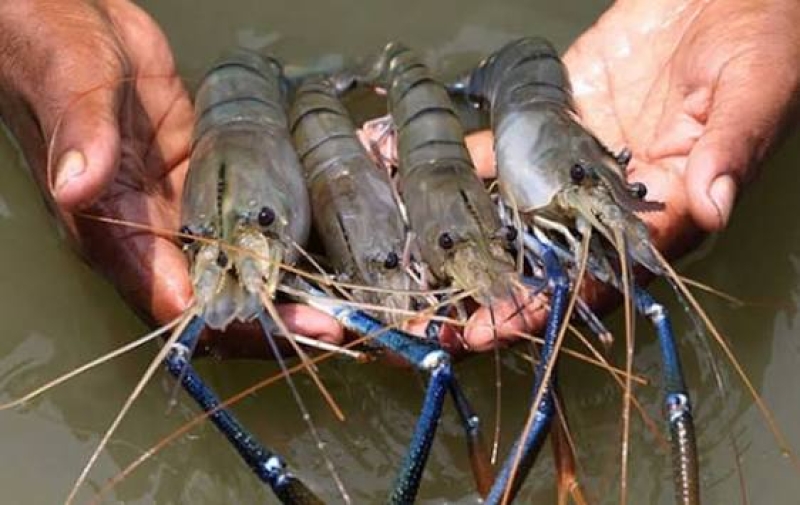
Bangladesh is stepping up efforts to modernise its shrimp farming industry to increase productivity, improve quality and secure a larger share of the global market amid growing competition from major exporting countries.
The government has undertaken a range of initiatives, including infrastructure development, disease-free shrimp fry production, farmers' training and financial assistance, according to an official document.
Under the programme, the Department of Fisheries (DoF) is providing free soil and water quality testing, along with technical advice for shrimp enclosures, locally known as ghers, to encourage improved farming practices.
Farmers are receiving training in Good Aquaculture Practices (GAP) and semi-intensive farming technologies. Demonstration farms are also being operated to promote sustainable and environmentally friendly shrimp farming.
To strengthen management of the sector, the department is registering and licensing shrimp farms.
It is also raising awareness among farmers about deepening water bodies and enclosures and stocking juvenile shrimp in ghers after nursing post-larvae (PL), with the aim of making production more profitable and environmentally sustainable.
In Cox's Bazar, 587 plots covering part of the 7,000-acre shrimp estate in Matamuhuri upazila have been leased out or had their leases renewed to increase production through improved management.
Work is also under way to develop shrimp estates by rebuilding embankments, re-excavating and renovating water supply and drainage canals, and repairing or reconstructing sluice gates.
A master plan has been prepared to establish a shrimp-based, multifunctional economic growth centre.
In coastal areas, 350 shrimp clusters have been formed, each comprising 25 farmers. Of these, 297 clusters have received competitive matching grants to introduce improved traditional farming methods.
In addition, 34 canals linked to the clusters, covering a total of 262 hectares, have been renovated and re-excavated.
Six post-harvest service centres have also been developed in shrimp cluster areas to reduce post-harvest losses and maintain product quality.
To ensure the production of pathogen-free post-larvae, 19 tiger shrimp (bagda) hatcheries and nurseries have been converted into Specific Pathogen Free (SPF) facilities.
"A monitoring protocol for operating SPF tiger shrimp hatcheries has been prepared, along with a standard operating procedure (SOP) for the management of tiger shrimp hatcheries to produce quality PL," the document said.
The DoF is also implementing the National Residue Control Plan (NRCP) 2018 to detect harmful chemicals, antibiotics and other contaminants in farmed shrimp and fish. Steps have also been initiated to update the National Shrimp Policy 2014.
Meanwhile, a modern freshwater prawn (golda) hatchery is being established at Char Kachhapia in Char Fasson upazila of Bhola district.
To expand the monoculture and mixed cultivation of golda and bagda shrimp across the country, post-larvae are being produced for stocking at 32 golda and 46 bagda hatcheries in the public and private sectors.
Bangladesh's shrimp industry remains an important source of export earnings, rural employment and foreign exchange. The southwestern coastal districts of Khulna, Satkhira and Bagerhat, along with the southeastern districts of Cox's Bazar and Chattogram, are major production centres.
According to the Department of Fisheries, the country produced around 299,000 tonnes of shrimp in the 2024-25 fiscal year, while average productivity remained relatively low at approximately 400 kilogrammes per hectare.
Traditional farming methods, inadequate supplies of quality shrimp fry, disease outbreaks, climate change and limited access to modern technology continue to constrain production.
Black tiger shrimp, locally known as bagda, and freshwater prawn, known as golda, are the country's major commercially cultivated varieties.
The DoF's Yearbook of Fisheries Statistics 2023-24 recorded 147,824 tonnes of farmed shrimp and prawn production, comprising 75,990 tonnes of bagda and 57,583 tonnes of golda.
The sector made a significant contribution to export earnings in FY2024-25, when Bangladesh exported 23,238 tonnes of frozen shrimp and prawn worth US$296.29 million. The figure accounted for around 76% of the country's total frozen fish and shrimp export earnings of US$388.7 million.
Despite a recovery in FY2024-25, shrimp export earnings remained substantially below their historical peak of around $550 million in FY2013-14.
Export earnings fell to $285 million in FY2025-26, while export value declined by a further 20% year-on-year during July-August of the current fiscal year, according to Export Promotion Bureau data.
The government is considering further measures to expand commercial production, improve productivity and attract investment, including a proposal to establish a dedicated shrimp economic zone.
However, Bangladesh faces stiff competition from countries such as India, Vietnam and Ecuador, where modern farming systems generate substantially higher yields.
The industry also faces challenges in meeting international quality standards, ensuring adequate supplies of disease-free post-larvae and diversifying export markets.
Improving hatchery facilities, introducing modern farming techniques, strengthening disease management and expanding value-added processing could help Bangladesh increase production and capture a larger share of the global shrimp market.
The sector's value chain includes hatcheries, feed suppliers, ice plants, transport operators, processing factories and traders, connecting small-scale farmers with overseas buyers in major markets.