

- Switzerland Beat Colombia to Reach World Cup Last Eight |
- Argentina beat Egypt 3-2 to reach World Cup quarter-finals |
- Bangladesh Leads South Asia in FDI Growth: UNCTAD |
- 3 flights diverted to Dhaka as rain disrupts operations at Ctg airport |
- Malaysia Reopens Labour Market for Bangladeshis |
Southwest Pacific Faces Escalating Climate Threats
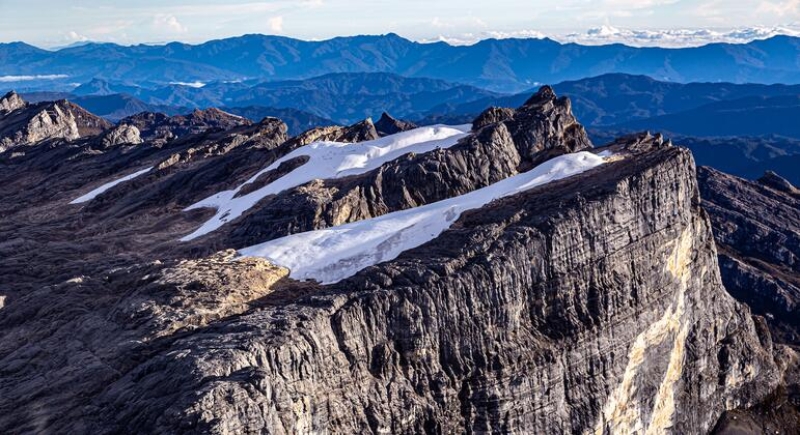
The shrinking equatorial glacier of Gunung Jaya Wijaya in Papua, Indonesia
The Southwest Pacific is facing mounting climate risks as its vast ocean region becomes hotter, more acidic and increasingly hazardous for coastal communities, according to a new report released by the World Meteorological Organization (WMO) on Tuesday.
The latest State of the Climate in the South-West Pacific report found that 2025 was the region's second-warmest year on record, behind 2024, with the average surface air temperature standing about 0.37 degrees Celsius above the 1991-2020 average.
The report highlights how rising sea levels are threatening low-lying island nations and coastal settlements, while marine heatwaves and ocean acidification are damaging ecosystems that support food security, fisheries, tourism and local livelihoods.
Last tropical glacier near disappearance
The WMO warned that the Southwest Pacific's last remaining tropical glacier, located in Indonesia, could disappear by the end of this year or early 2027. The glacier's remaining ice cover has shrunk to only about two percent of its 1988 size.
"For many countries and territories in the Southwest Pacific, the ocean is central to livelihoods, economies and resilience," said WMO Secretary-General Celeste Saulo.
"In 2025, the region experienced warming oceans, rising sea levels, marine heatwaves and ocean acidification, alongside tropical cyclones and the continued loss of tropical glacier ice," she added.
Oceans under growing pressure
According to the report, long-term ocean warming has made marine heatwaves more frequent, longer-lasting and more intense.
In 2025, record-high ocean heat content in the upper 700 metres of the ocean was observed south of Australia, in the southern Tasman Sea, parts of the tropical North Pacific between the Philippines and Hawaii, and south of Sumatra in Indonesia.
Average sea-surface temperatures remained exceptionally high across much of the region despite the temporary cooling effects of the La Niña climate pattern in some areas. Record temperatures were recorded around Papua New Guinea, the Australian region and across a broad stretch of the tropical western North Pacific extending from east of the Philippines to Hawaii.
Fisheries and ecosystems at risk
The WMO said marine heatwaves can trigger coral bleaching, fish deaths, widespread disruption to aquaculture, kelp forest loss, shifts in marine species and harmful algal blooms.
Although marine heatwave coverage in 2025 was lower than in the previous year, it was still the most extensive ever recorded during a year without an El Niño event. The agency described this as "a worrisome sign for 2026," with a potentially strong El Niño now developing.
During the 2024-25 summer, marine heatwave conditions around Australia caused coral bleaching in both the eastern and western reef systems during the same season for the first time, underlining the importance of effective early warning systems.
Rising seas and increasing ocean acidity
Sea levels continued to rise as oceans absorbed more heat. Between 1999 and 2025, sea levels across the Southwest Pacific increased at an average rate of 3.7 ± 0.03 millimetres per year.
The report identified an area of particularly rapid sea-level rise stretching from Australia's eastern coast to around 120°W longitude, covering the Coral Sea, the Tasman Sea and a vast area west of New Zealand.
Meanwhile, almost the entire Southwest Pacific experienced historically low surface ocean pH levels in 2025 as seawater absorbed increasing amounts of carbon dioxide, making the ocean more acidic.
Cyclone Senyar among deadliest disasters
The year's deadliest weather event was Cyclone Senyar, the first recorded tropical cyclone to reach cyclone intensity in the Strait of Malacca.
More than 10 million people in Indonesia and Malaysia were affected, while over 1,200 people lost their lives.
The heaviest rainfall was recorded in northern Sumatra, where more than 400 millimetres fell within a single day. Intense rainfall also affected northern Peninsular Malaysia and southern Thailand.
Early warning systems save lives
The report was prepared by the WMO in collaboration with national meteorological and hydrological services, international climate and marine research institutions, data centres and several UN agencies, including the UN Economic and Social Commission for Asia and the Pacific (ESCAP).
"Across Asia and the Pacific, heat is intensifying multi-hazard risks, intersecting with food systems, public health, infrastructure and oceans, and placing new pressures on health and livelihoods," said ESCAP Executive Secretary Armida Salsiah Alisjahbana.
She stressed that early warning systems remain one of the most effective tools for reducing disaster risks.
"Early warning and early action save lives when alerts are timely, messages are trusted and last-mile delivery reaches the most vulnerable," she said.