

- EU Deploys 56 Long-Term Observers Across Bangladesh |
- Appeals over nomination papers:18 more regain candidacies back |
- More than 100 dead in torrential rains and floods across southern Africa |
- Islami Andolan to Contest Election Alone in 13th Poll |
- 3 killed in Uttara building fire; 13 rescued |
When will the LPG crisis end? Businesses, homemakers in Dhaka struggle
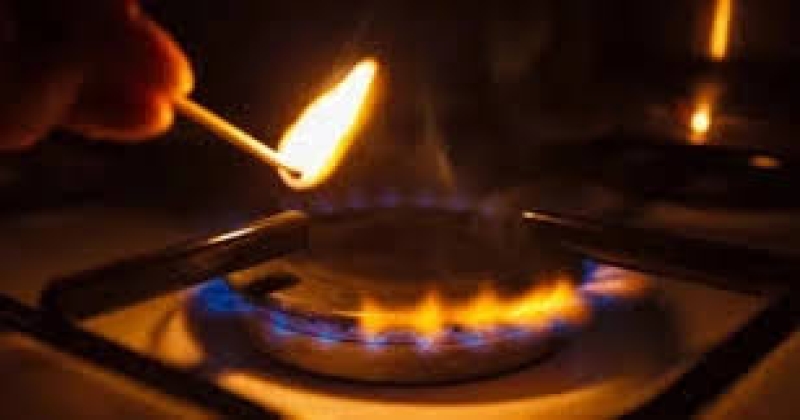
A serious shortage of liquefied petroleum gas (LPG) is disrupting kitchens and commercial eateries across the capital, forcing businesses and households to struggle with erratic supplies and higher costs.
For nearly two decades, Abdullah Molla has run a mid-range hotel in the capital, serving affordable meals to office-goers, students and low-income workers.
Over the past two weeks, however, he says keeping the business running has become a daily struggle.
“Even after paying more, gas cylinders are not available. Some days we cannot serve our full menu. We are losing money and customers are leaving without eating,” Abdullah told UNB.
Closing the kitchen is not an option but with no gas, many food items have already been dropped from the menu,he said .
Small restaurants and roadside food vendors are facing the same crisis across the country.
Kader, who runs a fast-food cart in a busy commercial area, said the rising price of LPG has pushed up his daily operating costs.
“The price I used to buy gas at has increased sharply. If I raise food prices, customers get annoyed. Many walk away without buying anything,” he said.
Homemakers Under Pressure
The crisis is not limited to businesses. In many urban neighbourhoods, LPG is now the only cooking fuel as new residential gas connections remain suspended. For thousands of families, daily cooking has become uncertain.
Some households are being forced to switch to alternative fuels, which are often more expensive, time-consuming and inconvenient.
“There has been no pipeline gas in our area for a long time. We depend entirely on LPG cylinders, but now even that has become chaotic,” said housewife Arha Moni.
She alleged a huge gap between government-fixed prices and what retailers are charging.
“What is the official price of a 12-kg cylinder, and what are shopkeepers charging? Now it costs Tk 2,500 to Tk 2,600. Is this business, or is it robbery?” she asked.
She accused traders of ignoring official prices and creating artificial shortages.
“Who gave them the right to empty ordinary people’s pockets through syndicates? Families are suffering badly. There is no gas in the stove, and buying a cylinder has become suffocating. Is there no one to see this?” she said.
Consumers have blamed weak market monitoring for allowing such practices to continue and have urged authorities to act immediately to curb price manipulation and ensure sales at government-fixed rates.
Import Dependence and Supply Disruptions
Businesses involved in LPG marketing claim that the current crisis stems from uncertainty in the supply system and complications over price adjustments.
They allege that despite the worsening situation, no clear directive or visible initiative has yet come from the government.
The Ministry of Power, Energy and Mineral Resources on January 04 said there is no shortage of Liquefied Petroleum Gas (LPG) in the country and local administrations have been ordered to take action against those responsible for creating the artificial crisis.
According to the ministry, LPG imports were 1.05 lakh metric tons in November 2025 and 1.27 lakh metric tons in December 2025.
Despite the increase in imports, there is no logic for a supply shortage in the market, it added.
Energy sector sources say Bangladesh’s annual LPG demand is now around 1.4 million metric tonnes, with monthly consumption exceeding 120,000 metric tonnes on average.
Demand rises further during winter and festival seasons.
Nearly 98 percent of the country’s LPG is imported, making the domestic market highly vulnerable to global price volatility, dollar shortages, LC opening complications and shipping delays.
Marketing companies claim recent import disruptions have prevented the buildup of adequate reserves.
As a result, dealers in many areas are receiving far fewer cylinders than required, creating shortages at the retail level.
Although the government-fixed price of a 12-kg cylinder remains unchanged, consumers say shortages have pushed market prices to Tk 1,800 to Tk 2,000 and even higher in many areas.
Analysts say LPG demand could reach 2.5 million metric tonnes annually by 2030. Without expanding supply capacity, simplifying import procedures and strengthening market monitoring, the crisis could worsen further.
A Ray of Relief?
Amid growing pressure from traders and consumers, Bangladesh Bank has eased import rules for liquefied petroleum gas to reduce financing pressure on local importers.
In a circular issued on Sunday, the central bank said LPG imports will now be eligible for usance terms of up to 270 days under suppliers’ or buyers’ credit.
The move is expected to give importers greater flexibility in managing payments during the ongoing dollar crunch.
However, industry insiders say the impact of the policy change may take time to be felt on the ground.
Until supply stabilises and prices come down, hotel owners, food vendors and homemakers fear the crisis will continue to disrupt daily life and livelihoods.
Energy and Mineral Resources Division's Joint Secretary AKM Fazlul Hoque said around six million households in Bangladesh currently use LPG, making it an essential commodity.
“The government is in the process of updating the LPG policy, which will include guidelines aimed at addressing existing challenges in the sector,” Fazlul added.
Chairman of the Bangladesh Energy Regulatory Commission (BERC) Jalal Ahmed on Thursday expressed optimism that the country would not face a shortage of liquefied petroleum gas (LPG) during the upcoming Ramadan, citing an expected increase in imports.
“Those who brought in additional imports were not obstructed. Around 150,000 tonnes of LPG are expected to arrive in January. We hope there will be no problem during Ramadan,” Jalal said at a roundtable discussion titled ‘Challenges of Regulating the LPG Market’, organised by the LPG.